


Complete Channel Letter Bending Machine Guide
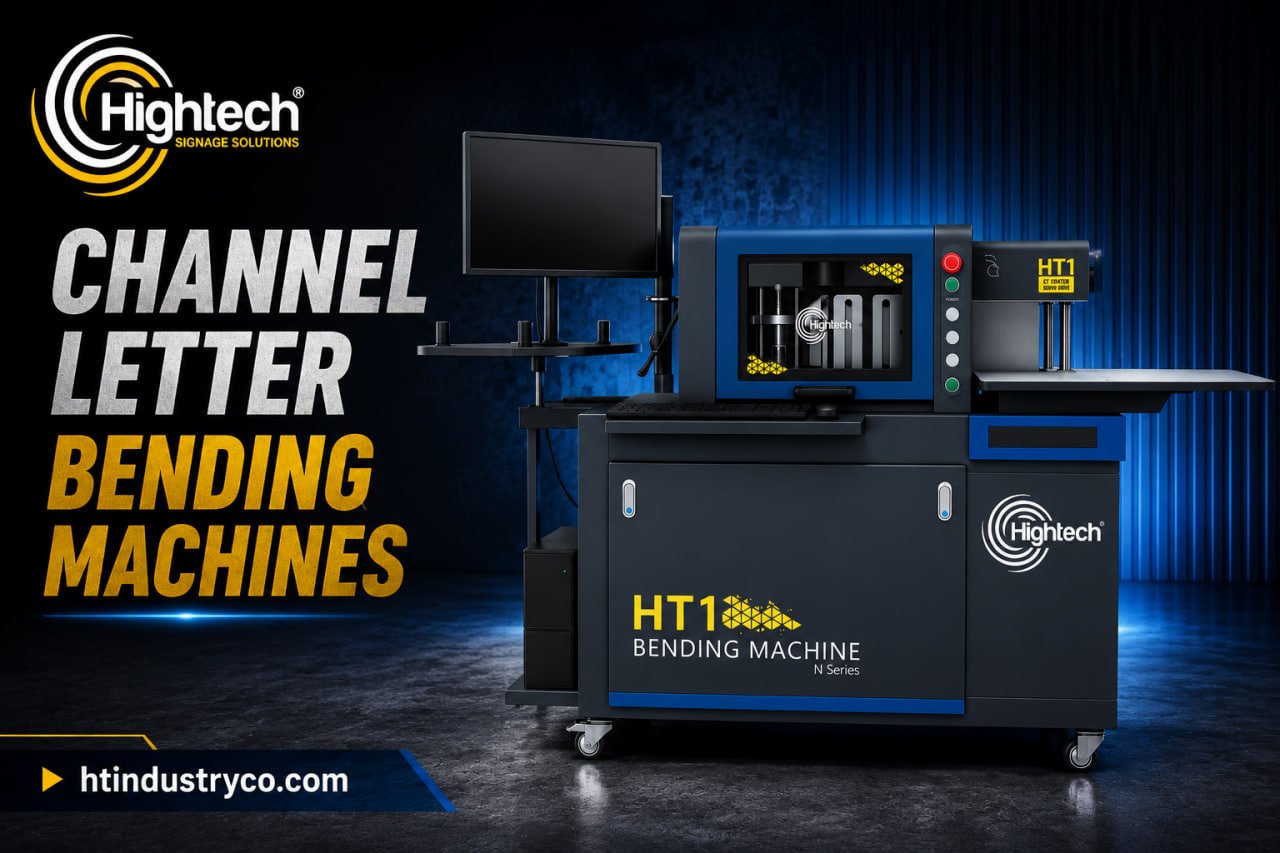
Table of Contents
Channel letter bending machines can significantly improve the speed, accuracy, and consistency of sign production. Instead of shaping every return by hand, an automatic system can feed, notch, cut, flange, and bend metal strip from a digital letter or logo file.
For sign shops that produce illuminated letters regularly, the right equipment can reduce rework, deliver more consistent curves, and shorten turnaround times. Capabilities vary by material, profile, letter height, forming strength, and expected production volume. Some systems focus on aluminum and Channelume, while stronger configurations can also process stainless steel or galvanized strip.
This complete channel letter bending machine guide explains the working process, compares manual, automatic, and CNC systems, and reviews materials, output, maintenance, and practical operating considerations. It is designed to give sign manufacturers a clear technical overview before they evaluate individual models or configurations.
Quick Facts
A channel letter bending machine cuts, slots, flanges, and bends aluminum or stainless-steel strip into the returns—the sides—of three-dimensional letters used in illuminated signage. Key performance points include:
- Speed: an automated system can form a letter in roughly 4–5 minutes, compared with about 45–60 minutes for manual fabrication.
- Labor efficiency: automation can substantially reduce fabrication time and allow one operator to manage output that would otherwise require several manual steps.
- Output: compact systems may produce about 75 letters per shift, mid-range systems around 100, and higher-capacity machines 150 or more, depending on material and design complexity.
- Materials: many systems process aluminum strip from approximately 0.3–1.5 mm thick; stronger models may also handle stainless steel and galvanized strip.
- Typical users: sign shops, fabrication companies, and advertising producers that manufacture channel letters on a recurring basis.
What is a Channel Letter Bending Machine?
A channel letter bending machine forms the metal returns of three-dimensional channel letters. It feeds a coil or strip of aluminum—or, on suitable machines, stainless steel—then slots and notches the strip at calculated points and bends it to match the outline of a letter or logo. The formed return can then be assembled with the face and back and fitted with LED lighting.
The equipment may also be described as a channel letter bender, 3D channel letter machine, or sign letter machine. Manual, automatic, and CNC versions are available, with different levels of throughput, precision, and software integration.

How It Works: Cut → Slot → Flange → Bend
A modern automatic or CNC bender reads your artwork file and runs the strip through four core steps:
- Cut: a milling cutter or planer knife trims the strip to length and prepares clean cut lines, often at adjustable angles.
- Slot / notch: the machine cuts notches so the strip can fold cleanly at corners and tight radii. On software-driven machines, slotting depth is calibrated automatically.
- Flange: the edge is formed so the return can later be attached to the letter face and back.
- Bend: a bending head — typically a double-blade alternating system on higher-end machines — curves the strip to match the letter outline with consistent accuracy.
Because the geometry comes straight from a design file (AI, DXF or PLT), the same letter can be reproduced again and again without the variation you get from hand bending.
Types of Channel Letter Bending Machines
Different machines serve different needs:
- Manual Channel Letter Benders – Hand-operated, cost-effective for small projects.
- Automatic Channel Letter Benders – Motorized for faster bending with reduced labor.
- CNC Channel Letter Benders – Computer-controlled for high precision and repeatable shapes.
- Material-Specific Machines – Optimized for aluminum, stainless steel, or acrylic bending.
Types: Manual vs. Automatic vs. CNC
The main distinction is the level of control and automation. Manual equipment depends heavily on operator skill. Automatic machines motorize feeding and bending. CNC machines read design files directly and provide the highest level of repeatability for complex shapes and production environments.
|
Factor |
Manual |
Automatic |
CNC |
|---|---|---|---|
|
Speed |
Slow — minutes of hand work per bend | Fast — motorized feed and bend | Fastest — file-driven, continuous |
|
Precision |
Depends on operator | High, consistent | Highest, repeatable to ±0.1 mm |
|
Labor |
High manual effort | Low — one operator | Low — largely unattended cycles |
|
Ideal volume |
Low / occasional | Medium to high | High / production shops |
|
Skill needed |
High hand skill | Moderate | Basic operation + file prep |
Channel Letter Bending Machine vs. Acrylic Bending Machine
A channel letter bender forms aluminum or stainless-steel strip into the sidewalls of three-dimensional letters. An acrylic bending machine heats acrylic sheet or strip so it can be formed into angles or curves.
Both machines may be used in the same sign-production workshop, but they are not interchangeable. Channel letter equipment creates metal returns, while acrylic bending systems are intended for acrylic fabrication, displays, light boxes, decorative components, and selected sign parts.
Materials & Letter Types
Most channel letter systems work with aluminum coil, including flat aluminum, Channelume, extrusion profiles, and trim-cap strip. Common operating ranges are approximately 0.3–1.5 mm in thickness and about 10–200 mm in strip height, although exact limits depend on the model. Stronger configurations may also form stainless steel and galvanized strip for durable or premium signage. For compatible stock, see Hightech’s channel letter material.
Depending on the tooling and material, a capable machine may support front-lit, reverse or halo-lit, and trimless letters. The exact profile compatibility should always be verified against the machine specification.
Review the different types of channel letter signs before specifying returns, faces, and the lighting effect your bending workflow must support.
|
Material |
Typical thickness |
Letter types |
|---|---|---|
|
Flat aluminum / coil |
0.3–1.2 mm (≈0.012–0.047 in) | Front-lit, reverse/halo-lit |
|
Channelume / trim cap |
0.3–1.2 mm | Front-lit illuminated letters |
|
Stainless steel |
0.3–1.5 mm (model-dependent) | Premium, durable, trimless |
|
Galvanized strip |
0.3–1.5 mm (model-dependent) | Heavy-duty signage |
Benefits of Using a Channel Letter Bender
Using a channel letter bending machine transforms the way sign shops operate. Instead of spending hours manually shaping letters, these machines streamline the process, save labor costs, and guarantee consistency in every project. From small custom jobs to large-scale commercial signage, the advantages are clear.
Speed and Accuracy
One of the biggest benefits is production speed. A CNC channel letter bender can shape materials in minutes, with precise angles and curves that match the design file.
This reduces human error, shortens turnaround times, and helps shops take on more projects without sacrificing quality.
Cost-Effectiveness for Sign Makers
Although the initial channel letter bender price may seem high, the return on investment is significant. By lowering labor costs, reducing material waste, and boosting efficiency, the machine quickly pays for itself. For sign makers competing in a fast-paced market, automation ensures long-term savings and stability.
Review manual and machine channel letter bending to relate the different machine types to output, staffing, and investment needs.
Improved Letter Quality
Manual bending often leads to inconsistencies, visible seams, or uneven edges. Automatic and CNC channel letter bending machines eliminate these issues by producing smooth, uniform bends every time. The result is higher-quality signs with clean finishes—essential for clients who demand professional and durable branding solutions.
Practical Operating Considerations
Before specifying a system, confirm file compatibility, supported material thickness and height, forming accuracy, electrical and compressed-air requirements, and the availability of training, spare parts, and technical support. These checks show whether the equipment will integrate with the current workflow without turning this technical overview into a detailed product-selection checklist.
For a focused, step-by-step selection process, read How to Choose the Right Channel Letter Bending Machine.

Production Speed & Output
The headline reason shops automate is throughput. On an automated machine, a letter takes roughly 4–5 minutes, compared with about 45–60 minutes by hand — a time reduction of up to ~75%. Daily output scales with the machine tier.
|
Tier |
Approx. output (8-hr shift) |
Typical fit |
|---|---|---|
|
Compact / entry |
~75 letters/day | Small sign shops |
|
Mid-range |
~100 letters/day | Growing fabricators |
|
High-end |
150+ letters/day | Production / high-volume shops |
Setup and training are usually same-day on most units, and many Hightech machines feature automatic calibration to reduce setup time between jobs.
Maintenance & Troubleshooting
Channel letter benders are low-maintenance, but a short routine keeps accuracy high and tooling lasting longer:
|
Task |
Frequency |
Why it matters |
|---|---|---|
|
Clean swarf and dust from feed path |
Daily |
Prevents feeding errors and surface marks |
|
Lubricate guide rails / ball screw |
Weekly |
Keeps feeding smooth and accurate |
|
Inspect & clean encoder wheel |
Weekly |
Maintains length and bend accuracy |
|
Check / sharpen milling cutter & planer knife |
Monthly |
Clean slots and cut lines |
|
Run calibration check |
Monthly / per job batch |
Holds ±0.1 mm precision |
|
Verify air supply & pressure |
Ongoing | Stable bending operations |
If returns don’t match the .dxf outline, re-run calibration and confirm the encoder wheel is clean before adjusting the file. Inconsistent slots usually point to a dull knife or incorrect slot-depth settings.
Find the Right Machine for Your Application
Share your materials, working size, and production requirements with our specialists. We’ll help you identify the right machine and configuration for your business.
Find the Right Machine for Your Application
Frequently Asked Questions
What is a channel letter bending machine?
It’s a machine that cuts, slots, flanges and bends aluminum or stainless-steel strips into the returns (sides) of 3D channel letters for illuminated signage. Manual, automatic and CNC versions exist depending on volume and precision needs.
How long does it take to bend a channel letter?
On an automated machine, roughly 4–5 minutes per letter, versus about 45–60 minutes by hand — a time reduction of up to ~75%.
What materials can a channel letter bender use?
Most machines handle aluminum coil from about 0.3 to 1.5 mm thick; stronger models also bend stainless steel and galvanized strip. Letter heights typically range from ~10 mm to 200 mm.
How big a letter can a channel letter machine make?
It depends on the model. Across the Hightech range, material height runs from about 10 mm up to 200 mm, so the practical letter size is set by the machine’s height capacity and your material.
What’s the difference between manual, automatic and CNC benders?
Manual benders are hand-operated and cheapest, suited to low volume. Automatic machines motorize bending for speed and consistency. CNC benders read design files (AI/DXF/PLT) for the highest precision and repeatability.
How many letters can a machine produce per day?
Depending on tier, roughly 75 letters/day on compact units, ~100/day on mid-range, and 150+/day on high-end machines in an 8-hour shift.
Do you need a CNC machine for channel letters?
Not always. Automatic benders are enough for many shops, but a CNC bender that reads design files gives the best precision and repeatability for high-volume or complex production.
Is a channel letter bending machine worth it?
For shops producing channel letters regularly, yes: the labor saved per letter typically pays back the machine while improving consistency and turnaround. Low-volume shops may prefer buying letters wholesale.
Latest contents



Prefer a callback? Share your details and requirements below.
Your details will only be used to respond to this request.