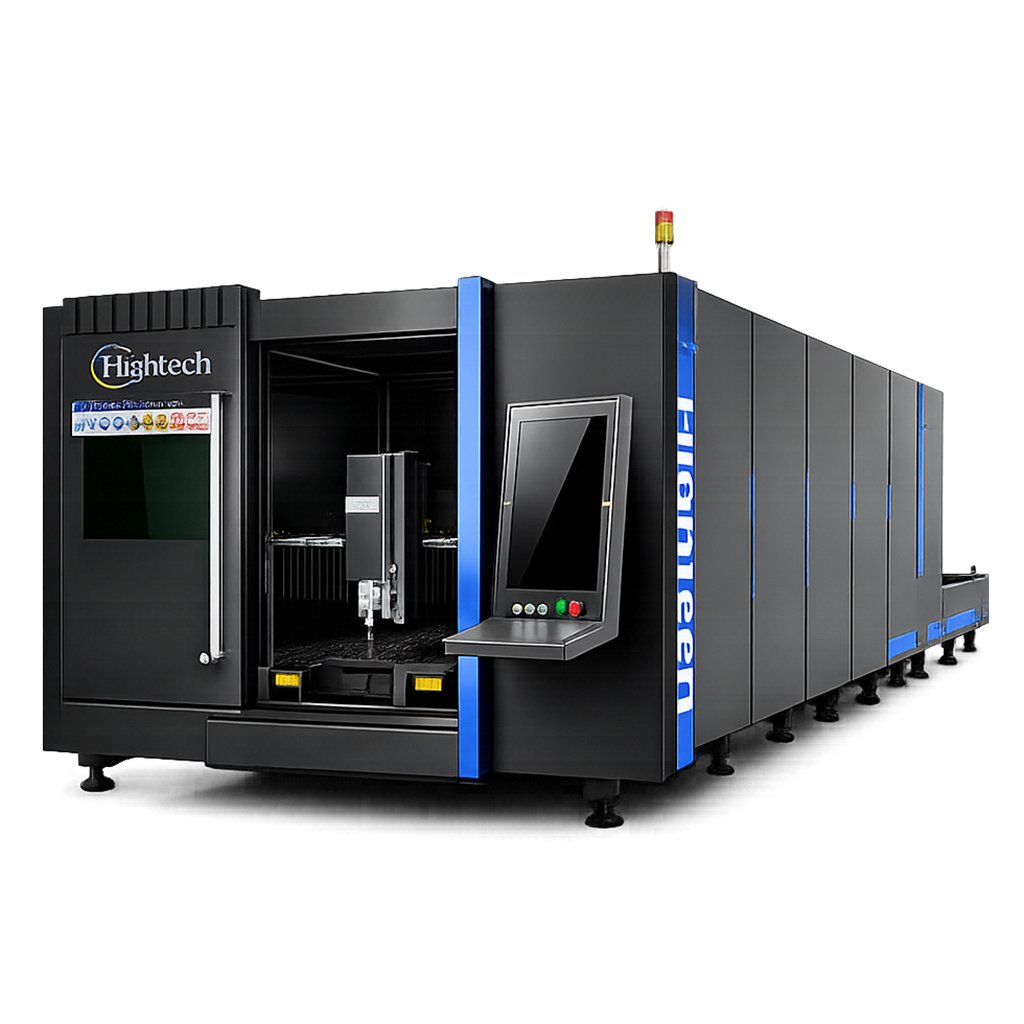
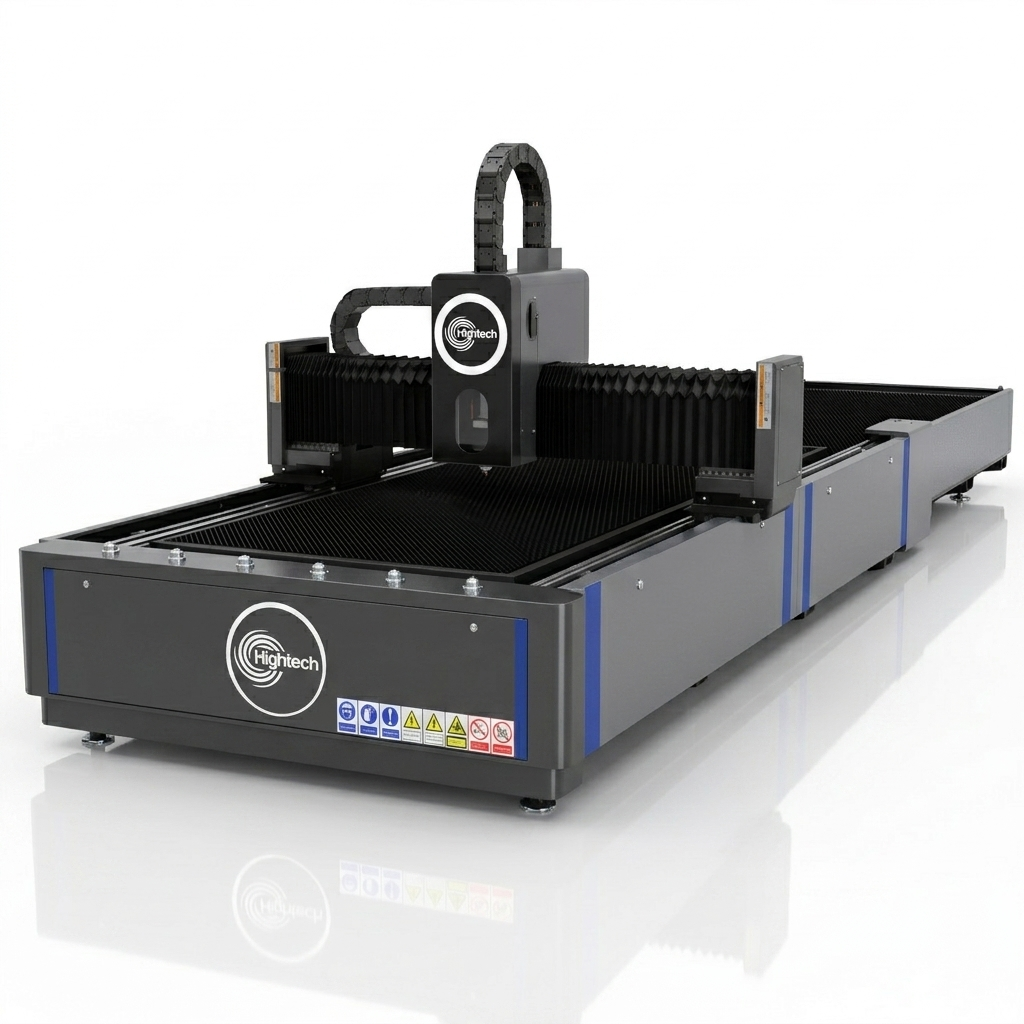
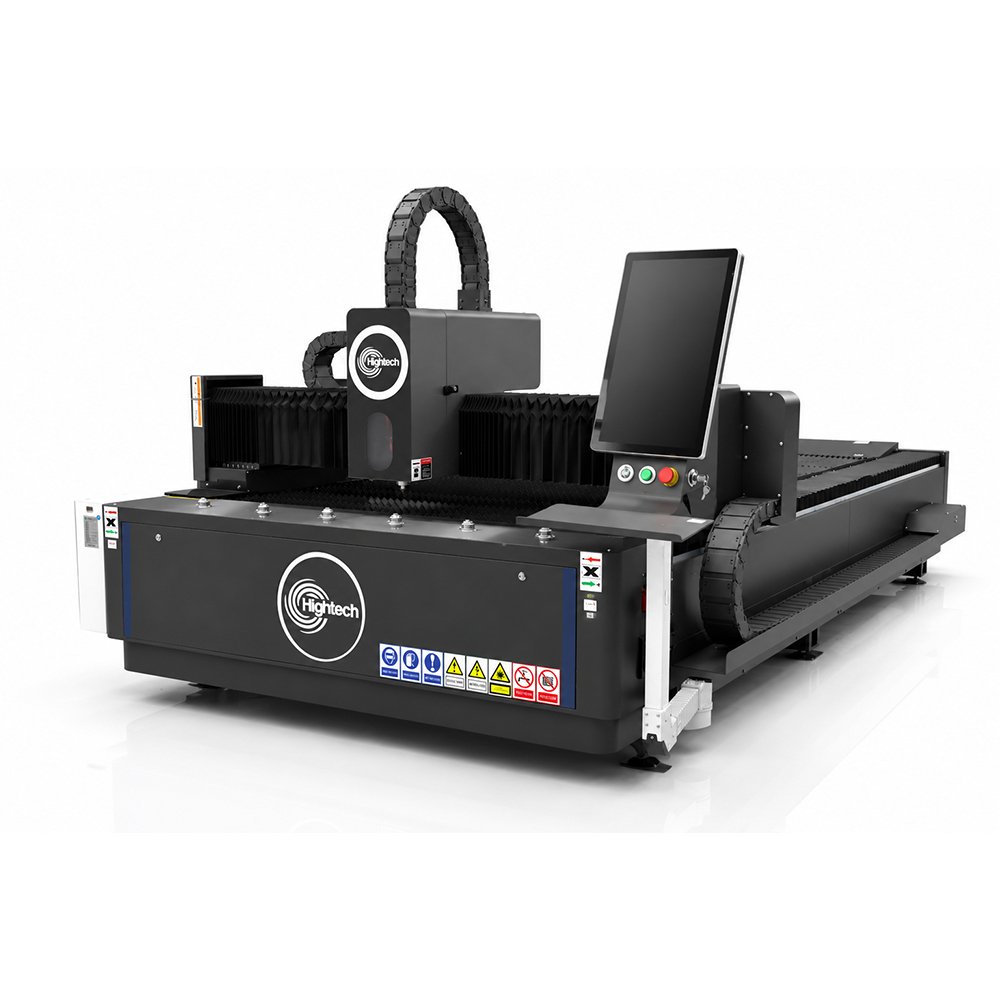
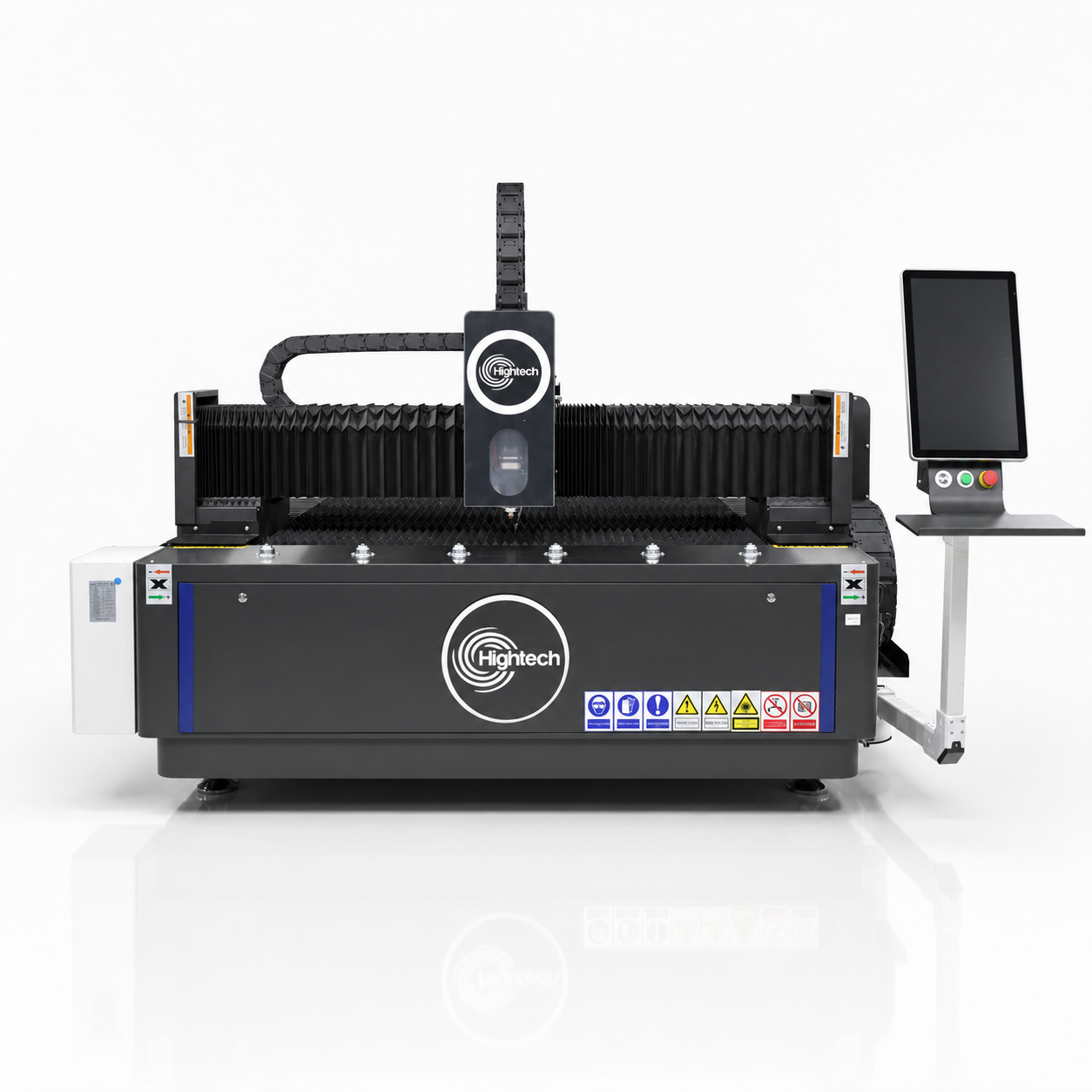
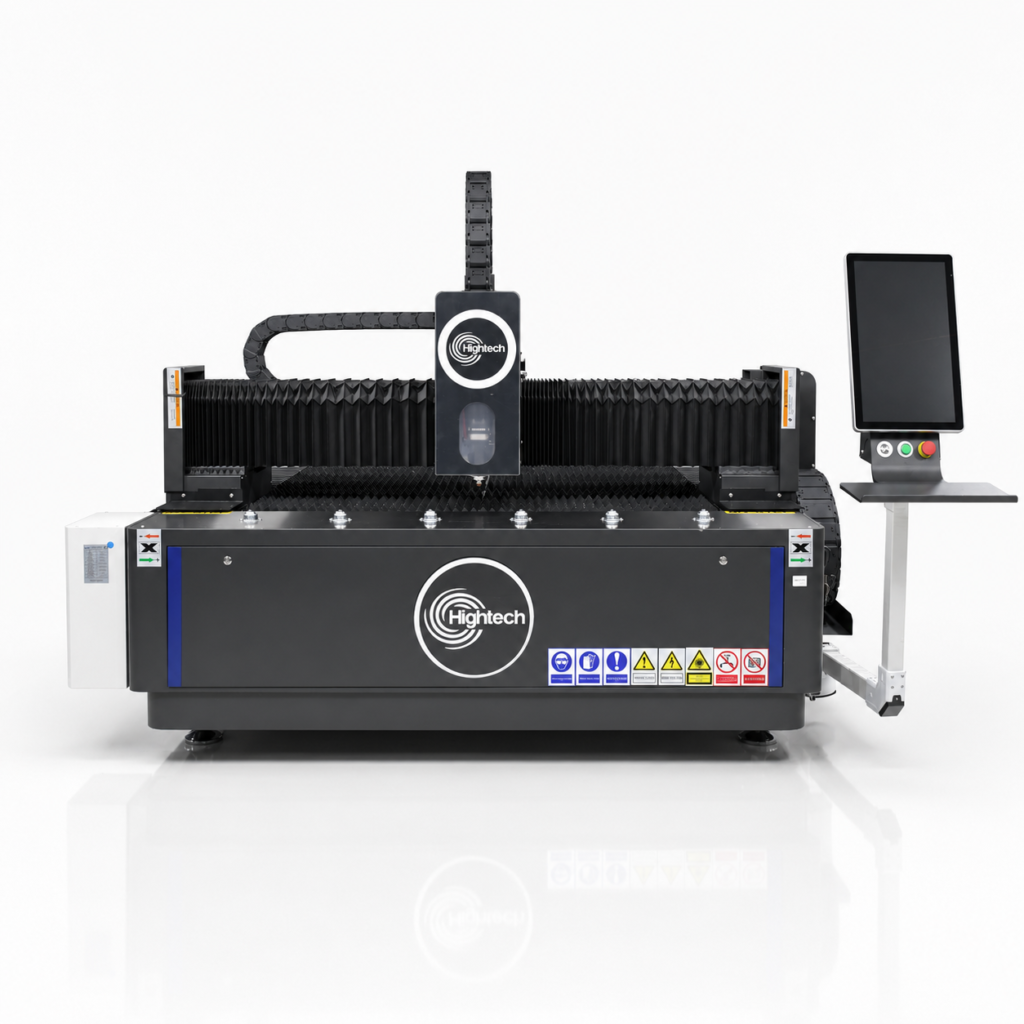
Hightech supplies fiber laser cutting machines for accurate and efficient processing of carbon steel, stainless steel, aluminum, and brass. Selected configurations support additional metals depending on laser power and machine setup. The range covers multiple working areas, from standard HT-FC sheet-cutting models to the exchange-table HT 4015H.
The Hightech fiber laser range includes models with different working areas and machine configurations. Published HT-FC configurations cover several sheet sizes, while the HT 4015H adds a 4000 × 1500 mm exchangeable worktable for a different production setup.
How to Choose the Right Fiber Laser Cutting Machine
Choose mainly by sheet size, worktable type, and required laser power.
By Material Type and Maximum Thickness
First identify the metal and maximum thickness you need to cut. Hightech’s published HT-FC cutting data covers carbon steel, stainless steel, aluminum, and brass. Higher thicknesses generally require higher laser power; confirm the required power for your material before ordering.
By Sheet Size
Choose the working area based on your regular sheet dimensions: FC-1325 for 1300 × 2500 mm, FC-1530 for 3000 × 1500 mm, FC-2040 for 2000 × 4000 mm, or HT 4015H for 4000 × 1500 mm.
By Worktable Configuration
Choose the standard HT-FC models for conventional sheet cutting. Select the HT 4015H when an exchangeable worktable is required for your production workflow.
By Laser Power
Laser power should match the material, thickness, required cutting speed, and edge quality. The HT 4015H is specified at 6000W; available power configurations for the HT-FC models should be confirmed for the selected bed size.
By Production Requirements
Consider your daily workload, sheet dimensions, loading frequency, and available workshop space. Larger beds are useful for larger sheets, while an exchangeable table can better suit workflows where loading and cutting need to be separated.
Hightech.Built to Lead.Hightech . Built to Lead.Hightech . Built to Lead .
Hightech.Built to Lead.Hightech . Built to Lead.Hightech . Built to Lead .
Compare Fiber Laser Cutting Machine Models
Compare machine types, working areas, production roles, laser configurations, and workflow advantages across the current Hightech fiber laser cutting machine range.
High-quality fiber laser sources, auto-focus cutting heads, capacitive height control, servo motion systems, and rigid machine beds support accurate and consistent cutting across production runs.
Flexible Material and Assist-Gas Options
Selected machines can operate with air, oxygen, or nitrogen and process common industrial metals including carbon steel, stainless steel, aluminum, brass, copper, and galvanized sheet.
Configurations for Different Workflows
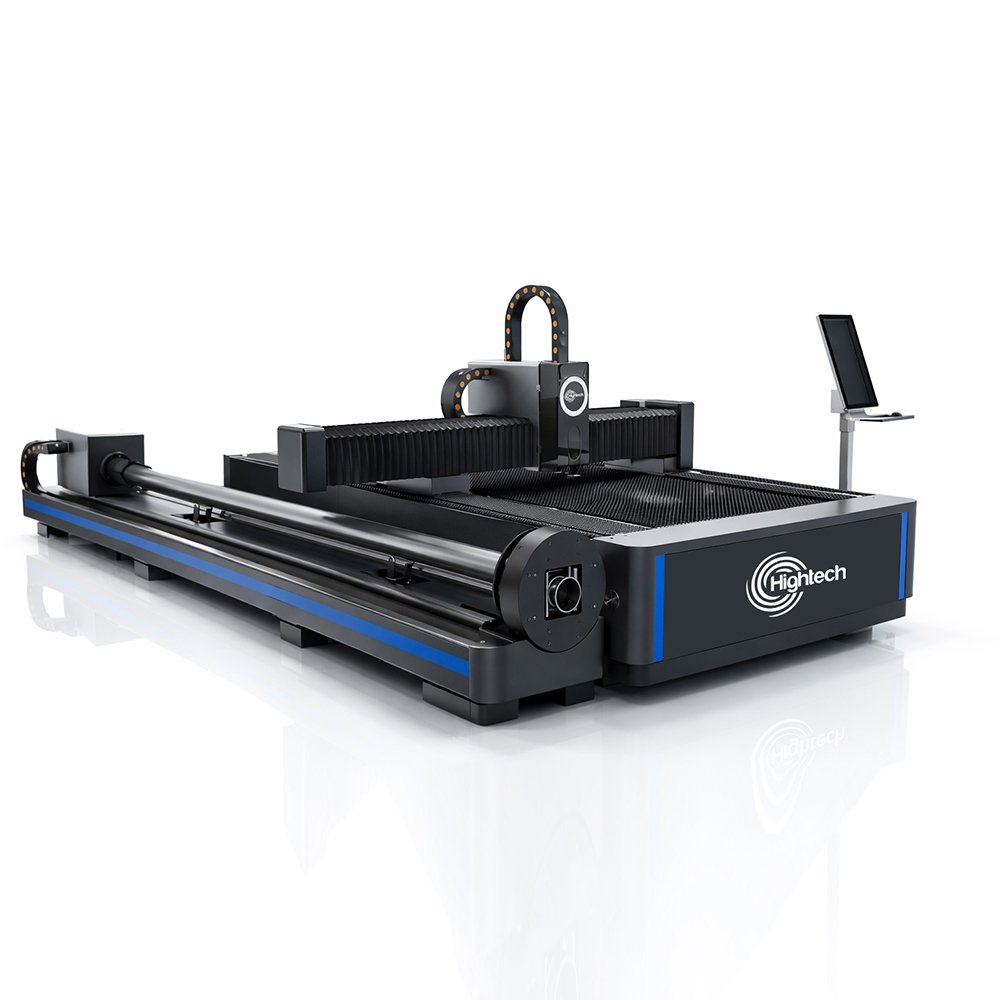
Choose from compact flatbed systems, standard industrial machines, larger working areas, exchange-table equipment, and sheet-and-tube configurations.
What materials can a fiber laser cutting machine cut?
Fiber laser machines can process many common metals, including carbon steel, stainless steel, aluminum, copper, brass, galvanized sheet, silicon steel, and titanium alloys. Supported thickness depends on the machine, laser power, assist gas, and required cutting quality.
What is the best fiber laser cutting machine for metal fabrication?
The correct machine depends on sheet size, metal type, maximum thickness, daily output, floor space, and whether tube processing is required. These factors should be evaluated before recommending a model.
What is the difference between a small and an industrial fiber laser cutting machine?
Small machines generally have a more compact working area and are suitable for smaller sheets or lower-volume production. Industrial machines may offer larger tables, higher power, heavier frames, exchange tables, automation, and greater continuous-production capacity.
How much laser power do I need?
Required power depends on the material, maximum thickness, desired cutting speed, assist gas, and edge-quality requirements. Submit sample materials and production details for an application-based recommendation.
What is an exchange-table fiber laser cutting machine?
An exchange-table machine uses two working platforms so one table can be loaded or unloaded while the other remains in the cutting area. This helps reduce non-cutting time between production cycles.
What assist gases can be used?
Selected fiber laser machines can operate with air, oxygen, or nitrogen. The correct gas depends on the metal, thickness, cutting speed, edge-quality requirements, and machine configuration.
What working area should I choose?
Choose a working area that accommodates your standard sheet dimensions, nesting layout, part size, available floor space, and loading workflow without unnecessary material repositioning.
Do you provide installation, training, and technical support?
Hightech provides machine configuration consultation, remote installation guidance, operator training, spare parts, and technical support. The exact service arrangement should be confirmed for the selected model and destination country.
We use cookies to improve your experience on our website. By browsing this website, you agree to our use of cookies.
Tell our specialists about your materials, applications and production goals. We’ll help you compare suitable machines and identify the right solution for your business.