

Best Laser Marking Machine for Automotive Parts: Choose by Component, Material, and Production Requirement
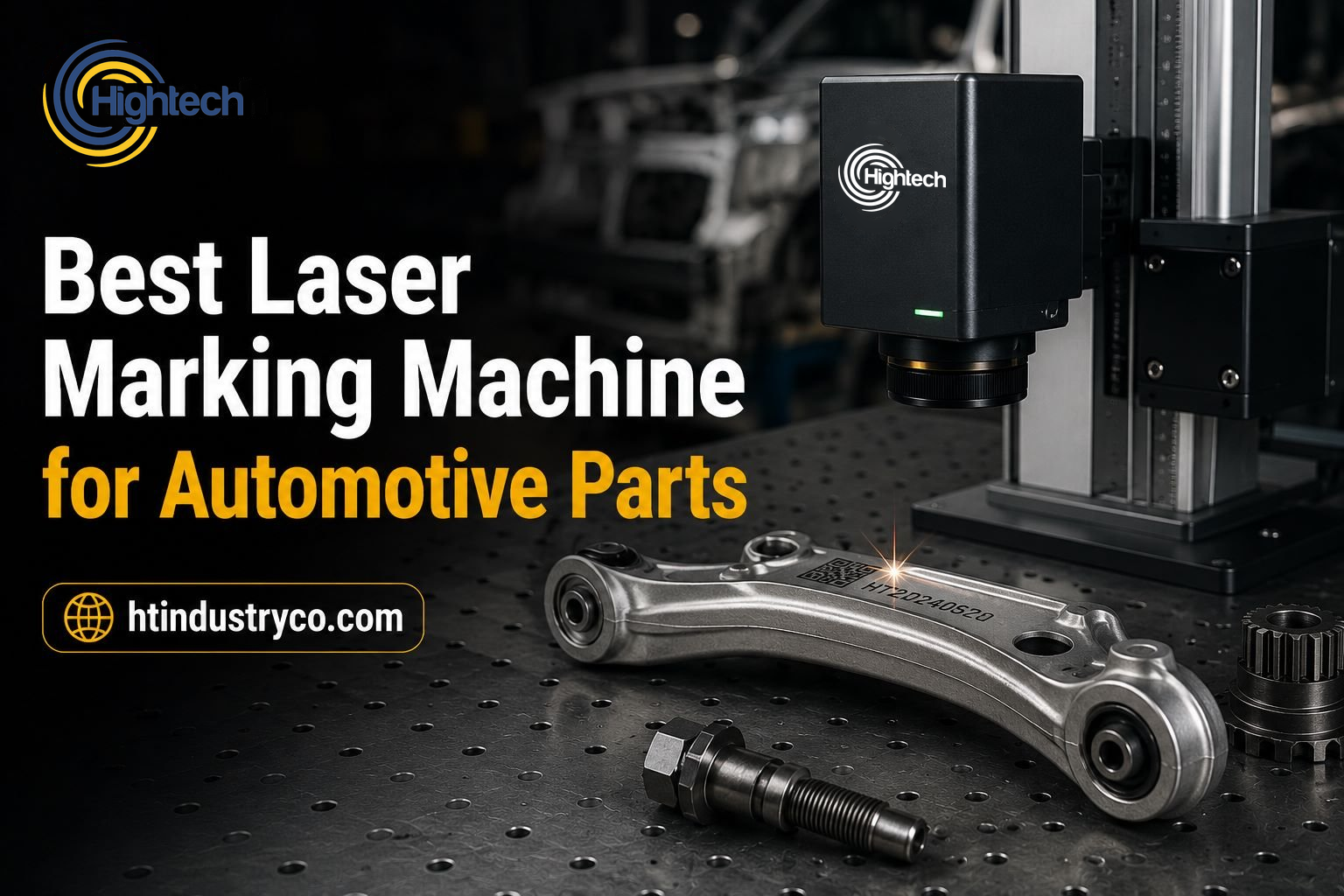
Table of Contents
The best laser marking machine for automotive parts depends first on the material and the mark you need to produce. For many steel, stainless-steel, iron, and aluminum parts, a fiber laser is the first technology to evaluate. For anodized aluminum or applications where pulse control and high contrast matter, MOPA deserves a direct comparison. For heat-sensitive plastics, connectors, sensors, and electronic components, UV marking is often the better starting point. CO2 marking has a narrower role and should be reserved for compatible non-metal materials that have been validated for the laser process.
For automotive manufacturers and suppliers, “best” is not a universal machine specification. A system can make a clear sample in a showroom and still fail the production requirement if the code cannot be read after coating, if cycle time misses takt time, or if part positioning varies. The right decision therefore combines material compatibility, mark permanence and contrast, code readability, real cycle time, part geometry, operator handling, and production-line fit. Hightech offers laser marking machines across fiber, MOPA, UV, and CO2 technologies, allowing the selection to begin with the actual automotive application rather than forcing one laser type onto every part.
Best Laser Marking Machine for Automotive Parts: Quick Selection Guide
If you are looking for the best laser marking machine for auto parts, use the table below as a shortlist rather than a final specification. Every recommendation should be confirmed on the actual material, coating, surface finish, code size, required contrast, and expected cycle time before purchase.
|
Automotive component / use case |
Common material or surface |
Required mark |
First technology to evaluate |
Relevant Hightech product |
Validate before purchase |
|---|---|---|---|---|---|
| Machined parts, brackets, fasteners, chassis or metal identification | Steel, stainless steel, iron, aluminum | Serial numbers, part numbers, Data Matrix codes, durable direct marks | Fiber | Fiber Laser Marking Machine | Contrast, depth, code readability, surface finish, line cycle time |
| Anodized housings, aluminum identification plates, high-contrast metal marks | Anodized aluminum; selected metals | Black/high-contrast marks with controlled surface effect | MOPA | MOPA Laser Marking Machine |
Exact anodic layer, pulse recipe, contrast, heat effect, cycle time |
| Connectors, sensor housings, switches, electronic components | Heat-sensitive or formulation-dependent plastics | Fine text, codes, production data, low-disturbance surface mark | UV |
UV Laser Marking Machine |
Polymer formulation, additives, color response, heat effect, code quality |
| Selected interior/non-metal parts where CO2 is compatible | Validated plastics, leather or other compatible organic materials | Surface marking or identification | CO2 | CO2 Laser Marking Machine | Material safety, fumes, contrast, surface damage, permanence |
| Cylindrical metal parts or components requiring circumference marking | Metal shafts, rings, round parts | Repeated traceability around curved geometry | Fiber with rotary handling | Fiber Laser Marking Machine |
Fixture/rotary compatibility, focus, code distortion, loading time |
Which Hightech Laser Marking Technology Fits Each Automotive Material?
The best laser marking for automotive parts starts with the substrate and the required mark effect. Do not select a machine only because it has the highest advertised speed or power. Automotive parts can differ in alloy, anodizing, coating, pigmentation, molding additives, oil residue, surface roughness, and geometry. Those variables can change contrast and readability even when two parts appear similar. For a broader explanation of the technology families, see Hightech’s types of laser marking machines guide; this article stays focused on automotive selection.
Fiber Laser Marking for Steel, Stainless Steel, Iron, and Aluminum Automotive Parts
For many metal-component traceability jobs, the fiber laser marking machine is the first Hightech system to evaluate. Hightech currently lists 30 W and 50 W configurations, a 1060 nm wavelength, air cooling, EZCAD control, and a published marking-line speed of up to 7,000 mm/s. The product page also lists a rotary-axis device, which is relevant when the part itself is cylindrical or the mark must follow a curved surface.
Automotive uses include direct identification on machined steel or stainless parts, aluminum housings, metal hardware, engine-related components, and other parts that need serial numbers, part numbers, logos, or machine-readable codes. The key advantage is not simply that fiber can mark metal; it is that the mark can be created without ink, labels, or physical contact. For production selection, test the actual code size and reader, then confirm that the chosen parameters create enough contrast and permanence without damaging the functional surface.
MOPA Laser Marking for Anodized Aluminum and High-Contrast Metal Marks
A MOPA laser marking machine becomes especially relevant when the surface finish and pulse behavior matter as much as basic material compatibility. Hightech specifically documents anodized-aluminum blackening, color marking on stainless steel, precision stripping of thin anodic layers, and MOPA pulse control. Its published parameters include a 1064 nm wavelength, 1-4,000 kHz repetition frequency, 2-500 ns pulse duration, and marking-line speed up to 7,000 mm/s.
For automotive applications, compare MOPA with standard fiber when you need a high-contrast mark on anodized aluminum or tighter control over the marked surface. MOPA is not automatically better for every aluminum part: raw, anodized, coated, and cast aluminum can respond differently. Validate the real production surface for contrast, edge definition, heat effect, and repeatability.
UV Laser Marking for Heat-Sensitive Plastics, Connectors, Sensors, and Electronics
Automotive plastics are not one material. Connector housings, sensor bodies, switch components, electronic enclosures, and molded interior parts can use different polymers, pigments, fillers, and flame-retardant packages. When the goal is a fine mark with lower thermal impact, the UV laser marking machine is an important option to test. Hightech’s current UV system uses a 355 nm wavelength, offers 3-10 W power, lists a 100 × 100 mm marking range, a marking line width of 0.01 mm or less, and a marking-line speed up to 7,000 mm/s. The product page also states support for automatic serial numbers, production dates, and data extraction in the control workflow.
UV is a strong candidate when code sharpness, small characters, and sensitivity to heat are priorities. Polymer additives strongly affect laser response, so sample testing should confirm readability and check for unacceptable melting, bubbling, discoloration, or surface damage.
CO2 Laser Marking for Selected Compatible Non-Metal Automotive Materials
CO2 should be treated as a narrower automotive option, not as the default for metal parts. Hightech’s CO2 laser marking machine is positioned for non-metal materials such as leather, wood, plastic, and two-color board, with a published marking-line speed up to 12,000 mm/s. In automotive work, that makes it a candidate only for selected compatible interior or non-metal components where the material has been confirmed safe and suitable for CO2 processing. Do not assume every “plastic” is appropriate: material chemistry, fumes, surface damage, and long-term mark durability must be verified first.
High-Speed Laser Marking for Automotive Parts and Production-Line Fit
High-speed laser marking for automotive parts is a production-system question, not a scanner-speed number. Hightech publishes maximum marking-line speeds, but plants need completed parts per minute or seconds per verified part. Loading, positioning, focusing, code retrieval, inspection, unloading, and changeover may take longer than the laser itself.
What Determines Real Automotive Marking Cycle Time?
Measure the full cycle from part arrival to verified departure: loading, locating, focus confirmation, code generation, laser processing, reader verification, unloading, and recipe change. Published marking-line speed is useful for comparing machine capability, but mark area, code complexity, depth, and material response determine actual throughput.
Test a representative part with the final code, planned fixture, and verification step. Ask the supplier to demonstrate the complete target cell cycle, not only laser-on time.
Standalone Workstation vs Inline Marking
A standalone workstation fits moderate batches, manual handling, frequent product changes, and applications that do not need synchronization with another station. It is also useful for pilot production, rework, spare parts, or several low-volume components sharing one laser.
Inline marking fits applications where the code must be applied automatically within takt time or generated from upstream production data. Base the decision on part flow, operator touches, variants, and fail/reject logic. If an inline cell is required, confirm the automation interface and mechanical configuration with Hightech instead of assuming a standard system includes production-line controls.
Fixtures, Rotary Handling, Vision, and Part Positioning
Repeatable positioning is essential because a stable laser recipe can still fail if the part shifts relative to the focal plane. Flat parts may use simple nests; curved or cylindrical components may need dedicated fixtures, rotary handling, or controlled Z-position. Hightech lists a rotary-axis device with its fiber marker, but the final setup should be matched to the production part.
Vision can help when position varies, multiple variants share a station, or mark placement must be checked before firing. Treat vision, auto-focus, code readers, conveyors, and reject mechanisms as cell requirements unless they are documented on the quoted machine.
Serialization, PLC/MES/Database Connectivity, and Automated Verification
Automotive traceability may require sequential serial numbers, lot/date data, unique Data Matrix content, recipe selection, pass/fail verification, and production records. Hightech’s UV page lists automatic serial numbers and production dates, while the fiber system uses EZCAD. PLC, MES, database, and vision connectivity should still be confirmed for the exact quoted configuration.
Define the data path before purchase: where the code comes from, which system owns the serial, what happens after a failed read, whether pass/fail data returns upstream, how duplicates are blocked, and how the correct part recipe is selected. This turns “can mark the code” into a traceable production process.
How to Validate the Best Industrial Laser Marking for Automotive Parts Before Purchase
The best industrial laser marking for automotive parts should be proven on the actual part. Provide the real material and surface treatment, smallest required code, target location, and relevant durability conditions. Request multiple samples produced near the intended cycle time rather than one visually perfect sample made without a production constraint.
- Material and surface: Provide the exact alloy or polymer, coating/anodizing, color, and any known additives or treatments.
- Mark content: Supply the real serial-number format, Data Matrix or QR content, logo, character height, and required mark area.
- Quality target: Define acceptable contrast, permanence, depth or surface change, and the reader/verification method used on the line.
- Geometry and handling: Share drawings or samples showing curvature, access limits, fixture points, and whether a rotary axis is needed.
- Production rate: Specify takt time, batch size, shifts, changeover frequency, and whether marking is standalone or inline.
- Integration: List required PLC, MES, database, barcode-reader, vision, conveyor, safety, and reject/stop interactions.
- Durability test: Validate the finished mark after the real downstream process: cleaning, coating, oil exposure, abrasion, heat, or other relevant conditions.
Frequently Asked Questions
Is a fiber laser or MOPA laser better for anodized aluminum automotive parts?
MOPA is the stronger first comparison when the goal is controlled blackening or high contrast on anodized aluminum because Hightech documents anodized-aluminum blackening and adjustable pulse parameters. Standard fiber may still suit some aluminum identification jobs, so test both when appearance or cycle time is critical.
Can the same laser marking machine handle both metal and plastic automotive components?
Sometimes, but not across every metal and plastic. Hightech’s fiber page lists metals plus plastic and rubber compatibility, while UV is worth testing for heat-sensitive plastics and fine marks. Automotive polymers vary by formulation, so validate each part rather than assuming one recipe covers all materials.
Can a UV laser mark automotive plastic connectors and housings with less thermal impact than an infrared laser?
Yes, UV is appropriate to evaluate when lower thermal impact and fine marking are priorities. Hightech’s UV system uses a 355 nm wavelength. Results still depend on the polymer, pigments, fillers, and code requirement, so sample testing is necessary.
Is CO2 laser marking suitable for metal automotive parts?
Not as the default. Hightech positions CO2 marking for compatible non-metals such as leather, wood, plastic, and two-color board. For steel, stainless steel, iron, aluminum, and other metal automotive parts, evaluate fiber or MOPA first.
What information should an automotive supplier provide for a laser-marking sample test?
Provide the exact material and surface finish, real code/artwork, mark size and location, target cycle time, part drawings, traceability/reader requirements, and durability conditions. For inline cells, also provide required PLC/MES/database and verification logic so integration can be scoped correctly.
Latest contents


Prefer a callback? Share your details and requirements below.
Your details will only be used to respond to this request.