


How to Choose a Fiber Laser Cutting Machine
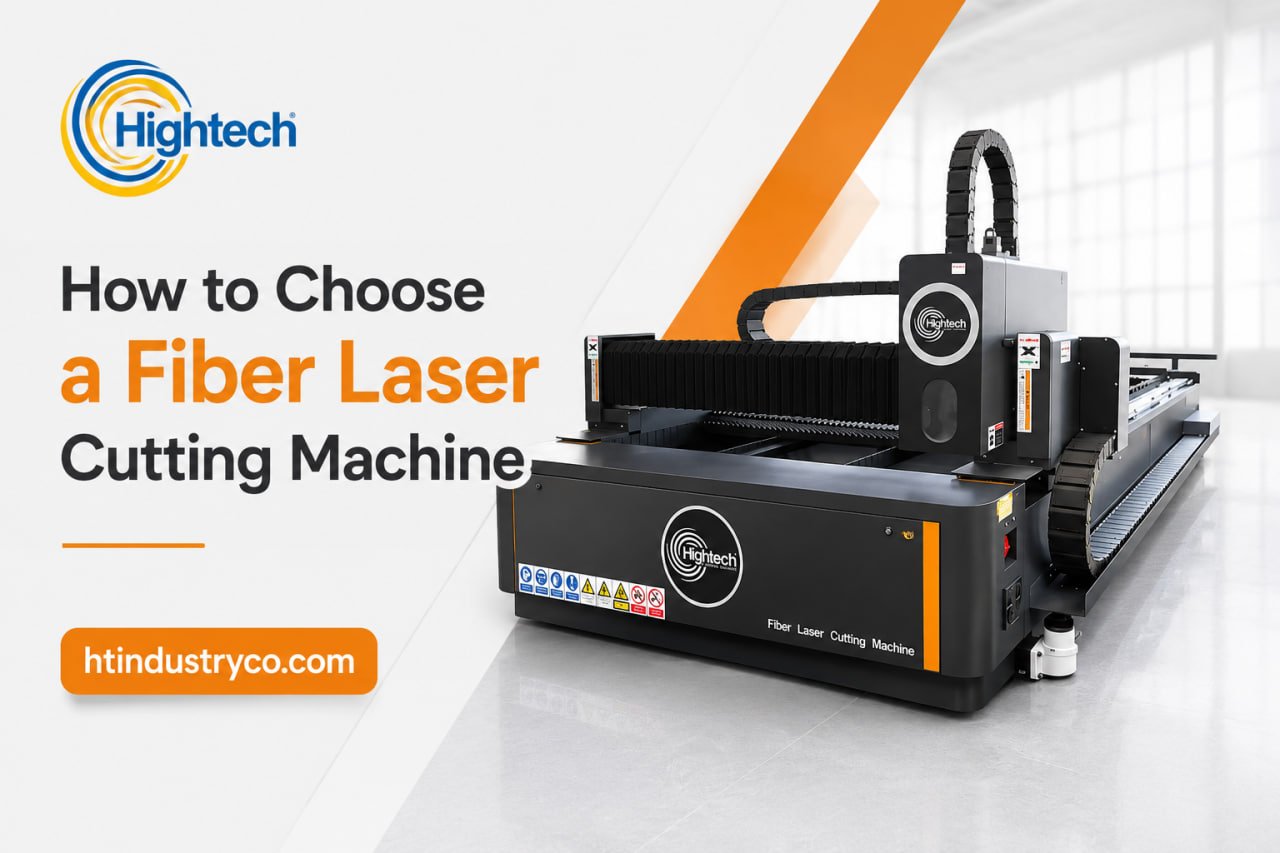
Table of Contents
If you’re reading this, you’ve already made the big decision: fiber, not CO2. Smart. For any shop cutting carbon steel, stainless, or aluminum, fiber has effectively become the only serious option in 2026 — there are no resonator mirrors to align and no lasing gas to refill, which is why fiber dominates metal fabrication today.
The hard question is the next one: which fiber laser? And here most buyers get steered toward the single most expensive mistake in the market — buying more power than their work will ever use, while ignoring the costs that don’t show up on the quote.
Quick-Start: Match the Machine to Your Application
The "Wattage Trap": Why More kW Can Wreck Your ROI
There’s a sales pattern worth naming. A rep shows you a 12kW or 20kW machine, points at the maximum-thickness spec, and lets you assume bigger is safer. It usually isn’t.
Here’s the reality the spec sheet hides: a 6kW machine cuts thin sheet (1–6mm) at essentially the same speed as a 2kW machine. The extra power only matters above roughly 10mm. So if your daily mix is thin-to-medium gauge — as it is for most job shops — paying for 12kW buys you capacity you’ll rarely touch, while you eat the higher purchase price, the bigger electrical service, and the larger chiller every single day.
The "12mm Rule"
A simple heuristic for sizing power to work:
Daily mix mostly under 6mm: 3kW is the sweet spot. A 3kW fiber is widely regarded as the optimal balance for the large majority of general fabrication.
Regular work in the 6–12mm range: 6kW. It cuts the thin stuff just as fast and opens up thick plate, eliminating outsourced heavy cuts.
Routine cutting above 12mm, or speed-critical thick plate: 8kW and up.
The trap isn’t high power itself — it’s high power bought for thin work. Match the kW to the metal you cut most days, not the one heavy job you land twice a year.
read more: how does a nitrogen generator work
The "Big Three" Components: Heart, Brain, and Muscle
The Heart — Laser Source (IPG vs. Raycus vs. Max)
The source is the single most expensive component and the biggest driver of price and longevity.
IPG (US-made): The premium choice. Strong beam quality, proven durability, and — critically for US buyers — domestic service and parts support. When a source goes down, who answers the phone and how fast parts arrive is not a footnote; it’s uptime.
Raycus / Max (China): The value choice, and a legitimately good one for standard carbon-steel work. Lower upfront cost, broad availability, perfectly capable for many shops. The trade-offs are around top-end beam quality and service logistics inside the US.
There’s no universally “right” answer. A high-mix job shop running standard steel may be entirely well-served by Raycus; a high-uptime OEM where every downtime hour costs real money often justifies IPG.
read more: What Is Fiber Laser Marking?
The Muscle — Cutting Head (Auto-Focus vs. Manual)
The Brain — CNC Controller (Friendess/CypTube vs. Beckhoff)
Friendess / CypCut (CypTube for tube work): The de facto standard on most imported machines. Easy DXF import, a gentle learning curve, low operator training overhead. For a shop that wants parts cut, not a PhD in motion control, this is usually the practical pick.
Beckhoff: Higher-end, tighter integration and precision, favored on premium European and OEM-grade machines. Worth it when precision and line integration justify the added complexity.
Whatever controller you choose, test the real workflow: how cleanly does your DXF or DWG come in, nest, and run? A smooth file-to-cut path matters more day-to-day than a spec you’ll never notice.
read more: Choosing the Right Lighting for Channel Letter Signs
US-Specific Requirements Most Guides Ignore
This is where generic, globally-written guides leave US buyers exposed. Three items can blow up a budget after the quote is signed.
Power Supply — 208V vs. 480V
Industrial fiber lasers need 3-phase power, and many shops discover their existing service won’t carry the new machine. Confirm whether the unit runs on 208V or 480V/3-phase, then have an electrician verify your panel capacity before you buy. An electrical service upgrade is a real line item — sometimes a five-figure one — and it’s far cheaper to plan for than to discover on install day.
To see more products, refer to the Power Supply page.
FDA Compliance — Class 4 Lasers
Tariffs & Duty — Section 301 on Chinese Imports
The Hidden Costs of Ownership (Your TCO Framework)
Cutting Reflective Metals: The Copper & Brass Warning
If copper or brass is anywhere in your work, read this before you buy. Highly reflective metals send laser energy back up into the machine, and not every fiber laser is configured to handle that back-reflection safely. As a rough guide, even a capable 6kW machine tops out around 12mm on brass — well below its ~25mm carbon-steel maximum — and copper is tougher still. If reflective work is part of your plan, confirm the source and head are rated for it and protected against back-reflection. Assuming “a fiber laser cuts metal, so it cuts copper” is how expensive components get damaged.
To see more products, refer to the Fiber laser Cutting Machine page.
Summary Comparison Table
Feature | High-End Option (Trumpf / IPG) | Value Option (Chinese Import / Raycus) | htindustryco.com Strategy |
|---|---|---|---|
Laser Source | IPG — US-made, top beam quality, durability & domestic support | Raycus / Max — lower cost, capable for standard steel work | Offer IPG as a premium upgrade; Raycus as the value baseline |
Cutting Head | Auto-focus, premium optics | Manual or basic auto-focus | Standardize auto-focus across all tiers (US labor-cost case) |
CNC Controller | Beckhoff — precision & line integration | Friendess/CypCut — easy DXF import, low training curve | Default to Friendess for usability; Beckhoff for OEM precision |
Power Rating | 8kW+ for thick plate & throughput | 3–6kW for typical 1–6mm daily mix | Right-size power to the daily mix; avoid the "wattage trap" |
| Compliance | Pre-certified, FDA-ready Class 4 enclosure | Verify enclosure & interlocks on import | Position turnkey, US-compliant delivery as a differentiator |
| Tariff Exposure | Domestic / lower 301 risk | Up to 25% Section 301 on Chinese origin (HTS 8456) | Quote landed cost with duty included; offer DDP clarity |
| Total Cost | Higher sticker, lower hidden-cost & downtime risk | Lower sticker, higher install/duty/compliance variables | Lead with the TCO framework to make true cost transparent |
Find the Right Machine for Your Application
Frequently Asked Questions
How much does a fiber laser cutting machine cost in the USA?
Which is better: IPG or Raycus laser source?
Can I import a fiber laser from China to the USA?
What thickness can a 6kW fiber laser cut?
Do I need a chiller for my fiber laser?
Latest contents


Prefer a callback? Share your details and requirements below.
Your details will only be used to respond to this request.