


channel letter bending machine guide
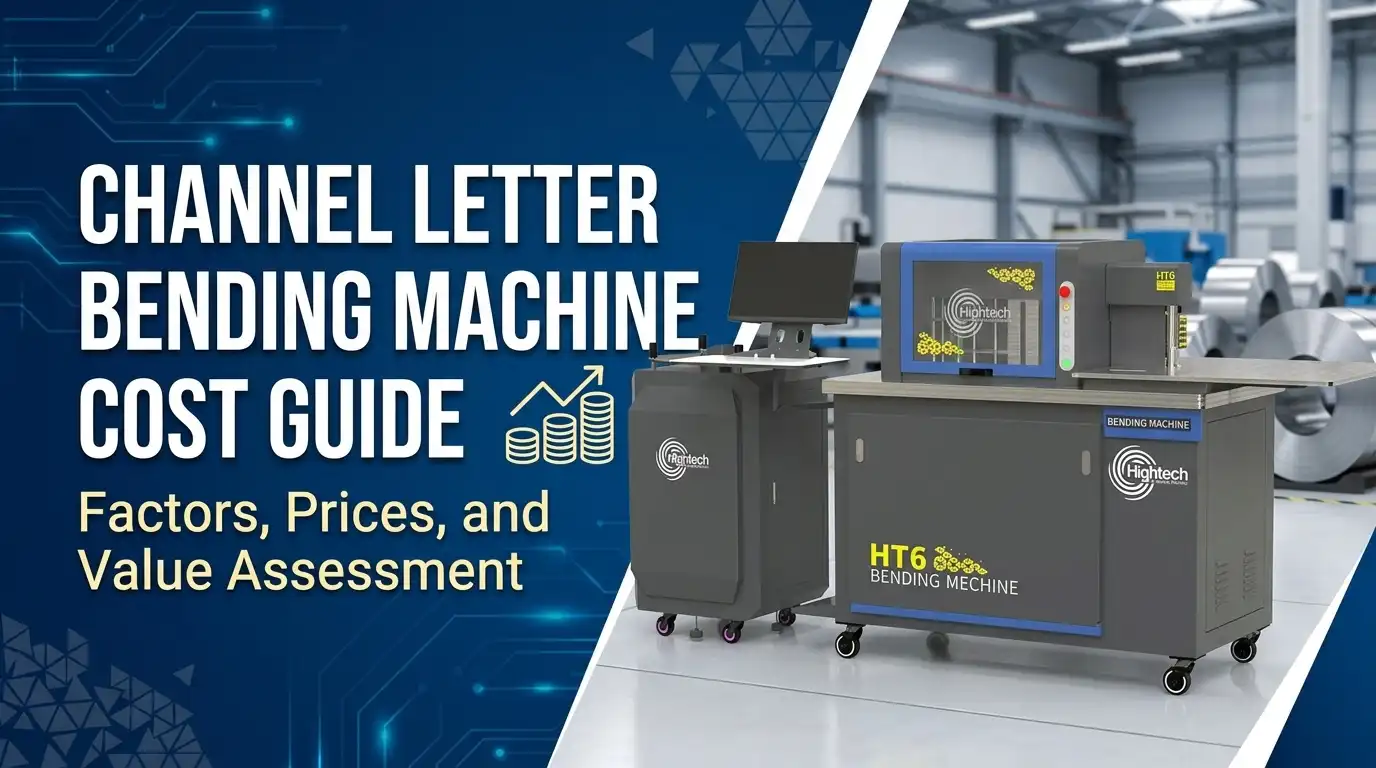
Table of Contents
If you run a sign shop, understanding the channel letter bending machine cost is one of the most important steps before investing in in-house production. The right machine can dramatically cut labor, speed up turnaround, and improve quality, but the purchase price is only part of the story. This guide breaks down what actually drives channel letter bending machine pricing, how categories compare, the hidden costs buyers often overlook, and how to evaluate long-term return on investment instead of focusing on a single number.
Quick Answer: How Much Does a Channel Letter Bending Machine Cost?
A channel letter bending machine cost depends mainly on automation level, supported materials and thickness, bending speed, precision and process functions (notching and flanging), software integration, and brand support. Entry-level machines suit low-volume shops, while automatic and industrial systems cost more but deliver higher output, better consistency, and stronger long-term ROI.
What Factors Affect the Cost of a Channel Letter Bending Machine?
Several technical and commercial factors determine where a machine falls on the pricing scale. Understanding each one helps you judge whether a higher-priced machine is justified for your shop, or whether a more affordable option will meet your needs.
Level of Automation
Automation is the single biggest driver of channel letter bender cost. Semi-automatic machines require more manual setup and operator involvement, which keeps the price lower but limits speed and consistency. Fully automatic channel letter bending machines handle bending, notching, and flanging in a coordinated process, reducing labor and increasing repeatable accuracy. The more the machine does on its own, the higher the upfront cost, but the greater the labor savings over time.
Supported Materials and Thickness Range
Machines that handle only thin aluminum coil are generally less expensive than those engineered to bend both aluminum and stainless steel across a wider thickness range. Stainless steel is harder to form and demands more robust mechanics and motors, which raises the price. If your shop produces premium or large-format letters, a machine with broader material capability protects you from outgrowing your equipment.
Bending Speed and Production Capacity
Higher throughput costs more. A machine built for continuous, high-volume output uses stronger components, faster feed systems, and more durable construction than a low-volume unit. For shops with steady order flow, the added cost is offset by the ability to produce more letters per shift without bottlenecks.
Precision, Notching, and Flanging Functions
Integrated notching and flanging functions add to the cost but remove manual steps that are slow and error-prone. Precise, automated forming reduces material waste, lowers rework, and produces cleaner letters that need less finishing. These functions are a major reason automatic machines deliver better long-term value despite the higher initial price.
Software Compatibility and CAD Integration
Software is an often-underestimated cost factor. Machines with full CAD integration let you import letter designs directly, nest jobs efficiently, and minimize setup time. Stronger software shortens the path from design to finished letter, but advanced control systems and licensing contribute to a higher purchase price.
Brand Reputation and Technical Support
Established manufacturers typically price their machines higher because the cost reflects build quality, reliable spare-parts availability, training, and responsive technical support. A lower-priced machine with poor support can cost far more in downtime and lost production, so support quality should be weighed as part of the true cost.
Channel Letter Bending Machine Price Ranges by Machine Type
Rather than fixating on exact figures, it helps to budget by machine tier. Each tier serves a different production profile, and the right choice depends on your current volume and where you expect your business to be in a few years.
Machine Type | Typical Investment Tier | Best Suited For |
Entry-Level / Semi-Automatic | Lowest upfront cost; the most affordable entry point into in-house bending | Low-volume shops testing in-house production |
Mid-Range / Automatic | Mid-tier investment balancing speed, precision, and price | Established shops with steady, growing demand |
Industrial / High-Volume | Highest investment; built for throughput and uptime | High-volume manufacturers and production lines |
As a practical example, a small shop producing a handful of sign jobs each month may find an entry-level machine perfectly adequate, while a shop fielding consistent weekly orders will recover the cost of an automatic machine far faster through labor savings and increased capacity. A high-volume manufacturer building a dedicated channel letter production line will see the strongest case for an industrial system.
Hidden Costs Buyers Often Overlook
The purchase price rarely reflects the full cost of ownership. Smart buyers budget for the surrounding expenses that affect total cost of ownership (TCO) and long-term profitability.
Installation and Training
Getting a machine running and your operators proficient takes time and money. Proper installation, calibration, and hands-on training ensure you reach full productivity quickly instead of losing weeks to trial and error. Underbudgeting here delays your return on investment.
Maintenance and Replacement Parts
Every machine needs routine maintenance and occasional replacement parts. Factoring in consumables, wear components, and scheduled servicing prevents surprises and keeps the machine running at peak performance. Reliable parts availability is also why brand and support matter.
Software Licensing and Updates
Some systems carry ongoing software licensing or update fees. These keep your design and control software current, but they are a recurring cost that should be included in your budgeting rather than treated as a one-time expense.
Shipping, Import Duties, and Logistics
For US buyers sourcing equipment, shipping, import duties, and logistics can add meaningfully to the landed cost. Crating, freight, and handling for heavy machinery should be confirmed up front so the quoted price reflects what you will actually pay to get the machine onto your shop floor.
read more: Automatic Channel Letter Machine
How to Choose the Right Channel Letter Bending Machine for Your Budget
Choosing the right machine is about matching capability to need, both today and as you grow. Start by assessing your production volume, the materials you work with most, and your expected growth over the next few years. A machine that is too limited forces an early upgrade, while an oversized industrial system ties up capital you may not recover quickly.
- Estimate your realistic monthly volume and the materials you produce most often.
- Prioritize automation features that remove your slowest manual steps, such as notching and flanging.
- Factor in total cost of ownership, not just the purchase price, including training, maintenance, and software.
- Choose a scalable solution if you expect demand to grow, so the machine supports rather than limits your expansion.
- Weigh support, parts availability, and warranty as part of the long-term cost.
Calculating ROI is straightforward in principle: compare the labor hours and outsourcing costs the machine eliminates against its total cost of ownership. Shops with steady volume often find that an automatic machine pays for itself through labor savings and the ability to take on more work in-house, while reducing reliance on outside fabricators.
read more: high performance sheet metal bending
Why Sign Shops Choose HT Industry Channel Letter Bending Machines
HT Industry brings deep experience in channel letter manufacturing solutions, helping sign shops move production in-house with confidence. Rather than selling a single machine, the focus is on matching the right equipment to a shop’s production goals, supported by guidance on workflow, training, and long-term operation. For growing businesses, that means choosing equipment that scales with demand and integrates into an efficient, repeatable production process. You can explore options and learn more through these resources: Channel Letter Bending Machine product page
Find the Right Machine for Your Application
Frequently Asked Questions
How much should I budget for a channel letter bending machine?
Budget by category rather than a single figure. Entry-level semi-automatic machines require the smallest investment, mid-range automatic machines cost more, and industrial systems are the largest investment. Always include installation, training, maintenance, and software in your budget, not just the purchase price.
What factors have the biggest impact on channel letter bending machine cost?
Automation level is the biggest driver, followed by supported materials and thickness, production speed, integrated notching and flanging, software capability, and the manufacturer’s support and reputation.
Is an automatic channel letter bending machine worth the investment for a small sign shop?
It can be, if the shop has steady demand. Automatic machines reduce labor and increase output, so even smaller shops with consistent orders often recover the cost through savings and added capacity. Shops with very low volume may start with a semi-automatic machine.
How long does it take to see a return on investment (ROI)?
ROI depends on volume. The more letters you produce, the faster the machine pays back through reduced labor and less outsourcing. Shops with regular order flow typically reach payback sooner than those with occasional jobs.
What size sign shop benefits most from automation?
Growing shops with steady, repeatable demand benefit most. They have enough volume to keep an automatic machine busy and to capture meaningful labor savings, while still needing the scalability to handle future growth.
How do I choose the right channel letter bending machine for future business growth?
Choose a scalable solution that exceeds your current needs slightly, so it supports rising demand without forcing an early upgrade. Prioritize material flexibility, automation, and strong software so the machine remains capable as your business expands.
How much labor can a channel letter bending machine save?
Automated bending, notching, and flanging replace slow manual steps and reduce rework, cutting the labor required per letter significantly. This frees skilled staff for higher-value work and increases overall production efficiency.
Sources
Latest contents


Prefer a callback? Share your details and requirements below.
Your details will only be used to respond to this request.