
Reducing Sheet Waste in Sign Production: Nesting and Remnants
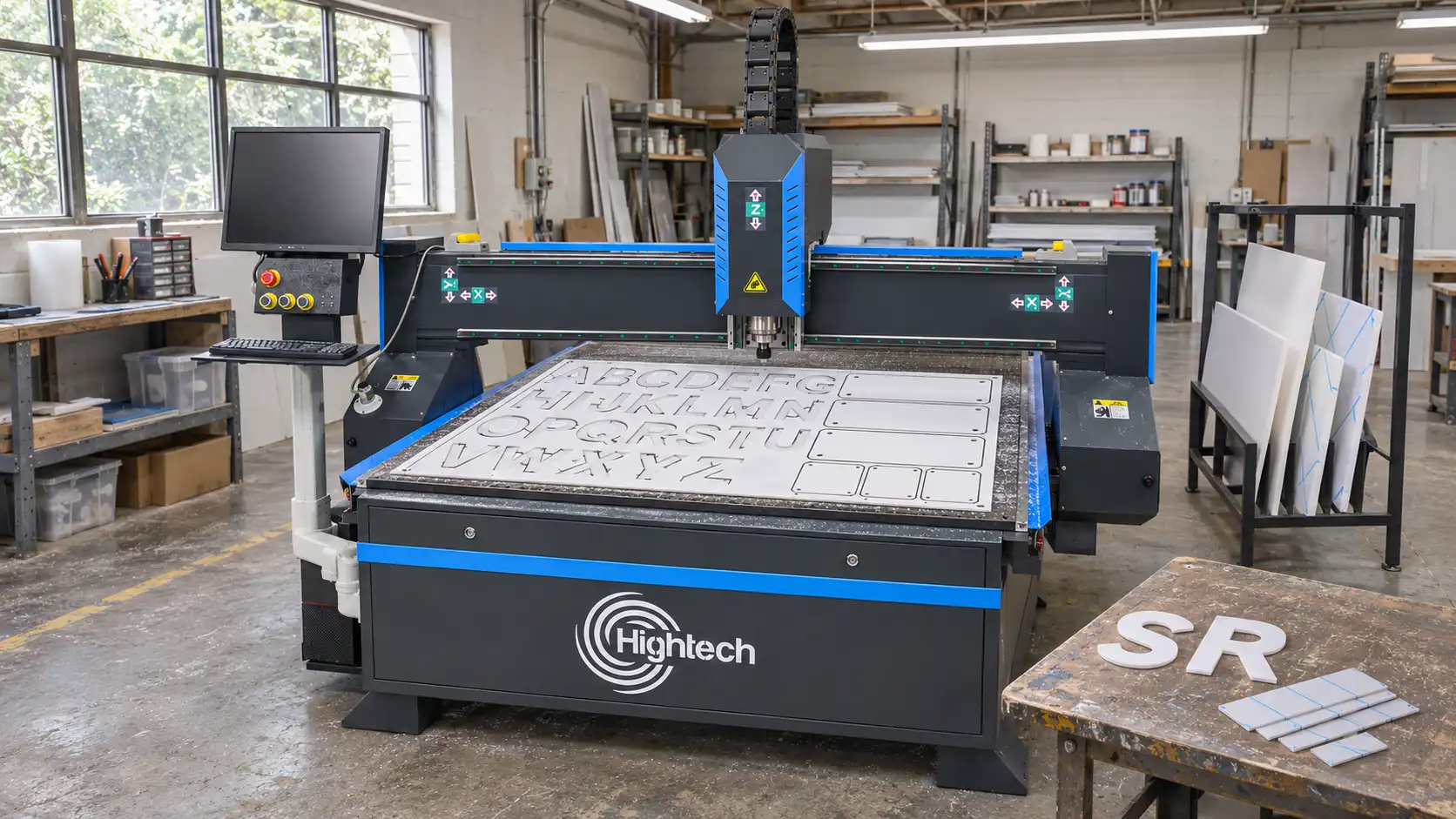
Table of Contents
Quick answer
Start by measuring the sheet area that becomes accepted parts, the area retained as usable remnants, and the area lost as scrap or rejects. Validate artwork and stock before cutting, nest around real kerf and workholding constraints, label useful offcuts, and inspect the first part before releasing a full batch. Judge success by material cost per accepted sign—not by how tightly shapes fit on a screen.
Sheet material is often one of the most visible inputs in sign manufacturing. Yet the biggest losses are not always the empty spaces between letters. A scratched acrylic face, a misregistered aluminium composite panel (ACP), or a stainless-steel letter cut from the wrong finish may consume more material than a slightly wider nesting gap. Effective sign manufacturing waste reduction therefore follows the entire job, from drawing approval to final inspection.
Where does sheet waste arise in sign manufacturing?
For rigid-sheet work, trace material through six checkpoints: approved drawing → stock selection → nesting → cutting → finishing or bending → assembly and inspection. Assign losses to four operational buckets so each one has an owner and a corrective action:
- Layout loss: sheet edges, trim allowances, internal cutouts and the remaining skeleton that cannot be used again.
- Stranded remnants: offcuts that could support another order but are discarded, misplaced or stored without identifying information.
- Rejected parts and recuts: wrong dimensions, poor edge quality, heat distortion, surface scratches or assembly mismatches that require replacement material.
- Handling and stock errors: damage in storage, using the wrong thickness or finish, or cutting an obsolete drawing revision.
Scrap, reusable remnants and rework are not the same
Scrap is material with no approved future use under the shop’s current requirements. A remnant is a retained, identifiable piece that passes the reuse rules; it is not a saving until a later job actually uses it. Rework means correcting an existing component—for example, refinishing an edge—while a recut replaces it with a new piece. Log a rejected component once as a reject, plus the additional sheet consumed for its replacement; never count the same piece again as both reusable remnant and scrap.
How can nesting reduce waste without creating more rejects?
Effective nesting balances material savings with reliable cutting and part quality. Compare layouts within the same production constraints, and consider whether the remaining offcuts will be useful for future jobs.
Compare true-shape and mixed-size nests with the original layout
Use the approved bill of materials (BOM) for a specific batch—not a hand-picked collection of ideal shapes. Compare the existing nest against a revised layout that fits smaller letters, brackets and larger panels together only when material, thickness, colour, protective face and finish match. True-shape nesting may reduce unused gaps compared with bounding-box placement, but tighter packing is useful only when the production rules remain valid.
Record sheet count, accepted quantity, cutting distance, estimated machine time, remnant shape and practical reject risks for each option. Keep the source drawing revision, sheet size and part orientation identical. When batching pieces from separate orders, retain part IDs so the finishing and assembly teams can identify every component. Advanced CAD/CAM systems may help with multi-order nesting and remnant geometry, but check the installed software and postprocessor rather than assuming compatibility with any particular Hightech machine.
Protect kerf, grain, hold-down and cutting sequence
Before approving a dense layout, confirm these process limits:
- Kerf or cutter diameter, lead-in and lead-out paths, tool clearance and the required finished dimensions.
- Material grain, brushed direction, protective-film side, print registration and ACP groove or fold direction.
- Vacuum coverage, clamp keep-outs, bridges or tabs where approved, and enough support to prevent part movement or tip-up.
- Laser heat and cut sequence, corner quality, edge finishing and any downstream bending or assembly tolerance.
For laser work, measure the actual kerf for the selected material and machine settings. Hightech’s guide to measuring laser cutting kerf provides further context. The separate guide to designing parts for laser cutting covers detailed file-preparation decisions. For metal, review thermal movement and cut order as described in Hightech’s material-warping guide.
Reserve a useful remnant instead of a jagged last strip
The densest layout is not automatically the most valuable. Imagine two approved nests with the same parts and no rejects: one leaves a narrow, irregular skeleton; the other deliberately keeps a rectangular, flat offcut large enough for a recurring sign bracket or small faceplate. Even if the second layout places slightly less accepted-part area on the first sheet, it may lower future purchases if the retained piece is used. Make this decision from verified follow-on demand, handling time and storage space—not from an assumed credit on day one.
How can sheet-metal remnants be reused in sign production?
Reusing remnants starts with knowing what each offcut is, where it is stored and which jobs it can support. A simple identification and inspection process helps turn usable leftovers into production stock.
Give each retained piece a remnant ID and eligibility rule
Set a minimum practical size based on actual repeat orders and available handling equipment. Record each retained metal offcut in a simple rack log or CAM remnant library:
- Unique ID, source job and date; alloy or steel grade, thickness and surface finish.
- Bounding dimensions or CAD outline; flatness, orientation, grain and protected face.
- Visible defects, contamination or corrosion status; rack/bin location and approved uses.
A suitable stainless-steel remnant might later become a smaller letter face, backplate or fixing bracket; another could be used for a test coupon. Neither choice should be automatic. A part for a customer-visible brushed face has different cosmetic requirements from a hidden support bracket. Use material traceability and job specifications to decide whether each remnant qualifies.
Reuse, recycle or reject: a practical decision
- Inspect: is the material identifiable, clean, flat and undamaged enough for a future approved use? If not, segregate it for the appropriate waste stream.
- Match: is there a real upcoming order with compatible grade, thickness, face, grain and dimensions? Reserve the remnant against that job.
- Economize: would reusing it cost less than issuing new stock after cutting setup, handling and traceability effort? If yes, record consumption and release its realized credit.
This is how to reuse sheet metal remnants in sign production without compromising appearance or safety. Never mix unidentified grades into structural, specified or cosmetic work simply to improve a recycling metric.
What changes for acrylic, ACP/PVC, MDF and sheet metal?
How to improve material utilization in sign manufacturing depends on the substrate. Cutting methods, usable faces and defect risks differ; a single universal spacing rule is not reliable.
Substrate | Relevant process / Hightech fit | Waste and QA controls |
Steel, stainless steel, suitable aluminium sheet | Validated fiber laser metal cutting; Hightech fiber laser range | Account for heat, support, tip-up, cut order, edge finish, grade and grain. |
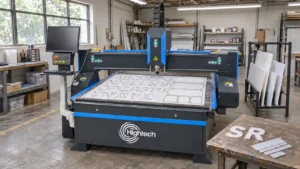
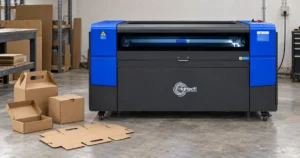
Acrylic (PMMA) | Compatible CO₂ laser or CNC router; Hightech CO₂ and CNC ranges | Protect visible face; check optical edge quality, chipping, film and part orientation. |
ACP / ACM | CNC routing and appropriate V-grooving | Confirm skin/core composition; align printed face, groove depth and fold direction. |
PVC foam board | CNC or other approved mechanical cutting | Plan vacuum/fixture support, cutter selection, dust extraction; never laser cut PVC. |
MDF, plywood or wood | CNC routing; CO₂ only when verified safe for the specific board | Account for grain, warpage, chipping and suitable dust or fume extraction. |
Do not laser-cut PVC or PVC-based vinyl. Laser processing can release hazardous and corrosive decomposition products. For unfamiliar plastics, protective films and composite panels, confirm the material composition and compatibility with the selected process before cutting. Do not assume an unidentified ACP core or coating is laser safe.
What does a practical 30-day waste-reduction trial look like?
Choose one or two high-volume substrate families and a comparable set of recent orders. Use the same acceptance criteria before and after each change; do not mix metal, acrylic and composite sheets into one unexplained headline number.
When | Action | Evidence to keep |
Week 1 | Audit 10–20 comparable recent sheet jobs. | Sheet issued, accepted area/units, retained remnant, rejects, recut reasons and cost. |
Week 2 | Add drawing-release checks, stock verification and labelled remnant storage. | Revision log, preflight checklist, material labels and baseline nests. |
Week 3 | Run controlled nesting and cut-order comparisons. | Same BOM/specification; sheet count, cut time, first-article result and offcut geometry. |
Week 4 | Compare outcomes, decide what to standardize and train the team. | Yield, remnant actually reused, rejection rate and cost per accepted sign. |
A minimum daily worksheet
For each sheet job, record: date and job ID; material/finish/thickness; nominal and usable sheet sizes; accepted quantity and net accepted area; retained remnant ID and area; rejected part quantity and cause; additional sheet issued for recuts; cutting or finishing cost; and any later remnant consumption. Require an owner to review the top two recurring loss causes every week.
After 30 days, keep only changes that preserve quality and improve accepted production economics. The best result may be a clearer cut-file approval, a dependable rack for offcuts, more repeatable vacuum holding or a different stock sheet—not necessarily a machine replacement.
Frequently asked questions
How do you reduce sheet waste in sign manufacturing without buying new equipment?
Start with approved CAD files, consistent material labelling and a first-article inspection. Batch compatible parts on the same sheet, verify kerf or tool diameter, and stop cutting superseded revisions. Store eligible remnants by size, grade and finish, then search that inventory before issuing a new sheet. These low-cost controls address layout losses, stock mistakes and recuts without assuming additional machinery.
What is a good material utilization rate for acrylic or metal signs?
There is no defensible universal target. Intricate letters, finished-face direction, clamp margins, thickness, batch size and remnant value all change the achievable yield. Establish a baseline for comparable jobs, track accepted-part utilization and separate retained remnants from actual recovered material. A small increase in nesting density is not worthwhile if rejection, finishing time or handling costs rise.
How do you reuse sheet-metal remnants without compromising appearance or traceability?
Identify the grade, thickness, finish, source job and dimensions on a physical label or digital record. Inspect flatness, corrosion, scratches and protective-film condition before assigning a new use. Match each piece to the new drawing’s engineering and cosmetic requirements. Record the remnant as consumed only when it is used in an accepted job, not when it is placed in storage.
Can tighter nesting increase scrap or cutting problems?
Yes. Insufficient clearance can affect edge quality, lead-in or lead-out paths, vacuum holding, heat distribution and part removal. Small pieces can move or tip, causing collisions or rejects. Grain direction and print registration also restrict rotation. Compare an alternative nest against the same approved BOM and process limits, then judge the real accepted output, rather than the layout’s displayed fill percentage.
Which is better for reducing waste: a CNC router, CO₂ laser or fiber laser?
None is universally best. CNC routing is often relevant to acrylic, ACP, PVC board and wood; CO₂ laser cutting can suit confirmed compatible acrylic and selected wood products; and fiber laser cutting is designed for suitable metals. The right choice depends on material chemistry, sheet size, cut edge, workholding and production mix. Validate machine and material specifications before comparing waste outcomes.
Turn your sheet-waste audit into a production improvement plan
Bring one approved sign drawing, a representative sheet size, your material and finish specification, and a sample reject log to an equipment or process review. Hightech Industry Group can help discuss whether your workflow calls for CNC routing, CO₂ cutting or fiber laser sheet processing—and which machine specifications need confirmation. Start with the application, then select the equipment.
Explore: CNC routers for sign fabrication | Fiber laser sheet-cutting machines | CO₂ laser machines
Latest contents

Prefer a callback? Share your details and requirements below.
Your details will only be used to respond to this request.