


What Is AB Glue? Uses, Benefits & Complete Guide
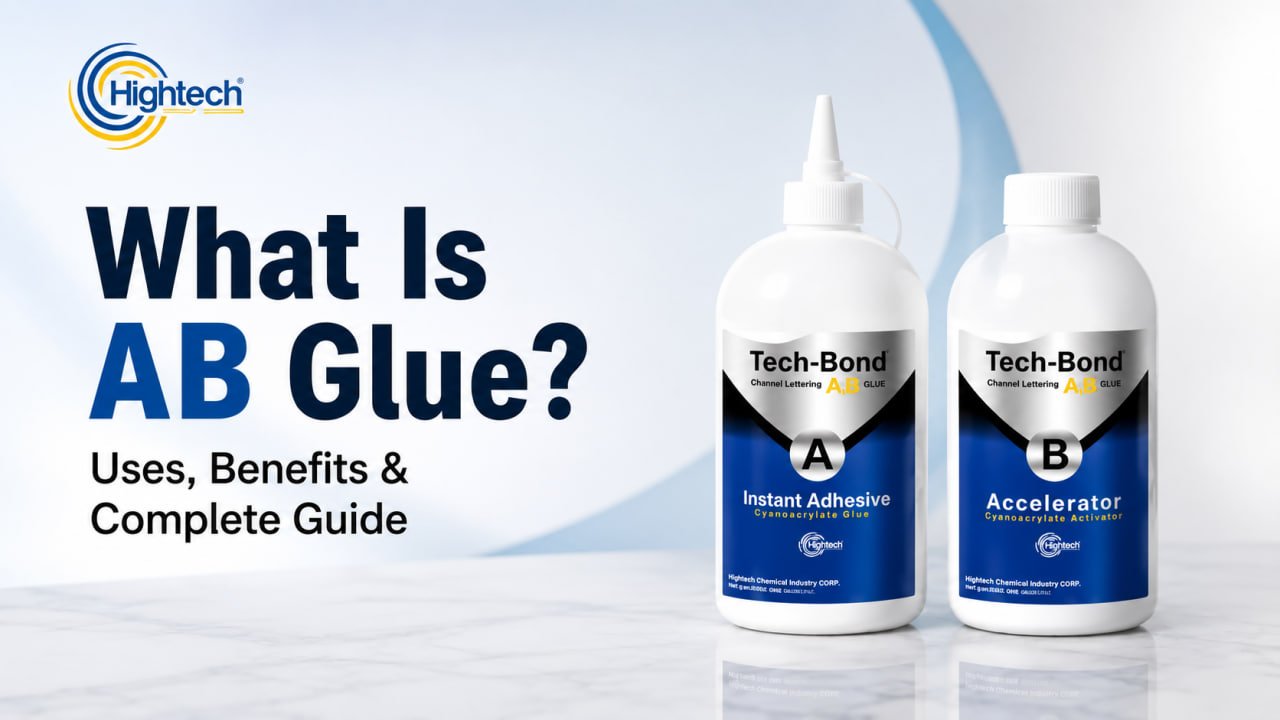
Table of Contents
AB glue is an umbrella term for an adhesive system supplied as two components, usually labeled Glue A and Glue B or Part A and Part B. Depending on the product, the components may be mixed before application, combined through a static mixing nozzle, or applied separately as an adhesive and accelerator.
That distinction matters because AB glue is not one universal chemical formula. The name may refer to epoxy, acrylic, polyurethane, silicone, or another reactive adhesive system. Before using any AB glue, identify its chemistry, application format, ratio or sequence, working time, compatible materials, and full-cure requirements from the product instructions and technical data sheet.
Quick Answer: What Is AB Glue?
AB glue is a two-component bonding system in which Glue A and Glue B work together to initiate or accelerate curing. In a conventional two-part adhesive, one component commonly contains the base resin and the other contains a matched hardener or curing agent. When combined in the specified ratio, they react and form a solid polymer bond.
Not every AB system is mixed. In adhesive-plus-accelerator products, Glue A is placed on the joint and Glue B is applied separately to activate or speed the bond. Because the labels A and B do not define a universal chemistry, ratio, or sequence, the instructions for the exact product always take priority.
Types of AB Glue: Epoxy, Acrylic, Polyurethane, Silicone and Activator Systems
The right AB glue depends on chemistry as much as the A/B format. The descriptions below are typical profiles rather than universal performance promises; individual grades can behave differently.
Type | Typical bond/process profile | Common best-fit uses | Main caution |
Epoxy | Rigid to toughened; often good gap filling with moderate or slower fixture | Metal, ceramic, composites, glass, many rigid plastics, potting | Can be brittle; correct ratio and full cure are critical. |
Acrylic / MMA | Often fast-fixturing and impact-resistant on metals or plastics | Production assembly and metal/plastic combinations | Odor, flammability, and short working time may matter. |
Polyurethane | More flexible and tolerant of movement or vibration | Dissimilar materials, wood, panels, and flexible substrates | Some grades are moisture-sensitive or have lower heat limits. |
Two-part silicone | Flexible and sealing-oriented; weather/temperature performance varies by grade | Glass, electronics, sealing, and movement joints | Usually not the first choice for rigid, highly loaded structural joints. |
Adhesive + accelerator | Very fast fixture; components may be applied separately | Channel letters, trim, and rapid positioning or assembly | Do not premix unless the exact product instructions require it. |
AB products may also be optimized for different jobs. Bonding grades prioritize adhesion and joint strength, while potting or filling grades may prioritize viscosity, cure depth, controlled exotherm, or void filling. A product that works well as a thin bond line is not automatically suitable for a deep pour or a large mixed mass.
Hightech’s AB Glue 500ml and AB Glue 200ml New Formula are currently described as adhesive-and-accelerator systems: prepare the surfaces, apply Glue A to one surface, join the parts, and then spray Accelerator B along the joint. Do not premix these products unless revised instructions supplied with the product explicitly require it.
ab glue 9911 vs 9922 difference
ERGO 9911 and 9922 are both two-part adhesives sold for metal casting repair and leak sealing. The clearest difference in current product listings is how they are positioned: 9911 as the more economical option and 9922 as the stronger-bonding option. However, the listings do not provide a comparable test result showing how much stronger 9922 is, so choose by the demands of the repair rather than the model number alone.
For a routine metal repair, 9911 may be the more economical starting point. If the joint needs greater strength, consider 9922, then check that the specific pack is suitable for the metal, operating temperature and exposure to water or oil. Prepare the surface and follow the mixing and curing instructions supplied with the product. These casting-repair epoxies should also be distinguished from Hightech’s AB glue for channel-letter assembly, which is applied as an adhesive followed by a separate accelerator spray.
How Does AB Glue Work?
AB glue works through a controlled chemical reaction between its two components. Part A usually supplies the main adhesive resin, while Part B initiates or accelerates polymerization. As curing progresses, the liquid or paste changes into a solid polymer network that adheres to both surfaces and transfers loads across the joint.
Manufacturers should distinguish between three different time periods:
- Working time or pot life: How long the adhesive remains usable after mixing or activation.
- Fixture or handling time: When the assembly has enough strength to be moved or unclamped.
- Full cure time: When the adhesive reaches its intended final properties.
A joint may feel dry or firm while still being far from fully cured. For example, one commercial 1:1 epoxy has a five-minute working life, reaches handling strength in approximately 20 minutes, and requires about 48 hours for full cure at 72°F. Another epoxy offers approximately one hour of working time and reaches full cure in about 24 hours. These examples show why “drying time” cannot be assumed from the AB glue name alone.
Temperature, bond-line thickness, mixed quantity, humidity, and component ratio can also affect curing. The product’s technical data sheet should always control the process.
What Are the Main Uses of AB Glue?
AB glue can be used in manufacturing, fabrication, repair, sealing, and product assembly. However, the appropriate use depends on the adhesive chemistry, substrate materials, joint design, and service environment.
AB Glue for Metal Bonding
Many epoxy, acrylic, and polyurethane AB adhesives can bond aluminum, steel, stainless steel, and coated metal. Typical uses include brackets, housings, frames, decorative trim, panels, enclosures, signage structures, and metal-to-plastic assemblies.
Adhesive bonding can avoid drilling and welding heat while distributing stress over a wider area. However, oil, grease, oxidation, dust, and weak coatings can block adhesion. Clean and prepare the metal as specified by the adhesive manufacturer, and test the actual alloy and coating before production.
AB Glue for Plastic Repairs
AB glue can bond plastics such as acrylic, polycarbonate, PVC, ABS, and rigid polyurethane when the correct formulation is selected.
However, no adhesive bonds every plastic equally well. Polyethylene, polypropylene, PTFE, silicone, and other low-surface-energy materials are particularly difficult to bond and may require a specialized structural acrylic, primer, or surface-treatment process.
Manufacturers should also test for stress cracking, discoloration, and chemical damage. This is especially important when working with transparent acrylic, polycarbonate covers, painted plastic parts, or components under constant mechanical stress.
AB Glue for Wood and Furniture Applications
Epoxy and polyurethane AB adhesives are used in furniture repair, cabinetry, architectural fabrication, decorative assemblies, damaged screw-hole repair, and wood-to-metal bonding.
Their gap-filling capability can be useful when a joint is not perfectly uniform. Nevertheless, adhesive should not be used to compensate for rotted material, unstable wood, or poor joint geometry.
The surface should be free from dust, wax, oil, moisture, and weak finishes. Test the adhesive first when appearance, staining, or visible squeeze-out is a concern.
AB Glue for Signage and Channel Letters
Sign shops use fast-setting adhesives to assemble channel letters, attach trim and returns, bond acrylic or polycarbonate parts, and hold small components before sealing or final installation. The product should be compatible with the face, return, trim cap, and backing materials while providing the required viscosity, positioning time, appearance, and resistance for the installation environment.
Hightech lists AB Glue 500ml and AB Glue 200ml New Formula for materials including acrylic, polycarbonate, PVC, trim cap, aluminum, wood, glass, and ceramics. Treat these as manufacturer-stated compatibility claims and verify the exact substrate, finish, load, and exposure through the current product instructions or an approved TDS.
Both current Hightech pages specify the same sequence: apply Glue A to one surface, join the parts, and spray Accelerator B along the joint. This is different from a conventional dual-cartridge epoxy that mixes A and B in a static nozzle. Follow the instructions supplied with the exact product purchased. For related fabrication materials, see the channel letter materials range.
Benefits of Using AB Glue
Potential benefit | Why it can help | Important limitation |
Broad material options | Different chemistries can join metal, plastic, glass, wood, ceramic, or composites. | Compatibility must be verified for the exact substrate and finish. |
Stress distribution | A bonded joint can spread load across a larger area than a screw or rivet. | Peel, impact, and joint geometry may still control failure. |
Clean appearance | Bonding can avoid visible fasteners, weld marks, holes, and heat distortion. | Squeeze-out, yellowing, or surface attack may affect appearance. |
Gap filling and process flexibility | Some grades fill irregular joints and can be hand-mixed, cartridge-dispensed, or automated. | Ratio errors, limited pot life, exotherm, and trapped air can cause defects. |
Fast positioning | Activator and fast-fixturing systems can shorten holding time. | Very short open time can make alignment and rework difficult. |
Environmental resistance also varies by grade. A product described as water-resistant is not automatically approved for continuous immersion, and a general heat-resistance claim does not establish a safe service-temperature range. Review the TDS/SDS and test under representative load, temperature, moisture, UV, vibration, and chemical exposure.
High Bonding Strength
Structural AB adhesives can create strong joints over a broad bonding area. The final strength depends on adhesive chemistry, substrate preparation, bond-line thickness, cure conditions, and joint geometry.
Resistance to Heat and Moisture
Many epoxy, polyurethane, acrylic, and silicone products are formulated to resist heat, moisture, chemicals, or outdoor exposure.
However, water resistance does not automatically mean that the product is suitable for continuous immersion. Environmental claims should be checked against the technical data sheet and the real operating conditions.
Long-Lasting Durability
A correctly designed adhesive joint can withstand vibration, impact, fatigue, and environmental cycling without loosening like a mechanical fastener.
Durability must still be tested under realistic loads. A hand-pull test immediately after application cannot predict long-term outdoor or industrial performance.
Ability to Bond Different Materials
AB glue can join combinations such as:
- Metal to plastic
- Glass to metal
- Acrylic to aluminum
- Composite to coated steel
- Wood to metal
- Ceramic to plastic
Flexible polyurethane or silicone systems may be preferable when the bonded materials expand and contract at different rates.
Clean Finished Appearance
Adhesive bonding can eliminate visible screw heads, rivets, weld marks, and heat distortion. Clear or non-yellowing formulations are particularly useful for signage, displays, glass, and transparent plastics.
Easier Assembly
Dual cartridges, static mixing nozzles, activator systems, and automated dispensers can reduce drilling, fastening, welding, and finishing operations.
The total production benefit should be calculated using fixture time, labor, material waste, cure time, rework, and equipment requirements rather than adhesive cost alone.
AB Glue vs Epoxy: What Is the Difference?
AB glue and epoxy are not necessarily the same.
AB glue describes a two-component adhesive system or application method. Epoxy describes one specific adhesive chemistry.
A two-part epoxy is therefore one type of AB glue, but a two-part acrylic, polyurethane, silicone, or adhesive-and-activator product may also be sold under the AB glue name.
This difference affects:
- Flexibility
- Cure speed
- Working time
- Heat resistance
- Chemical resistance
- Plastic compatibility
- Odor
- Color and transparency
- Surface-preparation requirements
Instead of asking only for “strong AB glue,” buyers should request the adhesive chemistry, technical data sheet, safety data sheet, recommended substrates, activation or mixing method, and full-cure conditions.
AB Glue vs Welding, Fasteners, and One-Part Adhesives
Joining method | Main advantages | Main limitations |
AB glue | Bonds dissimilar materials, distributes stress, clean appearance and no drilling | Requires surface preparation, fixture time and curing |
Welding | Strong metal joining and immediate permanent assembly | Heat distortion, limited material combinations and skilled labor |
Screws and rivets | Immediate mechanical strength and easier disassembly | Requires holes, creates stress concentration and remains visible |
One-part adhesive | Simple dispensing and no component mixing | May require moisture, UV light, heat or thin bond lines to cure |
Two-part adhesive | Controlled chemical cure and good gap-filling capability | Ratio, mixing and working time must be controlled |
AB glue should not automatically replace welding or mechanical fasteners in safety-critical structures. The correct joining method depends on load direction, operating temperature, inspection requirements, repairability, codes, and expected service life.
How to Use AB Glue Correctly
The following procedure applies mainly to conventional two-part adhesives. Adhesive-and-activator systems may require a different sequence.
Step 1: Prepare the Surface
Remove dust, grease, oil, corrosion, release agents, moisture, and weak paint. Use a cleaning product compatible with both the adhesive and substrate.
Abrade the surface only when recommended. After preparation, remove residue and avoid touching the bonding area with bare fingers.
Dry-fit the components before applying adhesive to confirm alignment, gap size, fixture placement, and assembly time.
Step 2: Mix Components A and B
Check the required ratio by weight or volume.
Although 1:1 ratios are common, industrial systems may use 2:1, 4:1, 10:1, or another proportion. Commercial dispensing equipment is specifically designed for multiple ratios, demonstrating why a universal AB glue ratio cannot be assumed.
For dual cartridges:
- Remove the cap.
- Purge a small amount from both outlets.
- Install the correct static mixing nozzle.
- Dispense until the mixture appears uniform.
- Apply the adhesive within its working time.
For hand mixing, use clean tools and thoroughly combine both components without introducing excessive air.
Do not mix products that use a separate activator. Follow the manufacturer’s specified order of application.
Step 3: Apply the Adhesive
Apply enough material to wet the joint surfaces and create the recommended bond-line thickness.
Too little adhesive may leave dry areas or voids. Too much may increase waste, squeeze-out, cure heat, and cleanup requirements.
Assemble the components within the stated working time and apply uniform pressure without squeezing all adhesive out of the joint.
Step 4: Allow Proper Curing Time
Secure the assembly using clamps, magnets, fixtures, or jigs until handling strength is reached.
Do not machine, package, load, or expose the joint to severe moisture or temperature before the required cure stage. For consistent production, record the application time, workshop temperature, fixture time, and release time.
How to Choose the Right AB Glue
Start with the joint—not the product name. A useful selection process should answer the following questions before price or cure speed is compared.
- Identify both substrates: record the exact material grades, coatings, paints, finishes, and whether either surface is a low-surface-energy plastic.
- Define service conditions: temperature range, moisture or immersion, UV, chemicals, vibration, peel or impact, static load, and expected service life.
- Match the production process: compare working time, fixture time, full cure, vertical or non-sag behavior, appearance, cleanup, and whether the joint may need rework.
- Choose the application format: hand-mixed containers, a dual cartridge with static mixer, automated metering, or adhesive plus separately applied accelerator.
- Check joint behavior: rigid systems may suit stable parts, while a more flexible grade may better accommodate vibration or different thermal expansion between materials.
- Review evidence: read the current TDS and SDS, then test representative substrates using the intended surface preparation, bond gap, cure conditions, and load.
A small sample test is especially important for transparent plastics, coated metals, outdoor signs, unfamiliar material combinations, and joints where failure could create a safety risk. Do not approve production use based only on a hand-pull test immediately after application.
How Long Does AB Glue Take to Dry?
AB glue may set in seconds, reach handling strength in minutes or hours, and require 24–48 hours or several days to reach full cure.
The exact time depends on:
- Adhesive chemistry
- Component ratio
- Temperature
- Mixed quantity
- Bond-line thickness
- Substrate temperature
- Accelerator use
- Required final properties
Fast adhesive-and-accelerator systems may grip almost immediately. Quick epoxies may reach handling strength in approximately 20 minutes, while slower products can provide a longer assembly window and require a day or more for full cure. Some flexible epoxies may require several days to reach their final properties.
Use the values stated by the manufacturer at the specified temperature. Do not judge a structural joint only by whether the exposed adhesive feels dry.
Common Mistakes When Using AB Glue
A common mistake is assuming that every AB glue is epoxy-based. Different formulations may require different mixing methods, curing times, and surface preparation. Using the wrong ratio can leave the adhesive sticky, brittle, or incompletely cured, while adding extra hardener does not always improve strength or speed.
Poor surface preparation is another major cause of failure. Dust, oil, moisture, oxidation, and weak coatings can prevent proper bonding. Some plastics, including polyethylene, polypropylene, PTFE, and silicone, may also need special primers or adhesives.
Avoid mixing more material than necessary, as large batches can heat up and cure too quickly. Apply the adhesive within its working time, keep fixtures in place until sufficient strength is reached, and maintain the recommended bond-line thickness. Finally, test the adhesive under actual production conditions, since real materials and environments may perform differently from laboratory data.
Find the Right Machine for Your Application
Frequently Asked Questions
What is AB glue used for?
AB glue is used for bonding, repairing, sealing, gap filling, potting, and assembling components made from metal, plastic, acrylic, glass, wood, ceramics, and composites. Suitable applications depend on the adhesive chemistry and product specifications.
What are Glue A and Glue B?
Glue A is usually the base resin or primary adhesive. Glue B may be a hardener, curing agent, catalyst, or separately applied accelerator. Some products mix A and B; others apply B after the parts are joined. Follow the instructions for the exact product rather than assuming a universal method.
Is AB glue the same as epoxy?
Not always. Two-part epoxy is a common type of AB glue, but AB systems may also use acrylic, polyurethane, silicone, or a separate adhesive and accelerator.
How strong is AB glue?
Strength varies according to formulation, substrate, surface preparation, joint design, bond-line thickness, and curing conditions. Some AB adhesives are suitable for structural bonding, while others are intended for light assembly, sealing, or rapid positioning.
How long does AB glue take to dry?
Depending on the product, AB glue may set within seconds or minutes but require 24–48 hours or several days to fully cure. Always check the stated working, fixture, and full-cure times.
Can AB glue bond metal?
Yes. Many epoxy, acrylic, and polyurethane AB adhesives can bond aluminum, steel, stainless steel, and coated metals. The surface should be properly cleaned, and compatibility must be verified for the exact metal and coating.
Can AB glue be used on plastic?
Yes, but compatibility varies. Acrylic, polycarbonate, PVC, ABS, and rigid polyurethane can often be bonded with suitable products. Polyethylene, polypropylene, PTFE, and silicone are more difficult and may require specialized adhesives or primers.
What is the correct AB glue mixing ratio?
There is no universal ratio. Products may use 1:1, 2:1, 4:1, 10:1, or another ratio. Some adhesive-and-accelerator systems are applied separately and should not be mixed. Follow the manufacturer’s instructions exactly.
Is AB glue waterproof?
Some formulations are water-resistant or suitable for outdoor exposure, but not every AB glue is waterproof or approved for continuous immersion. Check the specific product’s water, humidity, heat, and chemical-resistance ratings.
Latest contents




Prefer a callback? Share your details and requirements below.
Your details will only be used to respond to this request.