
Laser Welding Machines


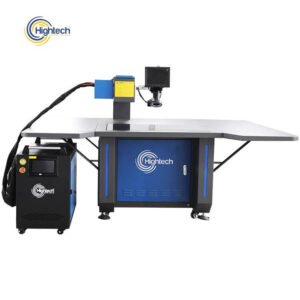

High-precision Laser Welding Machines for clean, fast, and reliable welding. Explore models and features to find the best option for your manufacturing needs.
Laser welding machines offer precise, high-speed joining of metals with minimal heat distortion. Ideal for both small workshops and large-scale industrial production, these machines deliver consistent weld quality and superior accuracy for a wide range of applications.
Applications of Laser Welding Machines
Laser welding machines are widely used in industries where precision and reliability are essential. Key applications include:
- Jewellery manufacturing: Delicate pieces with minimal distortion
- Electronics: Welding small components and circuit parts
- Automotive: Precision joining of engine and body components
- Aerospace: Lightweight parts requiring strong, accurate welds
- Medical devices: Surgical instruments and implants
- Prototyping and small-scale production: Rapid, repeatable results
How Does Laser Welding Work?
A focused laser beam melts the metal at the joint, fusing parts together without the need for filler material in many cases. This process produces strong, precise welds with minimal thermal impact on surrounding material.
What Is the Cost of a Laser Welding Machine?
laser welding machine price vary depending on power, brand, cooling system, and automation. Entry-level machines are suited for small workshops, while high-powered, fully automated systems are designed for industrial-scale operations.
What Are the Downsides of Laser Welding?
While laser welding provides high precision and efficiency, there are some downsides and limitations to consider:
- Higher initial investment compared to traditional welding methods
- Limited effectiveness on very thick materials without specialized equipment
- Requires trained operators for safe and optimal use
- Maintenance of optics and cooling systems is critical
How Thick Can a Laser Welder Weld?
The thickness a laser welder can handle depends on the machine’s laser power and configuration. Generally, thin sheet metals can be welded easily, while thicker components require higher wattage systems.