

Types of Sign Making Machines (Complete Guide + How to Choose)
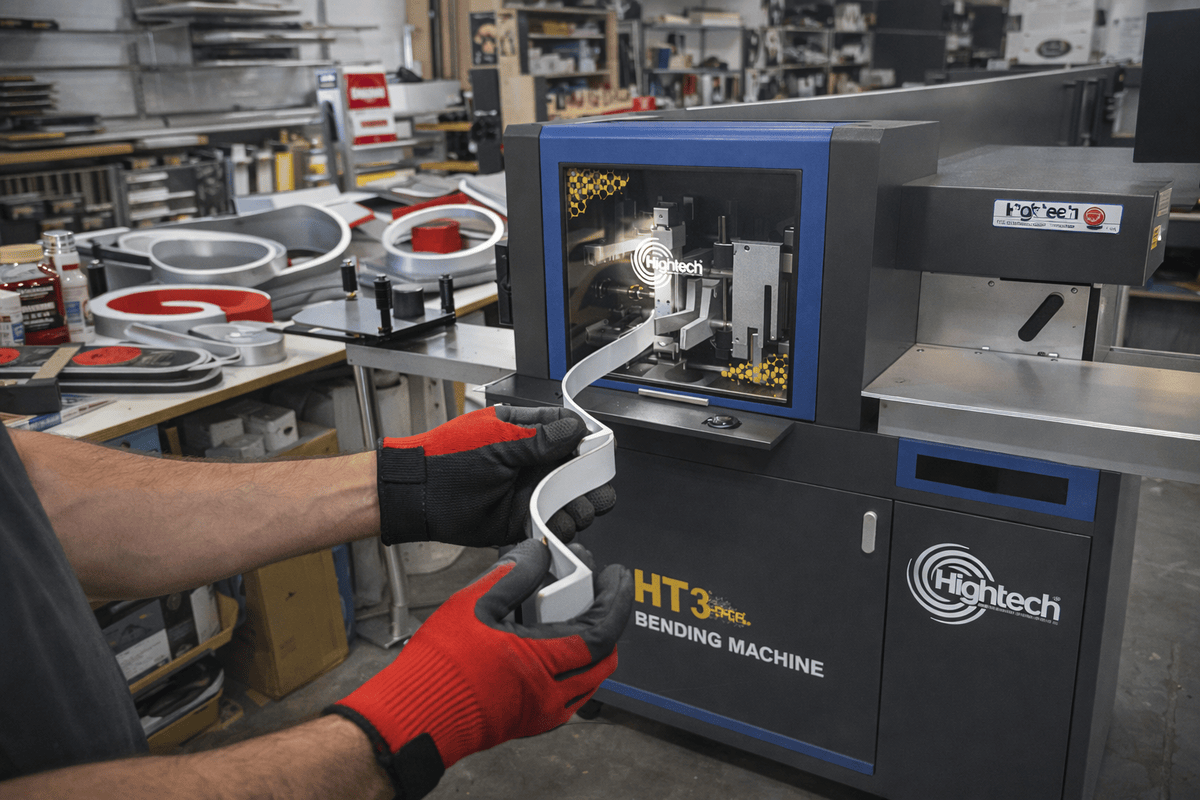
Table of Contents
There is no single sign making machine that produces every type of sign. The right choice depends on whether you need to cut, print, engrave, or fabricate—and on the materials, sign types, and production volume involved. Modern sign businesses therefore use different equipment for applications ranging from simple vinyl decals to complex 3D channel letters.
This guide explains the main categories of machines used in professional sign production, compares their applications, and helps you identify the best solution for your business needs. You will also learn how different technologies support scalable and high-quality sign manufacturing.
The terms sign making equipment, sign making machinery, sign machine, and sign maker machine are often used for this broad equipment group. In practice, professional sign manufacturing equipment includes several specialized machines rather than one universal system.
Quick Comparison Table (Best Machine by Sign Type)
Choosing the right equipment depends on the type of signs you want to produce, the materials you plan to work with, and your production scale. The comparison below gives a quick overview of which machine is best suited for each major sign category and its primary application in professional sign production.
Sign type | Best machine | Main materials | Key advantage |
Vinyl decals and stickers | Vinyl cutter / plotter | Adhesive vinyl, heat-transfer vinyl | Fast, precise cutting for lettering and graphics |
Banners and full-color signage | Wide-format printer + laminator | PVC banners, vinyl, backlit film | High-resolution printing and added durability |
Printed rigid panels | UV flatbed printer | Compatible boards, acrylic, wood | Direct printing on rigid substrates |
3D letters and channel letters | Aluminum coil, stainless steel, acrylic | Automated 3D letter production | |
Engraved or personalized signs | CNC router / CO2 laser | Acrylic, wood, PVC, MDF | Precision engraving and material versatility |
Metal letters and fabricated panels | Fiber laser cutter | Stainless steel, carbon steel, aluminum, brass | Precise and repeatable sheet-metal cutting |
Below is a closer look at the best equipment for each category.
Best for Vinyl & Stickers
Vinyl cutters (plotters) are essential entry-level tools in many sign shops. They cut adhesive vinyl into precise shapes, text, and graphics without printing. These machines are widely used for vehicle decals, window lettering, wall graphics, and promotional stickers.
They are popular because they require relatively low investment, offer fast production speed, and support a wide range of vinyl materials. For small businesses or home-based operations, vinyl cutting provides a simple way to begin production and build a client base.
Best for Banners & Full-Color Signs
Wide-format printers produce full-colour graphics for banners, posters, vehicle wraps, and advertising signage. These machines print directly onto large materials such as PVC, vinyl, and backlit film.
To improve durability and weather resistance, printed graphics are typically finished using laminators. This combination allows sign businesses to deliver vibrant, high-resolution visuals suitable for outdoor use and commercial advertising.
Best for 3D Letters & Channel Letters
Channel letter bending machines are specialised equipment designed for producing three-dimensional letters used in storefront and illuminated signage. They automatically shape aluminium or metal coils into letter forms with high accuracy.
This technology enables efficient production of professional signage with consistent quality. When combined with acrylic faces and LED lighting, channel letters create premium commercial signs widely used by retail brands and businesses. Learn how to Choose the Right Channel Letter Bending Machine.
Best for Engraved or Personalized Signs
CNC routers and CO₂ laser machines are ideal for engraving, cutting, and shaping rigid materials such as acrylic, wood, PVC, and MDF. These machines produce detailed graphics, dimensional lettering, and personalised signage.
CNC routers are commonly used for cutting and carving thicker materials, while CO₂ lasers provide precise engraving and clean cuts on acrylic or wood. Together, they support high-value customised signage and decorative products.
Best for Metal Signs and Fabricated Panels
Producing metal letters, decorative panels, architectural signs, or structural sign components requires equipment specifically designed for metal processing. The most suitable metal sign cutting machine depends on the metal type, thickness, required edge quality, and production volume.
Fiber laser cutters are commonly used for precision cutting of stainless steel, carbon steel, aluminum, brass, and other sheet metals. They produce narrow kerfs, detailed shapes, and repeatable parts, making them suitable for metal letters, sign cabinets, mounting plates, and decorative panels.
Plasma cutters may offer a more economical option for thicker carbon steel when extremely fine detail is not required. CNC routers can also process aluminum composite material and selected thin aluminum sheets when equipped with the correct spindle, cutting tools, and workholding system.
Before selecting a machine to cut metal signs, buyers should compare cutting capacity, working area, software compatibility, extraction requirements, maintenance, and the need for secondary finishing.
Best Wood Sign Making Equipment
The right wood sign making equipment depends on whether the business focuses on cutting, carving, engraving, or painted dimensional signs.
CNC routers are suitable for deeper carving, raised lettering, shaped panels, and three-dimensional designs in wood, plywood, and MDF. CO₂ laser machines provide finer engraving and clean cutting for thinner wooden sheets, personalized plaques, decorative signs, and detailed logos.
Many professional workshops use both technologies. A CNC router handles thicker materials and dimensional carving, while a CO₂ laser completes detailed engraving and smaller decorative work. Businesses should also consider dust extraction, workholding, tool costs, material thickness, and the amount of finishing required after machining.
Main Categories of Sign Making Machines
The signage industry uses several core equipment groups, each designed for a specific stage of production such as printing, cutting, engraving, or fabrication. Understanding these categories helps businesses choose the right equipment based on production scale, materials, and sign type.
Below is a practical overview of the main types of sign making machines list used in professional sign shops.
1. Vinyl Cutting Machines (Plotters)
Vinyl cutting machines are typically the first step into sign production. These computer-controlled devices cut adhesive vinyl into letters, shapes, and graphics without printing. They are widely used in small sign shops because they are affordable, easy to operate, and suitable for fast production.
Common applications include window graphics, vehicle branding, promotional stickers, and interior wall signage. For businesses focused on decals and lettering, vinyl cutters provide a low-cost entry point with consistent precision and high production speed.
2. Wide-Format Sign Printers
Wide-format printers produce full-colour graphics for commercial signage and advertising materials. They print directly on large substrates such as vinyl rolls, banner materials, and backlit film using technologies like eco-solvent, UV, or latex printing.
Businesses typically use these machines for:
- Event and promotional banners
- Retail advertising displays
- Vehicle wraps and branding graphics
- Outdoor marketing signage
This category plays a central role among types of machines used in sign making, especially for visual advertising production.
3. Laminators and Finishing Equipment
Finishing equipment focuses on durability and presentation rather than production. Laminators apply protective layers that extend the lifespan of printed signs by protecting them from sunlight, moisture, and scratches.
Other complementary finishing tools include trimming systems, mounting tools, and application equipment. While these machines do not create signage directly, they are essential for delivering professional-quality results and long-lasting products.
4. Digital Cutting Systems
Digital cutting systems represent a broader technology group that includes multiple automated cutting solutions used in modern sign fabrication. These machines shape both rigid and flexible materials with high precision and repeatability.
Main subcategories include:
- CNC routers for rigid materials
- Laser cutters for precision cutting and engraving
- Flatbed cutters for sheet processing
- Advanced vinyl cutting systems
These technologies are essential for industrial-level accuracy and scalable production.
5. CNC Routers for Sign Making
CNC routers are designed for cutting and carving rigid materials such as PVC, acrylic, ACM panels, MDF, and wood. They are widely used to produce structural and dimensional signage.
Unlike vinyl cutting, CNC routing enables deeper material processing and three-dimensional results. Compact machines such as Desktop CNC Router 6040 or 6090 support production of raised lettering, engraved panels, architectural signage, and custom decorative signs. Their strength lies in precision, material versatility, and consistent repeatability. Buyers should also account for tooling, secure workholding, and dust or chip extraction.
6. Laser Machines for Sign Making
Laser machines provide precise cutting and engraving for a wide range of sign materials. However, the correct laser technology depends on the substrate.
CO₂ laser machines are mainly used for acrylic, wood, MDF, leather, fabric, paper, and other compatible non-metal materials. They are suitable for acrylic letters, engraved wooden signs, light panels, decorative products, and personalized signage.
Fiber laser systems are designed primarily for metals such as stainless steel, carbon steel, aluminum, brass, and copper. A fiber laser can serve as a high-precision metal cutting machine for signs, producing metal letters, decorative panels, sign frames, mounting components, and architectural signage.
Sign businesses should not select a laser based only on power. Material compatibility, sheet size, cutting thickness, engraving requirements, ventilation, and expected production volume must also be evaluated. Operators must never assume that every plastic or composite is laser-safe; follow the machine and material manufacturers’ guidance and local safety requirements.
CO2 laser cutting systems such as Desktop CO2 Laser 7050 are commonly used for non-metal materials, delivering clean edges, detailed output, and efficient small-batch production. Fiber laser cutting machines are the more appropriate category for dedicated sheet-metal work.
7. Channel Letter Making Machines
Channel letter machines are specialised equipment for producing three-dimensional illuminated letters, commonly used on commercial storefronts. HT1 Channel Letter Bending Machine, combined with the GSB-01 Sign Builder Kit, provides a complete workflow: bending aluminium channels, assembling acrylic faces, installing LED modules, and final finishing.
This setup is ideal for businesses targeting high-value B2B clients such as contractors, signage companies, and commercial storefronts. Using HT1 + GSB-01 reduces fabrication time, ensures precision, and enables small or home-based shops to produce professional-grade channel letters efficiently.
How to Choose the Right Sign Making Machine
Choosing the right sign making machine depends on your business focus, the materials you work with, and the types of signs you want to produce. Not every machine is necessary at the start, but understanding capabilities and limitations ensures you invest wisely.
Consider the following when selecting equipment:
- Material compatibility: Vinyl, acrylic, MDF, PVC, aluminium, or wood — choose a machine that handles your primary substrates.
- Production volume: High-volume shops benefit from automated CNC or laser systems, while low-volume operations may start with desktop solutions.
- Sign type focus: Decide if your business will prioritise channel letters, 3D letters, banners, decals, or engraved/personalised signs.
- Space and setup: Desktop CNC routers (6040/6090) or CO₂ lasers (7050) are compact enough for smaller workshops, while channel letter benders require a dedicated space.
- Budget vs ROI: Balance upfront cost with expected return; investing in versatile machines can save money over time.
By evaluating these factors, you ensure the selected machines align with both your workflow and long-term growth plans.
Which Sign Making Machine Is Right for Your Business?
Selecting the right machine depends on the types of signs you plan to produce, your target clients, and your workshop setup. Using the correct equipment streamlines production, improves quality, and increases profitability.
1. Vinyl Signs and Stickers
For window graphics, vehicle decals, and wall lettering, a vinyl cutter or plotter is the most practical. These machines provide precise cuts on adhesive vinyl and are ideal for small-scale or home-based shops. Complementary finishing tools, such as laminators and weeding kits, enhance durability and presentation.
2. Rigid and 3D Signs
Businesses producing rigid panels, 3D letters, or dimensional signage should consider Desktop CNC Routers 6040/6090. These machines handle materials like PVC, ACM, MDF, and wood with high accuracy. CNC routers enable both cutting and engraving, making them versatile for custom architectural signage, decorative panels, and raised lettering.
3. Engraved or Acrylic/Personalized Signs
For fine detailing, personalized gifts, or acrylic and wood signage, the Desktop CO2 Laser 7050 is ideal. This machine provides precise cuts and engravings, producing clean edges and detailed graphics. It is suitable for small workshops, hobbyist operations, or premium sign production with intricate designs, provided the chosen material is verified as compatible.
4. Channel Letter and Illuminated Signage
Producing commercial storefront letters requires specialized equipment. The HT1 Channel Letter Bending Machine, paired with the GSB-01 Sign Builder Kit, allows fabrication of aluminum channel letters, installation of acrylic faces, and integration of LED modules. This solution is best for businesses targeting high-value B2B clients such as signage contractors and retailers.
5. Complementary Equipment
No matter your primary machine, additional tools improve workflow and product quality:
- Laminators and protective coatings
- Cutting mats and hand tools for assembly
- Dust extraction and ventilation for safety
- Measuring tools for precise alignment
Choosing the right machine ensures your business can produce professional signage efficiently while minimising errors and waste. Start with one or two core machines based on your niche, and expand as demand grows.
Starter, Growth, and Industrial Sign Shop Setups
Business stage | Example core setup | Add when demand is proven |
Starter vinyl and graphics shop | Vinyl cutter, design software, application tools | Wide-format printer and laminator |
Dimensional-sign growth shop | CNC router or CO2 laser selected by primary materials | Larger working area, panel sizing, or complementary cutting equipment |
Channel-letter producer | Channel letter bender, face/back cutting, joining and assembly tools | Higher automation, welding, and material handling |
Industrial metal-sign manufacturer | Fiber laser cutter with gas, extraction, cooling, and material handling | Automated loading, larger format, and downstream finishing |
These combinations are examples rather than fixed packages. A new sign shop can begin with the process it sells consistently and outsource less frequent or highly specialized work until demand justifies bringing it in-house.
When Should You Outsource Instead of Buy?
Outsourcing is often more practical when demand is irregular, the process requires specialist infrastructure, the workshop lacks space or utilities, or the equipment would remain idle. Buying becomes more attractive when recurring outsourcing costs, lead times, and quality-control limitations begin to restrict sales.
Compare expected utilization, external production cost and turnaround, internal labor, consumables, maintenance, financing, waste, and the margin gained through faster delivery. A staged approach—outsource first, track real demand, and then buy for the most repeatable bottleneck—usually reduces investment risk.
Frequently Asked Questions
What machine is used to make signs?
The machine depends on the required operation. Vinyl cutters create lettering and decals; printers create full-color graphics; CNC routers and CO2 lasers cut or engrave compatible non-metals; fiber lasers cut sheet metal; and channel letter benders form letter returns.
What is the best sign making machine for a small business?
There is no universal best option. A vinyl cutter suits decals and lettering, a compact CNC router suits dimensional panel work, and a CO2 laser suits detailed cutting and engraving on compatible non-metals. Choose according to the first products and materials the business will sell consistently.
What equipment is needed to start a sign shop?
A basic setup includes a computer and design software, one core machine matched to the chosen niche, measuring and finishing tools, and a safe workspace. Printing, lamination, fabrication, or assembly equipment can be added according to demand. For broader planning, see how to start a sign business.
Can one machine make every type of sign?
No. Some systems combine processes, but most professional workflows use complementary equipment. A channel letter, for example, requires bending, face and back cutting, joining, lighting, sealing, and electrical testing.
Which machine is best for metal signs?
A fiber laser cutter is generally the strongest choice for precise sheet-metal letters and panels. Plasma can suit thicker carbon steel when fine detail is less important, while a suitable CNC router can process ACM and selected light non-ferrous materials.
Is a CNC router or CO2 laser better for wood and acrylic signs?
A CNC router is usually better for deeper carving, thicker profiles, and shaped panels. A CO2 laser is often better for fine engraving and detailed cutting on compatible materials and thicknesses. Test the actual substrate before deciding.
Which sign-making hardware is best for scaling from small to large-scale production?
The best setup is one that can be expanded around proven demand. A small shop may begin with a vinyl cutter, compact CNC router, or CO2 laser and outsource specialist work. As volume grows, it can add printing, lamination, larger working areas, automation, or metal fabrication equipment. Industrial production usually requires higher-duty machines, material handling, extraction, reliable technical support, and an integrated workflow rather than simply a more powerful standalone machine.
Find the Right Machine for Your Application
Latest contents


Prefer a callback? Share your details and requirements below.
Your details will only be used to respond to this request.