


YAG Laser Welding Machines
Precision YAG and Nd:YAG laser welding systems for controlled spot and short-seam welding, detailed repairs, signage, and metal fabrication, with 300W and 500W configurations.
In 100+ Countries
On-site or Remote
Ready to Ship Globally
Quick Response 24/7
Our YAG Laser Welding Machine Models
Compare 300W and 500W YAG laser welding systems across standard and MG configurations, then match the machine to your welding depth, positioning, worktable, pulse control, and production requirements.
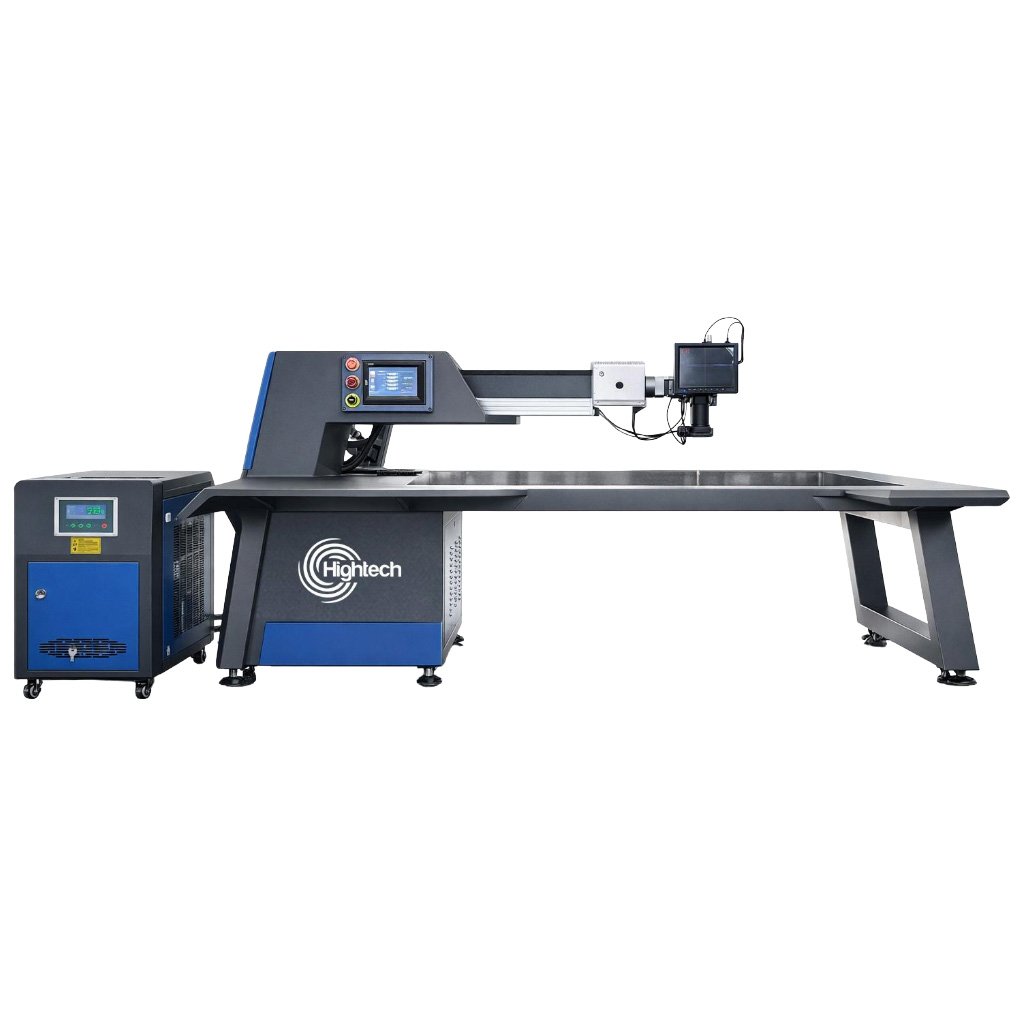
Máquina de solda a laser YAG HT-YG300W
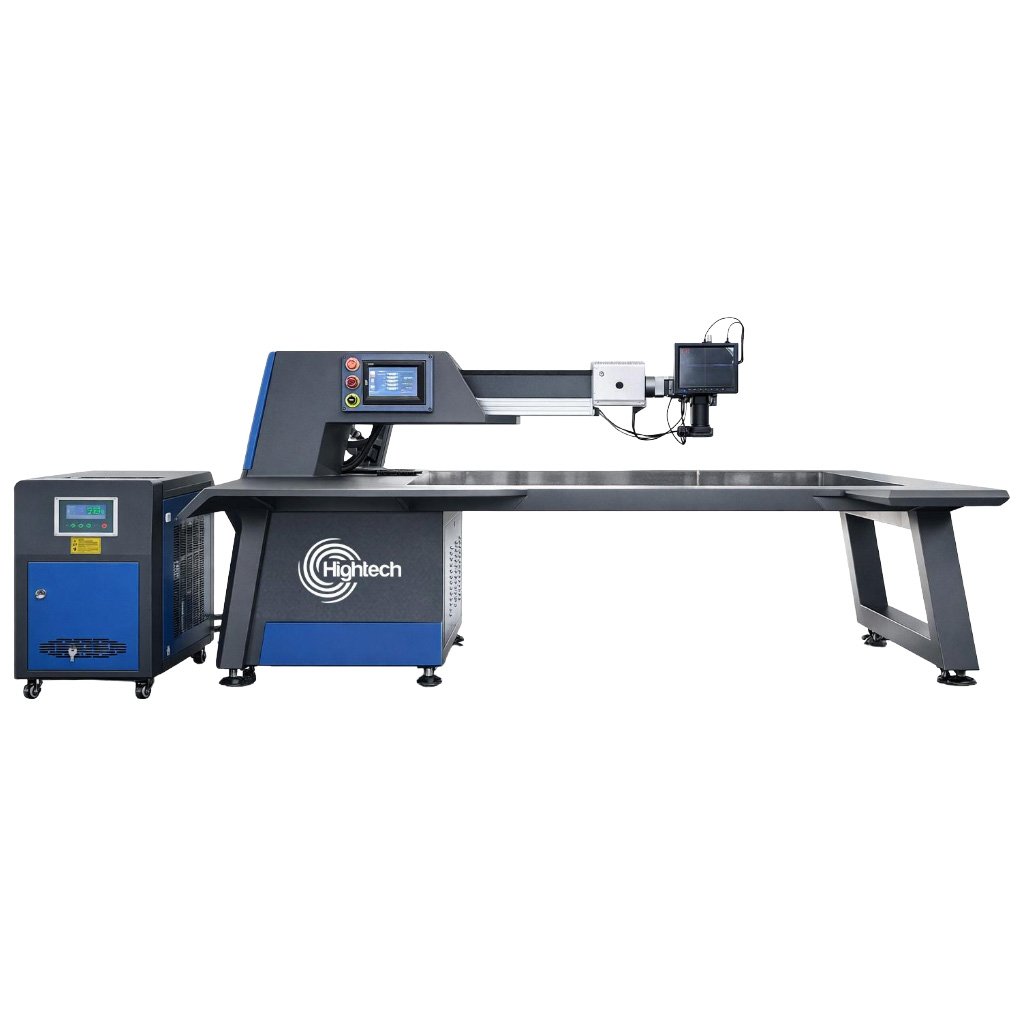
Máquina de solda a laser YAG HT-YG500W
Máquina de solda YAG-HT300W MG
Máquina de solda YAG-HT500W MG
How to Choose the Right YAG Laser Welding Machine
Choose the right YAG system by comparing power, welding depth, operating format, pulse control, positioning, worktable requirements, cooling, electrical demand, and the level of automation required for your parts.
By Power and Welding Depth
Compare the 300W and 500W classes based on the required weld depth and actual material. Published depth ranges are 0.1–2.5 mm for the 300W models and 0.1–4 mm for the 500W models.
By Operating Format
Consider whether the job requires handheld access, table-based positioning, or an MG configuration with a combined chassis, large working platform, mechanical arm, and chiller.
By Pulse Control
Compare pulse energy, pulse width, welding frequency, and adjustable spot size according to the weld geometry, heat sensitivity, and required finish.
By Worktable and Positioning
Published configurations use a 2100 × 1700 mm working table and 10× CCD positioning, with laser-head travel and optical-cable access to support different part sizes and joint locations.
By Production and Automation Needs
For repeat production, consider fixtures, rotary devices, programmable motion, multiple stations, process monitoring, and production-line integration before selecting the final configuration.
Compare YAG Laser Welding Machine Models
Compare the published power, pulse energy, welding depth, frequency, operating format, worktable, positioning, and system configuration across the Hightech YAG range.
| Compare | HT500W MG | HT300W MG | HT-YG500W | HT-YG300W |
|---|---|---|---|---|
| Best For | Higher-power MG configuration and deeper welding range | 300W MG configuration and precision welding | 500W handheld or table welding | 300W handheld or table welding |
| Published Configuration |
Combined Chassis Super Large Working Platform Mechanical Arm Chiller |
Combined Chassis Super Large Working Platform Mechanical Arm Chiller |
Handheld Welding Table Welding |
Handheld Welding Table Welding |
| Laser Power | 500W | 300W | 500W | 300W |
| Laser Wavelength | 1064 nm | 1064 nm | 1064 nm | 1064 nm |
| Max Pulse Energy | 180 J | 110 J | 110 J | 110 J |
| Welding Depth | 0.1–4 mm | 0.1–2.5 mm | 0.1–4 mm | 0.1–2.5 mm |
| Pulse Width | 0.1–20 ms | 0.1–20 ms | 0.1–20 ms | 0.1–20 ms |
| Welding Frequency | 1–60 Hz | 1–50 Hz | 1–60 Hz | 1–50 Hz |
| Adjustable Spot Size | 0.2–3.0 mm | 0.2–3.0 mm | 0.2–3.0 mm | 0.2–3.0 mm |
| Working Table | 2100 × 1700 mm | 2100 × 1700 mm | 2100 × 1700 mm | 2100 × 1700 mm |
| Sight Positioning |
10× CCD Synchronous HD camera |
10× CCD Synchronous HD camera |
10× CCD Synchronous HD camera |
10× CCD Synchronous HD camera |
| Laser Head Travel |
Vertical: ≥200 mm Horizontal: 200–800 mm |
Vertical: ≥200 mm Horizontal: 200–800 mm |
Vertical: ≥200 mm Horizontal: 200–800 mm |
Vertical: ≥200 mm Horizontal: 200–800 mm |
| Optical Cable | ≥5 m | ≥5 m | ≥5 m | ≥5 m |
| Power Consumption | ≤16 kW | ≤7.5 kW | ≤16 kW | ≤7.5 kW |
| Electrical Supply |
Single Phase AC220V ±10%, 40A, 50Hz |
Single Phase AC220V ±10%, 40A, 50Hz |
Single Phase AC220V ±10%, 40A, 50Hz |
Single Phase AC220V ±10%, 40A, 50Hz |
| Product Page | View HT500W MG | View HT300W MG | View HT-YG500W | View HT-YG300W |
Why Choose Hightech YAG Laser Welding Machines?
Controlled Precision Welding
Localized laser energy and adjustable pulse control support accurate spot placement, short seams, and detailed welding with limited heat input around the joint.
CCD Positioning and Large Worktable
Published YAG configurations use a 2100 × 1700 mm working table with 10× CCD positioning to support visual alignment and controlled part placement.
Industrial Optical and Cooling Components
The published machine configuration includes a dedicated chiller and branded optical components, with Dong Jun A-class crystal and ceramic-core components specified on current product pages.
Global Supply and Long-Term Support
Hightech lists factory-direct supply, worldwide shipping, a one-year warranty, lifetime technical support, international spare-parts delivery, and remote setup and troubleshooting assistance.
Metals and YAG Laser Welding Applications
Hightech identifies stainless steel, carbon steel, and titanium as YAG welding applications for precision fabrication, signage, localized repair, small assemblies, and controlled spot or seam welding. Other metals should be validated for the exact alloy, thickness, joint, and process requirements.
Stainless Steel
A published Hightech YAG application for precision fabrication, spot welding, short seams, repairs, and small metal assemblies.
Carbon Steel
Suitable for validated precision welding applications where controlled pulse energy and localized heat input are required.
Titanium
Listed among Hightech YAG welding applications for controlled precision work and heat-sensitive fabrication requirements.
Signage and Metal Fabrication
Supports localized welding for signage components, precision metal fabrication, and detailed assembly work.
Repairs and Small Assemblies
Useful for localized repairs, precise joins, small components, and applications where accurate spot placement matters.
Aluminum and Reflective Metals
Aluminum, copper, brass, coated metals, nickel alloys, and crack-sensitive materials require application-specific testing rather than universal compatibility assumptions.
Frequently Asked Questions
Are YAG and Nd:YAG laser welding machines the same?
YAG is commonly used as shorthand, while Nd:YAG specifies the neodymium-doped YAG crystal. When comparing machines, review the actual laser source, pulse controls, positioning system, cooling, and machine layout.
What metals can an Nd:YAG laser welding machine weld?
Hightech lists stainless steel, carbon steel, and titanium as YAG welding applications. Other metals should be tested for the specific alloy because reflectivity, conductivity, fit-up, surface condition, and cracking risk can affect results.
Can YAG systems weld stainless steel and aluminum?
Stainless steel is a published Hightech YAG application. Aluminum requires closer validation of the alloy, cleanliness, reflectivity, heat conduction, shielding, settings, and joint design.
When should a buyer choose a YAG spot welder?
A YAG laser spot welding machine is suitable for localized precision joints and repairs where controlled pulses and accurate positioning are important. Long continuous seams or higher-throughput fabrication may be better suited to another laser welding process.
What is the difference between 300W and 500W YAG models?
The published 300W models list a welding-depth range of 0.1–2.5 mm and frequencies up to 50 Hz, while the 500W models list 0.1–4 mm and frequencies up to 60 Hz. Final capability still depends on the material, joint, settings, and required weld quality.
Should I choose a manual or automatic YAG laser welding machine?
Manual or handheld operation suits varied parts, repairs, and lower-volume work. Automated configurations are more relevant when parts are consistent and fixturing, programmed motion, repeatability, and higher throughput justify the additional integration.
What affects YAG laser welder cost?
Cost depends on the model, power class, operating format, worktable, motion and viewing systems, cooling, accessories, safety equipment, customization, freight, installation, training, support, and spare-parts package.
Which YAG laser welding machine parts require maintenance or replacement?
Maintenance requirements vary by model. Confirm protective optics, filters, cooling and chiller components, seals, fixtures, safety components, pump-source parts, service intervals, and replacement-part lead times before ordering.
How do I choose the correct YAG laser welding machine configuration?
Match the machine to the alloy, thickness, joint type, weld size, access, part dimensions, production volume, operator method, positioning requirements, automation, utilities, safety requirements, and sample-weld results.
How long is production and delivery time?
Hightech states that estimated production time is usually 30–60 working days for most machines. Shipping time varies by destination and shipping method, and the estimated timeline is confirmed before the order.