Blog
Laser Welding vs. Traditional Welding: Which Is Right for Your Project?
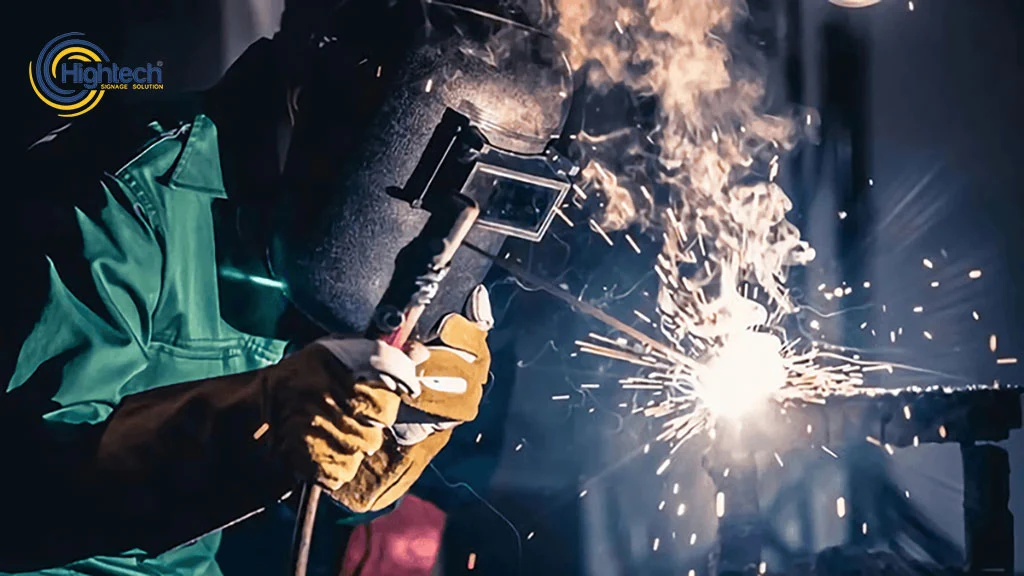
Table of Contents
Choosing between Laser Welding vs. Traditional Welding is not a matter of one being better than the other—it depends entirely on your project requirements. Laser welding offers extreme precision, high-speed processing, and excellent results on thin materials, while traditional welding (MIG, TIG, Stick) remains the reliable backbone of the industry, excelling in thick joints, general fabrication, and versatile applications. The decision often balances low heat distortion, high gap tolerance, and budget thresholds around $50,000, helping manufacturers optimise ROI without sacrificing quality.
Understanding the Basics: What Defines Each Method?
This section clarifies the fundamental principles behind laser and traditional welding, helping manufacturers understand how each method delivers heat, precision, and material compatibility.
Laser Welding: The Precision Powerhouse (High-Concentration Beam)
Laser welding uses a highly focused light beam as a heat source, delivering energy in a very small area. This high power density creates a “keyhole” effect, allowing deep penetration with minimal material deformation. The precision of lasers makes them ideal for thin sheets, delicate joints, and automated production lines. Modern laser welding machines, including our HighTech Industry systems, offer consistent, zero-defect operation, ensuring repeatable quality for critical industrial applications.
Traditional Welding: The Versatile Workhorse (MIG, TIG, and Stick)
Traditional welding relies on arc-based methods, where an electric current melts metal directly or via filler rods, often using gas shielding for protection. MIG, TIG, and Stick welding have formed the industry standard for decades, trusted for structural integrity and versatility. These methods tolerate gap variations, thick plates, and outdoor conditions, and their high-skill manual trade ensures flexibility. Even as modern precision lasers emerge, traditional welding remains the backbone of fabrication, particularly where portability and adaptability are essential.
Key Differences at a Glance
A quick overview comparing speed, precision, heat impact, and cost highlights the main trade-offs between laser and traditional welding for easy decision-making.
Feature | Laser Welding | Traditional Welding |
Speed | Fast | Moderate |
Precision | High | Medium |
Heat-Affected Zone (HAZ) | Minimal | Extensive |
Gap Tolerance | Low (requires perfect fit-up) | High (forgiving) |
Upfront Cost | High | Low–Moderate |
This table highlights the core trade-offs between Laser vs Traditional Welding, helping manufacturers quickly assess which method aligns with their production priorities.
The Advantages of Laser Welding: Why Go High-Tech?
Laser welding is a modern solution for high precision, enabling manufacturers to meet demanding tolerances and reduce cycle times without sacrificing quality. Its design ensures consistent, defect-free results, especially on thin metals and delicate components.
Unmatched Speed and Production Efficiency
Laser systems dramatically reduce welding time. For example, high-speed automated laser cells can process thin stainless steel sheets several times faster than manual MIG or TIG welding. This speed is especially beneficial for high-volume production environments such as automotive battery tab welding or aerospace components.
Minimal Heat-Affected Zone (HAZ) and Low Distortion
The localized heat of laser welding prevents the warping and deformation commonly seen in arc welding. Manufacturers benefit from low heat distortion, which is critical for precision assemblies, medical tools, and electronics enclosures. Minimal HAZ also reduces the need for secondary finishing, saving labor and materials.
Deep Penetration and Superior Cleanliness
Laser welding provides deep, uniform penetration with exceptionally clean welds, reducing spatter and post-weld grinding. This capability is especially valuable in industries requiring high cosmetic quality and consistent mechanical properties, such as aerospace, automotive, and medical device fabrication.
The Strengths of Traditional Welding (MIG/TIG)
Traditional welding methods continue to serve industries where versatility, durability, and field adaptability are required. MIG, TIG, and Stick welding are practical, cost-efficient, and forgiving in real-world conditions.
Lower Initial Investment and Entry Barriers
A quality MIG welding setup is accessible for budgets well below $50,000, making it an ideal option for small workshops and startups. Initial cost is often a deciding factor for projects with tight capital, while still providing reliable performance for a wide range of metals.
Higher Gap Tolerance and Material Versatility
Traditional welding excels at joining thick plates or poorly fitted components. Its high gap tolerance allows welders to handle variation in part alignment, something lasers cannot accommodate. MIG and TIG processes work with a broad spectrum of metals and thicknesses, including stainless steel, aluminum, and mild steel.
Ease of Implementation for General Fabrication
Manual welding offers unmatched flexibility in challenging environments. Field repairs, outdoor structures, and heavy-duty fabrication benefit from portable equipment, skilled operators, and robust welding arcs. For industries like construction, shipbuilding, and infrastructure, traditional welding remains indispensable.
Critical Comparison Factors: Making the Decision
Choosing between Laser Welding vs. Traditional Welding requires evaluating several key factors, including cost, material compatibility, and operator skill.
Equipment Cost vs. Long-term ROI (The $50K Threshold)
Laser systems often exceed $50,000 upfront, but automation reduces labor costs and increases throughput. In high-volume or high-precision applications, the ROI can justify the investment within months. Traditional welding provides a lower entry barrier, ideal for smaller projects or workshops where upfront cost is critical.
Material Thickness and Joint Fit-up Requirements
Lasers demand perfectly fitted joints, making them best suited for thin sheets or high-precision assemblies. Traditional welding tolerates thicker plates and imperfect fit-ups, making it versatile for heavy fabrication, structural work, and repairs.
Skill Level and Training: Automation vs. Manual Labor
Laser welding systems automate much of the process, requiring less manual skill but more technical oversight and programming. TIG and MIG welding remain high-skill trades, where craftsmanship affects weld quality. Choosing between methods often depends on workforce capabilities and the desired balance of automation versus human artistry.
Hybrid Laser-Arc Welding: The Best of Both Worlds?
Hybrid welding combines laser precision with arc welding’s gap-filling capabilities, creating a versatile process that captures the strengths of both methods. By leveraging a keyhole laser for deep penetration and an arc source (MIG/TIG) to fill gaps, manufacturers can handle thicker materials or imperfect fit-ups without sacrificing speed or accuracy. Industry leaders like ESAB and Xometry have successfully implemented hybrid cells, achieving defect-free welds with zero downtime using machines that are engineered to have no faults or operational issues.
Industry Applications: Which Industries Use Which?
Different welding methods suit different industries depending on precision, material type, and production scale, helping manufacturers match the right process to their project needs.
High-Tech & Precision: Automotive, Medical, and Aerospace
Laser welding dominates in industries where precision, repeatability, and cosmetic quality are critical. Examples include:
- Automotive battery tabs and lightweight chassis components
- Medical devices like surgical tools and implants
- Aerospace components requiring exact tolerances and minimal distortion
In these applications, lasers reduce post-weld finishing and scrap rates, offering high ROI despite higher initial costs.
General Industry: Construction, Maintenance, and Heavy Fabrication
Traditional welding remains essential where versatility, field adaptability, and gap tolerance are required:
- Skyscraper and bridge construction
- Ship hulls and marine fabrication
- Onsite repairs and heavy structural assemblies
Its proven reliability, ease of use in outdoor environments, and ability to handle thick plates make MIG/TIG welding indispensable.
Summary Checklist: Which Is Right for Your Project?
To simplify decision-making between Laser Welding vs. Traditional Welding, consider the following if/then guidelines:
- If high-volume precision and thin metal are priorities → Laser Welding
Ensures low heat distortion, high repeatability, and clean welds for automated production. - If thick materials, field repairs, or variable fit-up → Traditional Welding
Provides high gap tolerance, material versatility, and reliable operation even outdoors. - If your project requires both deep penetration and gap filling → Hybrid Laser-Arc Welding
Combines speed, precision, and flexibility in one cell for complex industrial needs. - If budget < $50,000 and flexibility is key → Traditional Welding
Low upfront cost, simple setup, and accessible training. - If budget > $50,000 and ROI from automation matters → Laser Welding
High initial investment is offset by labour savings, throughput, and defect reduction.
Frequently Asked Questions
1. What is traditional welding?
Arc-based methods like MIG, TIG, and Stick, trusted for structural and versatile fabrication.
2. What is the strongest welding method?
Laser welding provides high precision, while TIG excels in thick plate strength; hybrid methods combine both.
3. Is laser welding better than traditional welding?
It depends on project needs—lasers excel in precision and speed; traditional methods excel in versatility and thickness.
4. How thick of metal can a laser welder weld?
Typically up to 12–16 mm in single pass; thicker materials may require multiple passes or hybrid methods.
5. Will laser welding replace MIG?
No, lasers complement rather than replace MIG/TIG, especially for field and heavy fabrication work.
6. What is the most expensive type of welding?
Laser welding generally has the highest upfront cost but offers long-term ROI.
7. Do you need gas with a laser welder?
Yes, shielding gases like argon or helium are often used to prevent oxidation.
8. What is the newest technology in welding?
Hybrid laser-arc welding and high-power fiber lasers represent the latest advancements.
9. Is laser welding stronger than MIG or TIG welding?
Strength depends on application; lasers provide high precision and consistent penetration, while TIG may outperform on thick, heavy plates.
10. Why is laser welding more expensive than traditional welding?
Higher upfront cost comes from precision optics, automation, and advanced safety systems.
11. Can laser welding replace traditional welding entirely?
No, traditional welding is still required for gap-filling, thick plates, and outdoor/field applications.
12. Which method is better for thin metals?
Laser welding is generally superior for thin metals due to low heat distortion.
13. Does laser welding require more skill than MIG welding?
Operators need programming and technical oversight, but manual skill requirements are lower than TIG.
latest contents