
Blog
Can Laser Welding Be Used for All Materials? A Guide to Laser Welding Material Compatibility
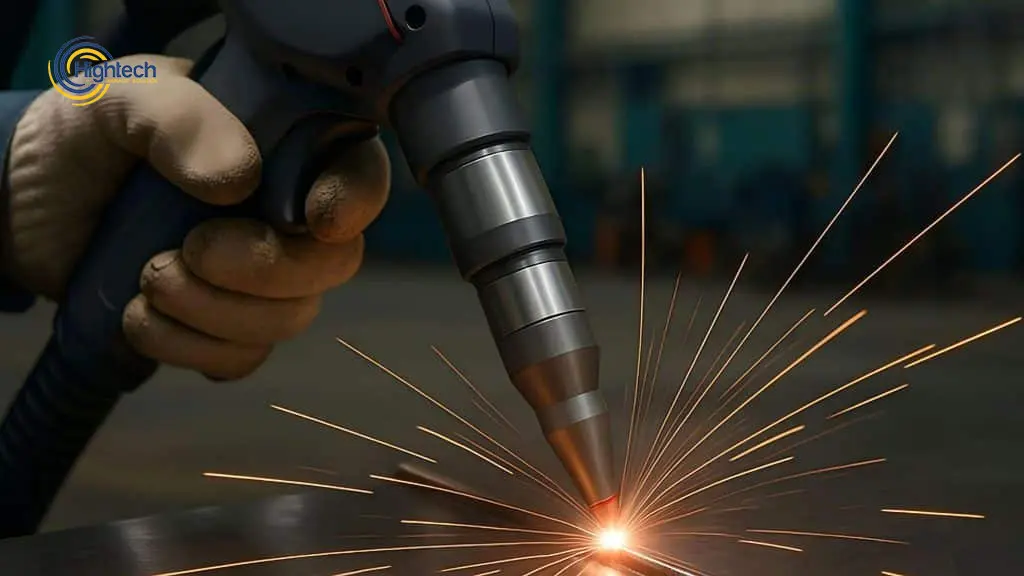
Table of Contents
Is Laser Welding a Universal Solution? No, laser welding is not suitable for every material, but it remains one of the most precise and flexible joining technologies available. Laser welding material compatibility depends on how a material absorbs laser energy, reflects light, conducts heat, and tolerates rapid thermal changes. Unlike conventional welding, laser welding machines concentrates energy in a small area, reducing distortion and improving accuracy. However, materials with high reflectivity, excessive heat dissipation, or thermal sensitivity may require specialised lasers, additives, or process optimisation to achieve reliable, defect-free welds.
Understanding Laser Welding Material Compatibility
Laser welding material compatibility refers to how well a material absorbs laser energy, manages heat flow, and withstands rapid thermal cycling during welding. Materials with high laser absorption, controlled reflectivity, and stable thermal behaviour produce stronger, defect-free welds. This compatibility determines laser selection, parameter settings, and whether laser welding is technically and economically viable for a specific application.
Laser Absorption and Reflectivity: How do different materials react to laser wavelengths?
Materials that absorb laser wavelengths efficiently are inherently easier to weld. Laser welding relies on converting light energy into heat. Dark, non-reflective materials such as carbon steel or black plastics absorb energy readily, forming stable molten pools. In contrast, highly reflective materials like aluminium and copper reflect a large portion of the laser beam, reducing energy coupling and increasing process instability.
The wavelength of the laser is critical. Fiber lasers, operating around 1 µm, are significantly better at coupling energy into reflective metals than traditional CO₂ lasers. In some cases, green lasers are used to further improve absorption in copper-based alloys.
Thermal Conductivity: Why does heat dissipation matter for a successful weld?
Materials with high thermal conductivity require higher energy density to maintain a molten weld pool. Copper, aluminium, and some nickel alloys rapidly conduct heat away from the weld zone. This makes it difficult to sustain fusion without increasing power or using tighter focus optics. If heat is lost too quickly, incomplete penetration and weak joints occur.
Low thermal conductivity materials, such as stainless steel or titanium, retain heat locally, making them far more forgiving during laser welding.
Material Thickness Limits: When do traditional methods outperform lasers?
Laser welding is most effective for thin to medium material thicknesses, typically below 10 mm. While high-power lasers can weld thicker sections, efficiency and cost become limiting factors. For very thick materials, arc welding or hybrid laser-arc welding may provide deeper penetration with better economic justification.
Metals Compatible with Laser Welding
Most industrial metals are compatible with laser welding when their optical absorption and thermal behaviour are properly managed. Metals that absorb laser energy efficiently and maintain a stable molten pool—such as carbon steel, stainless steel, and titanium—are ideal candidates. Highly reflective metals like aluminium and copper can also be laser welded successfully using advanced fiber lasers, precise power control, and appropriate shielding gases.
Ferrous Metals: Are carbon steel and stainless steel ideal for laser welding?
Yes, ferrous metals exhibit excellent compatibility with laser welding. Carbon steel and stainless steel absorb laser energy efficiently and have manageable thermal conductivity. They produce stable weld pools, low porosity, and high mechanical strength. This makes them widely used in automotive, structural, and medical applications. Stainless steels also benefit from minimal heat-affected zones, preserving corrosion resistance and surface finish.
Non-Ferrous Metals: Can aluminium, titanium, and nickel alloys be laser welded?
Yes, but each non-ferrous metal requires specific control strategies. Aluminium alloys demand high power density due to reflectivity and thermal conductivity. Titanium alloys, by contrast, are highly compatible but require inert shielding to prevent oxygen contamination. Nickel alloys weld well but can be prone to porosity if gas control is insufficient.
High-Reflectivity Metals: How can copper and brass be laser welded successfully?
Copper and brass can be laser welded using fiber lasers or green lasers to overcome reflectivity. Traditional CO₂ lasers struggle with these materials. Modern fiber lasers provide higher absorption efficiency, enabling precise welding for electrical and thermal components. Preheating and beam modulation further stabilise the process.
Refractory Metals: Is laser welding suitable for platinum and rhenium?
Yes, laser welding is one of the few viable methods for precision joining of refractory metals. Platinum and rhenium have extremely high melting points and require tightly controlled energy input. Laser welding allows micro-scale control, making it suitable for aerospace, medical, and scientific applications.
Can You Join Dissimilar Metals Using Laser Welding?
Yes, laser welding can join dissimilar metals, but the joint behaviour varies significantly by material combination.
Metallurgical vs. Mechanical Bonds: What kind of joint is formed?
Some dissimilar metal combinations form true metallurgical bonds, while others rely on mechanical interlocking. When melting points, solubility, and thermal expansion rates differ greatly, fusion may be limited. In these cases, the joint strength comes from mechanical bonding rather than full atomic diffusion.
Common Combinations: Can brass be joined to copper or titanium to aluminium?
Yes, but success depends on controlling intermetallic formation. Brass-to-copper joints are relatively stable due to chemical similarity. Titanium-to-aluminium joints are more complex and often require filler layers or precise energy control to prevent brittle phases.
Managing Intermetallic Compounds: How can brittleness be prevented?
Minimising heat input and interaction time reduces the formation of brittle intermetallic layers. Laser welding’s fast processing speed is a major advantage, allowing joints to form before harmful compounds grow excessively.
Laser Welding for Non-Metallic Materials
Laser welding is also effective for certain non-metallic materials, particularly thermoplastics.
Thermoplastics and Elastomers: Can PP, PS, PC, and ABS be laser welded?
Yes, many thermoplastics can be laser welded using transmission or absorption techniques.
Materials such as polypropylene (PP), polystyrene (PS), polycarbonate (PC), and ABS are commonly joined using laser welding, especially in medical and electronic assemblies.
This area is often discussed under plastic laser welding material compatibility, which focuses on optical transmission and absorption behaviour rather than melting temperature alone.
The Role of Additives: Why is carbon black used in plastic laser welding?
Some plastics require additives like carbon black to absorb laser energy effectively. Naturally transparent polymers may transmit laser light without heating. Adding carbon black converts light into heat at the joint interface, enabling consistent melting. This is especially important for materials like PPS used in precision components.
Ceramics and Composites: Can brittle materials be laser welded?
Yes, but ceramics require mandatory preheating to prevent cracking. Ceramics are highly sensitive to thermal shock. Controlled preheating reduces temperature gradients, allowing laser welding or laser joining without catastrophic fractures. Composite materials also require careful control to avoid delamination.
Major Challenges and Limitations in Material Compatibility
Laser welding presents specific technical challenges that must be addressed material by material.
Dealing with High Reflectivity: Why are fiber lasers essential for aluminium and copper?
Fiber lasers provide superior absorption efficiency for reflective metals. Their shorter wavelength and higher beam quality allow stable welding where older laser systems fail. This is a key reason fiber lasers dominate modern industrial laser welding.
Low Transmittance in Polymers: How can transparency issues be solved?
Adjusting material formulation or laser wavelength improves polymer weldability. Clear plastics may require absorptive additives or alternative wavelengths to enable energy coupling without surface damage.
Porosity and Spatter: Why do some alloys produce defects?
Gas entrapment and unstable melt pools cause porosity and spatter in certain alloy grades. Optimised shielding gas selection, beam oscillation, and power modulation significantly reduce these defects.
How to Optimize Laser Settings for Maximum Compatibility?
Correct laser configuration is critical to achieving strong, repeatable welds across different materials.
Selecting the Right Laser Type: Fiber vs. CO₂ vs. Green Lasers
Fiber lasers are the most versatile, while CO₂ and green lasers serve specialised roles. Fiber lasers dominate metal welding, CO₂ lasers remain useful for some polymers, and green lasers excel in copper processing.
Adjusting Power, Wavelength, and Pulse Frequency
Precise control of these parameters ensures stable fusion without defects. Higher power compensates for reflectivity, pulsed modes reduce heat input, and wavelength selection optimises absorption.
The Importance of Shielding Gases (Argon, Helium, Nitrogen)
Shielding gases prevent oxidation and stabilise the molten weld pool. Argon is widely used for most metals, helium improves penetration, and nitrogen is suitable for certain stainless steels.
Frequently Asked Questions
1. Can laser welding be used on all types of metal?
No, while many metals are compatible, highly reflective or reactive metals require specialised lasers and process control.
2. What materials cannot be laser welded?
Certain brittle ceramics, heavily reinforced composites, and materials with extreme thermal mismatch may not be suitable.
3. Can you laser weld clear or transparent plastics?
Yes, but absorptive layers or additives are usually required to enable energy absorption.
4. Why do ceramics crack during laser welding?
Rapid temperature changes cause thermal shock, which is why controlled preheating is mandatory.
5. Can laser welding join two different materials together?
Yes, laser welding can join dissimilar materials, though some joints rely on mechanical bonding rather than full metallurgical fusion.
latest contents







2 thoughts on “Can Laser Welding Be Used for All Materials? A Guide to Laser Welding Material Compatibility”
Great insights into laser welding material compatibility! As someone who’s recently worked with laser-cutting machines, it’s been fascinating to see how quickly they can adapt to various materials. Do you think there are materials that still pose challenges despite advances in technology?
Hi,Thank you for reaching out Hightech,we are always built to lead