


Laser Welding for Precision Projects: Benefits, Applications and Project Requirements
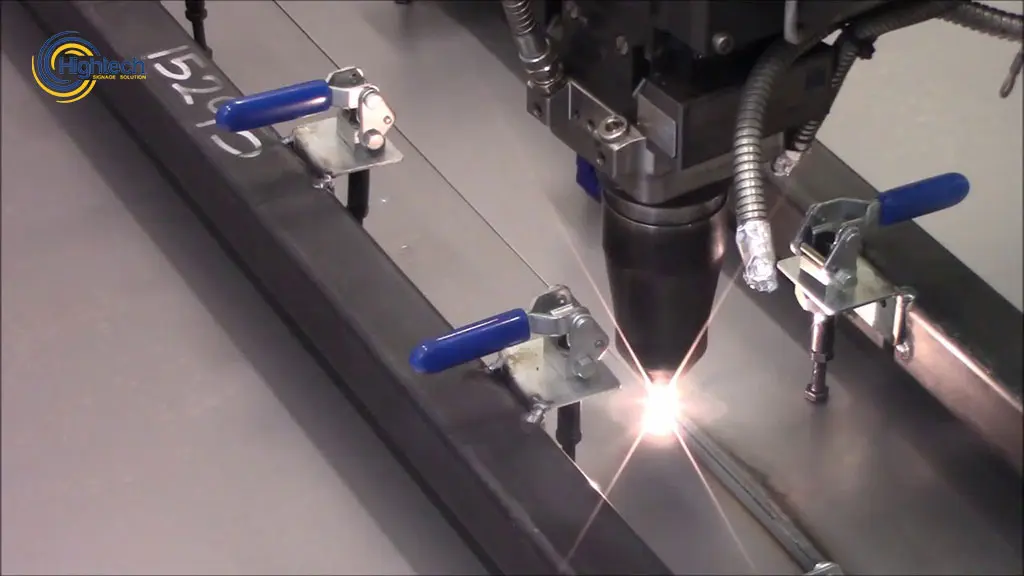
Table of Contents
What Is Precision Laser Welding?
Precision laser welding uses a focused beam to join parts with demanding dimensional, thermal, cosmetic or repeatability requirements. A precise process must place the seam correctly, achieve the specified penetration, limit distortion and reproduce the result across a batch. The outcome depends on the complete production system, not the laser source alone.
Laser welding is especially suitable for thin metals, small components, complex parts, and applications where appearance, accuracy, and strength are important. Compared with MIG or TIG welding, it usually provides better control, faster processing, and a smaller heat-affected zone.
Quick Answer: When Is Laser Welding a Good Choice for Precision Work?
Laser welding is a strong choice for small components, thin walls, visible seams, restricted heat input and repeatable production. Its concentrated energy can produce narrow welds and a small heat-affected zone, while CNC or robotic motion repeats the programmed path. It is a poor fit when gaps are large or inconsistent, parts cannot be located reliably, beam access is blocked, material condition is unknown or acceptance criteria have not been defined.
What Makes a Welding Project “High Precision”?
A project is high precision when small changes in weld position, heat input or geometry can affect function, appearance or assembly. Common indicators include:
- Small parts, narrow joints, thin sheet or fine wire
- Tight post-weld dimensions or limited allowable distortion
- Heat-sensitive components close to the seam
- Controlled penetration without marking the opposite surface
- Leak-tight, hermetic or electrically critical joints
- High-value or automated parts where scrap is costly
Precision therefore includes joint design, edge preparation, fixtures, parameters, equipment condition and inspection as well as beam accuracy.
When Precision Laser Welding Is Suitable—and When It Is Not
|
Good candidates |
Warning signs |
|---|---|
| Parts can be located and clamped consistently. | Joint position changes significantly between parts. |
| Gaps are small, measurable and repeatable. | Large or uncontrolled gaps require manual filling. |
| The seam must be narrow and heat input limited. | The job needs heavy filler deposition or broad buildup. |
| Material grade, coating and surface condition are known. | Composition, coating or contamination is uncertain. |
| Volume benefits from repeatability or automation. | Every part is unique and cannot be fixtured economically. |
| Acceptance criteria can be tested on samples. | “Perfect” welds are expected without measurable limits. |
| The welding head has clear access to the joint. | Geometry blocks the beam or a safe working angle. |
A representative welding trial is the fastest way to confirm suitability. The sample should match production material, thickness, joint geometry, surface condition and clamping; a convenient substitute can hide problems that appear later.
Key Factors That Determine Laser Welding Accuracy
Joint Design and Fit-Up
Aligned edges and controlled gaps are essential because a narrow beam cannot bridge the variation a skilled manual welder may compensate for. Butt, lap, corner and fillet joints require suitable access, contact and tolerances. Where a gap is unavoidable, filler wire, beam wobble or revised geometry may expand the process window, but each option must be validated.
Spot Size and Focus
A small spot provides fine placement and high energy density but reduces tolerance to position error. A larger or oscillating beam widens coverage while changing penetration and heat distribution. Focus must remain stable as part height and head angle change; accurate fixtures, calibrated motion, height sensing or seam tracking may be required.
Power, Pulse Shape and Travel Speed
Power and speed must create full fusion without burn-through, excessive vaporization or spatter. Pulsed and QCW Laser Welding Machines add control through energy, duration, frequency and waveform; continuous-wave systems rely on stable power and motion. The goal is a documented processing window with production settings near its center, not maximum power or a single impressive sample.
Fixtures and Part Positioning
Fixtures establish joint location, gap, height and restraint. They should protect surfaces, allow shielding gas to reach the seam and avoid trapping heat or vapor. Too much clamping can add stress; too little allows movement. Production repeatability should be measured after repeated loading and unloading, not on one carefully positioned part.
Surface Preparation, Shielding and Filler
Oil, oxide, plating, fingerprints and cutting residue can change absorption and gas generation, so cleaning and the time between cleaning and welding should be controlled. Shielding-gas type, nozzle position and flow affect oxidation and appearance. Filler wire can bridge limited gaps or improve metallurgy, but diameter, feed angle, speed and beam position must remain stable.
Motion, Vision and Monitoring
A fixed table, CNC stage or robot repeats a path more consistently than freehand motion. Vision can locate features, and seam tracking can correct predictable variation. Monitoring may detect changes in reflected light, plasma or weld-pool behavior, but its signals become meaningful only after they are correlated with inspected good and defective welds.
Precision Laser Welding for Thin Metals and Small Parts
Thin materials are vulnerable to burn-through, warping and discoloration because they absorb little excess heat. Focused energy and short interaction time can reduce these risks, but stable contact, accurate focus and a qualified parameter set remain essential. Small components also magnify positioning errors: a minor offset can be a large percentage of the joint width.
- Support the joint without blocking the beam or shielding gas.
- Match spot size and beam motion to the joint width.
- Use short pulses, faster travel or a balanced weld sequence to limit heat.
- Control gap and edge condition from cutting through final assembly.
Materials and Precision Welding Applications
Stainless steel is widely used for instruments, sensors and visible assemblies; shielding and heat control protect finish and corrosion performance. Aluminum requires attention to oxide, reflectivity, heat conduction and alloy-specific porosity or cracking. Titanium and nickel alloys demand clean surfaces, disciplined shielding and documented control. Copper, brass and dissimilar metals often need specialized development because conductivity, melting behavior and intermetallic formation can narrow the process window.
Typical applications include medical instruments and small housings; electronic terminals, tabs, connectors and sensor enclosures; aerospace thin-wall parts and precision brackets; automotive and EV battery or sensor components; and jewelry, mold or precision repair. Each sector may add requirements for cleaning, traceability, resistance, leak testing, fatigue or formal procedure qualification.
Laser Welding vs. TIG and MIG for Precision Projects
|
Criterion |
Laser welding |
TIG welding |
MIG welding |
|---|---|---|---|
| Small or thin parts | Strong when fit-up and access are controlled. | Flexible manual control, but torch size and heat may limit fine work. | Usually less suitable for delicate parts. |
| Gap tolerance | Low unless filler, wobble or joint design expands it. | A skilled operator can adapt to moderate variation. | Generally more tolerant in fabrication joints. |
| Repeatability | High with fixtures, CNC, robotics and fixed parameters. | Operator-dependent unless automated. | High when automated, with a broader seam. |
| Best use | Tight tolerances, low distortion and repeatable batches. | Repair, varied joints and manual precision. | General fabrication and higher deposition. |
Common Defects in Precision Laser Welding
|
Defect |
Likely causes |
Corrective direction |
|---|---|---|
| Incomplete fusion | Low energy, excessive speed, poor focus, contamination or seam error. | Verify focus and alignment; adjust qualified energy or speed; improve cleaning. |
| Burn-through | Excessive heat, slow travel, large gap or weak support. | Reduce heat input; improve backing and gap control. |
| Porosity | Contamination, coating vapor, unstable keyhole, poor shielding or trapped gas. | Improve cleaning, venting, shielding and keyhole stability. |
| Cracking | Alloy sensitivity, restraint, rapid solidification or unsuitable filler. | Review metallurgy, joint design, restraint and filler. |
| Spatter | Unstable keyhole, focus error, excessive power or contamination. | Stabilize focus and power; improve preparation and gas delivery. |
| Distortion or seam wandering | Excess heat, poor sequence, weak fixtures, calibration or vision errors. | Reduce heat, balance sequence and improve datum control, clamping and calibration. |
How to Evaluate a Precision Welding Sample
- Confirm production material, thickness, coating, joint design and clamping.
- Record the machine, optics, focus, power, speed, gas, wire and fixture setup.
- Inspect seam location, width, consistency, discoloration, undercut and spatter.
- Check penetration or internal geometry by cross-section or another suitable method.
- Perform required strength, leak, electrical, fatigue and dimensional tests.
- Repeat across enough parts to define variation, an acceptable parameter window and change-control rules.
How to Choose a Laser Welder for Precision Work
Start with the joint, acceptance criteria and production target. Pulsed or QCW systems suit spots, small components and repairs that benefit from high peak power with controlled average heat. Continuous-wave fiber systems suit longer seams, faster travel and automated production. Handheld systems offer flexibility but do not provide fixed positional accuracy without guides or fixtures. Fixed-table, CNC and robotic systems improve repeatability for programmed paths and regular batches.
Evaluate spot-size range, pulse shaping or wobble, power stability, vision, seam tracking, wire feeding, cooling, work envelope, fixture access, safety enclosure and data recording. Shortlist a machine only after repeated sample tests confirm weld quality.
Find the Right Machine for Your Application
Frequently Asked Questions
How accurate is precision laser welding?
Accuracy depends on the beam, motion system, fixture, part tolerances and seam-location method. A machine-position specification alone does not guarantee weld accuracy; verify the complete process on repeated samples.
Is laser welding suitable for very thin or delicate parts?
Yes, when energy, focus, support and gap are controlled. Pulsed operation, small spots, vision and precision fixtures can limit burn-through and positioning error.
Is a handheld laser welder precise enough?
It can produce clean seams, but freehand accuracy depends on the operator and joint guidance. Tight positional tolerances usually favor fixtures, a table system, CNC motion or robotics.
Can laser welding handle gaps?
Only within a controlled range. Filler wire, wobble or redesigned joints can increase tolerance, but large or inconsistent gaps reduce precision and stability.
Latest contents



Prefer a callback? Share your details and requirements below.
Your details will only be used to respond to this request.