


What Is Laser Welding and Why Is It Essential?How It Works
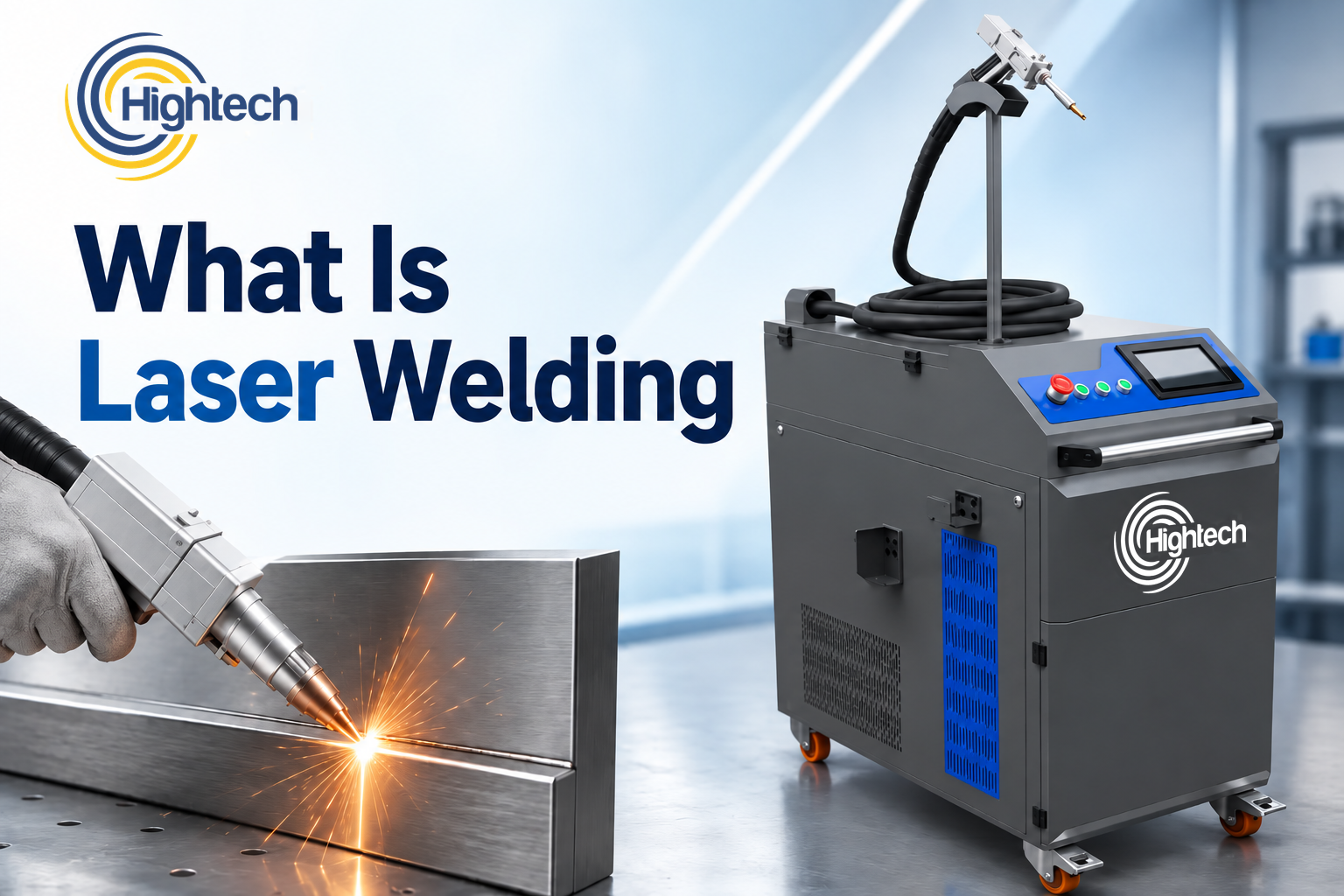
Table of Contents
Laser welding is a precision joining process that uses a highly focused beam of light to melt and fuse materials. But why is laser welding essential for modern manufacturers? It combines high welding speed, controlled heat input, narrow weld seams, and repeatable results, helping businesses increase production while reducing distortion, rework, and post-weld finishing.
Unlike conventional welding processes that spread heat over a relatively wide area, laser welding concentrates energy directly on the joint. This enables manufacturers to weld thin, delicate, or dimensionally sensitive components while limiting heat exposure to the surrounding material.
The technology is now used in automotive production, electronics, aerospace, medical-device manufacturing, metal fabrication, signage, jewelry, and other industries where accuracy and consistency are important.
Quick Answer: Why Is Laser Welding Essential?
Laser welding has become an important manufacturing process because it can produce fast, precise, and repeatable welds with a relatively small heat-affected zone. It is especially valuable for thin metals, precision components, visible seams, automated production, and applications where distortion and post-weld finishing must be minimized. However, its suitability still depends on the material, joint design, thickness, production volume, and required weld performance.
What Is Laser Welding?
Laser welding, also known as laser beam welding, is a fusion-welding process in which a concentrated laser beam heats the edges of two components until the material melts. The molten surfaces combine and then solidify to form a joint.
A typical laser welding system includes:
- A laser source
- Fiber-optic or mirror-based beam delivery
- A focusing head
- A control system
- A cooling system
- Shielding-gas equipment
- Safety enclosures or interlocks
Fiber lasers are widely used for modern metal welding because their beam can be delivered through a flexible optical fiber. Depending on the application, the welding head may be manually operated, mounted above a fixed worktable, installed on a CNC motion system, or integrated with an industrial robot.
Filler wire is not always necessary. Components with accurate joint fit-up can often be fused directly, while filler material may be added when the joint has a gap, requires additional reinforcement, or involves materials susceptible to cracking.
ESAB defines laser welding as a fusion process in which a focused beam melts material at the seam, producing high-speed welds in thin materials and narrow, deep welds in thicker sections.
How Does Laser Welding Work Step by Step?
The laser welding process can be divided into four main stages.
Step 1: Laser Beam Generation
The laser source generates concentrated light at a specific wavelength. In a fiber laser, the light is amplified inside an optical fiber and then transferred to the welding head.
The system’s power, pulse duration, frequency, beam quality, and operating mode determine how much energy reaches the workpiece. Continuous-wave lasers deliver uninterrupted energy and are commonly used for longer seams and higher production speeds. Pulsed lasers deliver energy in controlled bursts and are useful for small, delicate, or heat-sensitive components.
read more: can laser welding be used on any material?
Step 2: Energy Transfer to the Material
Optical components inside the welding head focus the beam onto a small spot at the joint. The concentrated energy is absorbed by the material and converted into heat.
Focal position is critical. A beam focused incorrectly may produce insufficient penetration, excessive spatter, an unstable weld pool, or inconsistent seam width. The welding head must also maintain the correct working distance and angle throughout the process.
Material reflectivity affects energy absorption. Aluminum, copper, and brass can be more challenging to weld because of their reflectivity and thermal conductivity. Stable results require a laser source and welding configuration approved for the specific alloy and thickness, together with controlled surface preparation, focal position, travel speed, shielding gas, and filler wire where required. Laser power should be selected from validated welding parameters rather than increased as a general solution.
Step 3: Melting and Fusion Process
As the material absorbs the laser energy, it reaches its melting temperature and forms a molten weld pool. The two component edges flow together, creating the joint.
Laser welding normally operates in one of two modes:
Conduction-mode welding uses a lower power density. Energy heats and melts the surface without creating deep vapor penetration. It produces a wider, shallower weld with a smooth appearance and is useful for thin materials and cosmetic seams.
Keyhole welding uses a higher power density. The laser vaporizes a small amount of material and creates a narrow cavity known as a keyhole. Laser energy travels deeper into this cavity, producing a weld with a high depth-to-width ratio.
Conduction welding is appropriate when appearance and controlled surface heating are the priorities. Keyhole welding is preferable when deeper penetration and stronger joining are required. ESAB similarly distinguishes surface-focused heat-conduction welding from high-power keyhole welding that penetrates further into the material.
Step 4: Cooling and Weld Formation
As the laser beam moves along the joint, the molten pool behind it cools and solidifies. This creates a continuous weld seam.
Shielding gas may be directed around the weld to reduce oxidation and protect the molten material. Argon, helium, nitrogen, or another gas may be selected depending on the material, required appearance, penetration, and production process.
Weld quality depends on the correct combination of:
- Laser power
- Travel speed
- Focal position
- Beam diameter
- Joint gap
- Shielding gas
- Material thickness
- Filler-wire feed rate
- Welding-head angle
Excessive power or slow movement may cause burn-through and unnecessary heat input. Insufficient power or excessive speed can lead to incomplete fusion or shallow penetration.
What Materials Can Be Laser Welded?
Laser welding can join many engineering metals, but weldability changes with alloy chemistry, reflectivity, thermal conductivity, coating, thickness and joint design.
Stainless steel is widely used because it can produce clean, narrow seams with limited distortion. Carbon steel is common in sheet-metal and machinery applications; galvanized steel needs controlled joint design and venting because zinc vapor can create porosity or spatter. Aluminum requires clean surfaces, stable focus and alloy-specific process development due to reflectivity, heat conduction and cracking sensitivity.
Titanium and selected nickel alloys are used in medical, aerospace and high-performance products. Copper and brass can be challenging because they conduct heat quickly and reflect incoming energy. Gold, silver and other precious metals are often welded with localized pulsed systems. In every case, sample testing should use the exact grade, thickness and joint planned for production.
Common Industrial Applications of Laser Welding
Laser welding is used where production requires accurate heat control, fast cycles, repeatable seams, or limited finishing.
Automotive and electric vehicles: battery trays, battery tabs, body components, sensors, transmission parts, exhaust components, and precision assemblies.
Aerospace: lightweight structural components, turbine parts, sensors, fuel-system components, and assemblies with strict dimensional tolerances.
Electronics: connectors, housings, sensors, battery components, terminals, and small heat-sensitive assemblies.
Medical devices: surgical instruments, stainless-steel components, titanium devices, and small parts requiring clean, controlled welds.
Sign and advertising production: stainless-steel letters, aluminum channel-letter components, decorative parts, and thin-sheet assemblies.
Jewelry and precision repair: gold, silver, titanium, and other small components that require localized heat input.
General metal fabrication: cabinets, enclosures, appliances, kitchen equipment, HVAC components, furniture, doors, windows, and architectural metalwork.
The HT Industry laser-welding category currently identifies signage, automotive, aerospace, jewelry, medical, electronics, prototyping, and general precision manufacturing among its application areas.
Explore applications of fiber laser welders and cleaners to connect the welding process with surface preparation and post-weld finishing tasks.
How to Decide Whether Laser Welding Is Suitable
Before choosing a system, evaluate the application in the following order:
- Identify the exact material grades, coatings and thickness range.
- Define the joint type, required penetration and acceptable gap.
- Set measurable acceptance criteria for strength, appearance, leakage, distortion and defects.
- Estimate annual volume, batch size and total cycle time.
- Decide whether the process should be handheld, table-based, CNC-controlled or robotic.
- Prepare representative samples and run welding trials.
- Inspect the samples using methods appropriate to the product, such as visual inspection, sectioning, leak testing or mechanical testing.
- Calculate total ownership cost, including training, gas, wire, optics, maintenance, extraction, safety and financing.
HT Industry offers multiple configurations in its laser welding machine category. The correct model should be selected from verified sample results and the required production workflow.
Find the Right Machine for Your Application
Frequently Asked Questions
What is laser welding and how does it work?
Laser welding uses a focused beam of light to melt material along a joint. The molten edges combine and then solidify into a weld. Depending on power density, the process may operate in conduction mode for shallow, smooth seams or keyhole mode for deeper penetration.
Why is laser welding essential for manufacturers?
Laser welding helps manufacturers increase speed, improve accuracy, limit distortion, reduce finishing, and create repeatable welds. It is especially useful for automated production and dimensionally sensitive parts.
Is laser welding stronger than TIG or MIG welding?
Laser welding can create joints comparable in strength to TIG or MIG when the process, material, joint design, and parameters are appropriate. The best method depends on thickness, fit-up, load, production volume, and quality requirements.
What materials can laser welding join?
Common materials include stainless steel, carbon steel, galvanized steel, aluminum, titanium, nickel alloys, copper, brass, gold, and silver. Actual compatibility depends on alloy grade and machine configuration.
How thick can a laser welder weld?
Maximum thickness depends on laser power, material, joint design, travel speed, focal position, filler wire, and required penetration. Buyers should request sample welds using their actual material grades and thicknesses.
What industries use laser welding?
Laser welding is used in automotive, aerospace, electronics, medical devices, jewelry, signage, appliances, architectural metalwork, battery manufacturing, machinery, and general metal fabrication.
Latest contents


Prefer a callback? Share your details and requirements below.
Your details will only be used to respond to this request.