


QCW Laser Welding Machines
QCW laser welding machines are designed for precise metal joining where controlled heat, pulse energy, and repeatability are critical. Hightech QCW systems support spot welding, short seams, repair, and precision work with configurations for stationary, handheld, and application-specific production.
In 100+ Countries
On-site or Remote
Ready to Ship Globally
Quick Response 24/7
Our QCW Laser Welding Machine Models
Compare Hightech QCW laser welding systems by positioning setup, operating mode, pulse parameters, fiber length, workpiece access, and production requirements.
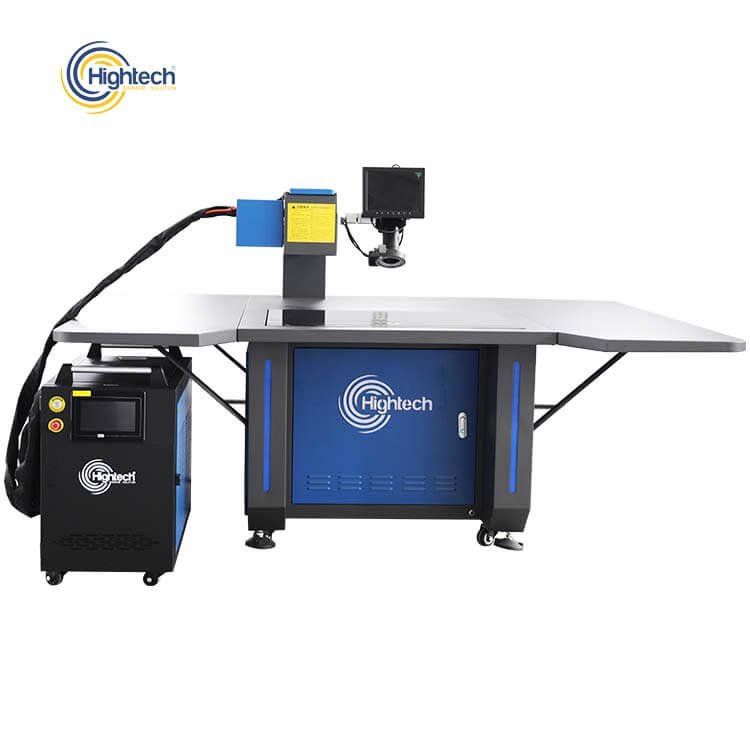
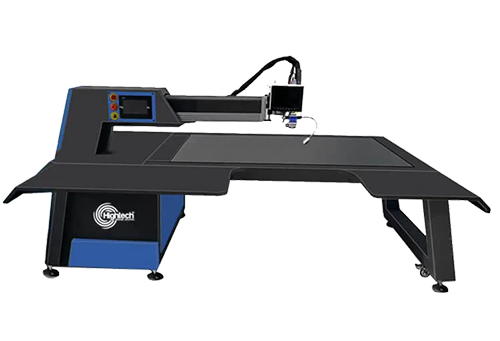
Máquinas de solda a laser QCW-HT750W
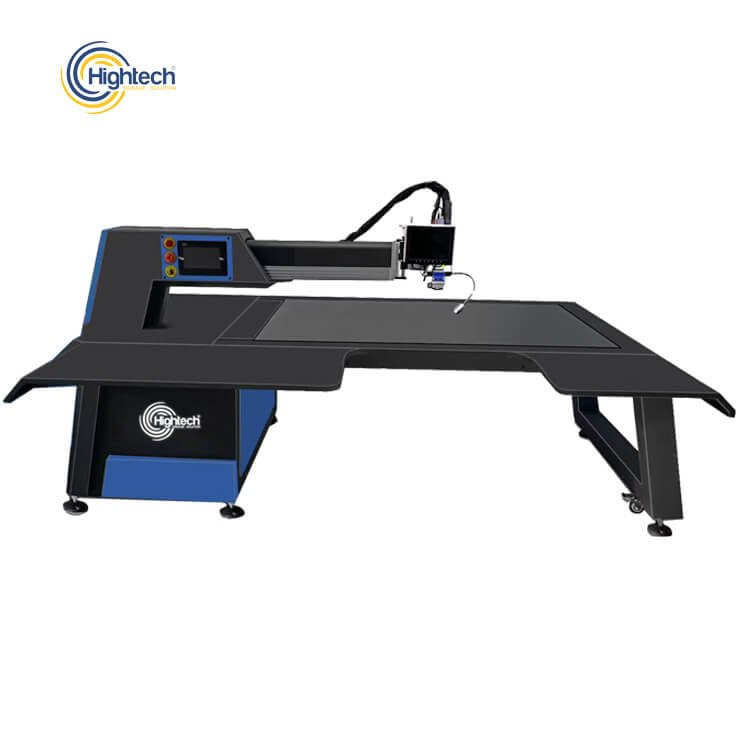
HT QCW 750Y — Máquinas de solda a laser
How to Choose the Right QCW Laser Welding Machine
Choose a QCW laser welding system by matching the material, joint geometry, heat sensitivity, required weld depth, workpiece access, positioning method, and production volume.
By Material and Joint
Start with the exact alloy, thickness, surface condition, joint type, and allowable gap to determine the required welding parameters and system configuration.
By Heat Input and Weld Depth
Match pulse energy, pulse width, frequency, and penetration requirements to applications where localized heat control and repeatable weld quality are important.
By Workpiece Access
Choose between workstation, handheld, or combined operating modes based on part size, joint accessibility, fixture requirements, and operator movement.
By Positioning and Automation
Consider CCD positioning, red-light aiming, fixtures, motion stages, rotary axes, galvo scanning, or automated integration according to the required accuracy and workflow.
By Production Requirements
Evaluate repetition rate, cycle time, production volume, cooling, utilities, safety requirements, and sample-weld results before selecting the final system.
Compare QCW Laser Welding Machine Configurations
Compare Hightech’s 750W QCW laser welding machines by pulse energy, welding depth, pulse width, positioning system, workbench configuration, and stationary or handheld operation to find the right setup for precision welding applications.
| Compare | HT750W QCW | HT QCW 750Y |
|---|---|---|
| Best For | Precision bench welding, repairs and large or irregular workpieces | Controlled precision welding with flexible stationary and handheld operation |
| Laser Output | 750 W 1080 nm wavelength | 750 W 1080 nm wavelength |
| Pulse Control |
30 J maximum pulse energy
0.2–50 ms pulse width Technical table: 1–1000 Hz |
30 J maximum pulse energy
0.2–50 ms pulse width Technical table: 1–1000 Hz* |
| Published Welding Capacity |
0.1–3 mm penetration range
Stainless steel: 0.2–3 mm Galvanized sheet: 0.2–2 mm |
0.1–3 mm penetration range
Stainless steel: 0.2–3 mm Galvanized sheet: 0.2–2 mm |
| Operation & Positioning | Stationary + handheld welding CCD camera, 10× magnification, crosshair and red-light positioning | Stationary + handheld welding CCD camera, 10× magnification, crosshair and red-light positioning |
| Workbench & Fiber |
Foldable dual-wing workbench
Open: 200 × 160 × 119 cm Folded: 96 × 160 × 119 cm Fiber: 5–8 m |
Foldable dual-wing workbench
Open: 200 × 160 × 119 cm Folded: 96 × 160 × 119 cm Fiber: 5–8 m |
| Materials & Applications | Stainless steel, galvanized sheet, iron plate and titanium Channel letters, metal lettering, detailed parts, repairs and larger workpieces | Stainless steel, galvanized sheet, iron plate and titanium Precision parts, signage, short welds, repairs and difficult-to-position workpieces |
| Product Page | View HT750W | View HT QCW 750Y |
Why Choose Hightech QCW Laser Welding Machines?
Controlled Heat for Precision Welding
QCW output combines high peak power with controlled average heat input, making it suitable for localized welds, precision repair, and heat-sensitive components.
Flexible Stationary and Handheld Operation
Available QCW configurations combine stable workstation welding with handheld access for larger, irregular, or difficult-to-reach parts.
Reduced Routine Optical Maintenance
Hightech describes a sealed laser-module design that does not require routine optical realignment and avoids several traditional YAG optical components.
Global Service and Technical Support
Hightech provides worldwide shipping, installation and operation guidance, spare-parts support, warranty coverage, and long-term technical assistance.
QCW Laser Welding Materials and Applications
QCW laser welding is suited to precision metal joining where weld size, heat control, repeatability, and access are important. Material compatibility should always be confirmed using the exact alloy, thickness, surface condition, and joint design.
Stainless Steel
Precision welding for small joints, housings, components, repair work, and repeatable metal assemblies.
Galvanized and Ferrous Metals
Suitable configurations can weld galvanized sheet and iron-based parts while controlling localized heat input.
Titanium and Precision Alloys
QCW welding can support precision titanium and alloy components where localized energy and repeatability are required.
Aluminum, Copper and Nickel Alloys
These materials may require careful parameter validation because reflectivity, conductivity, cracking, and joint conditions can affect weld quality.
Gold, Silver and Precious Metals
Suitable for selected jewelry, repair, and precision joining applications where small and visually controlled weld zones are important.
Electronics, Batteries and Precision Parts
Applications can include electronic components, battery tabs, sensors, medical instruments, thin enclosures, tooling repair, and other precision assemblies.
Frequently Asked Questions
What is a QCW laser welding machine?
A QCW laser welding machine uses quasi-continuous-wave fiber output to produce high-peak-power pulses at controlled average power. It is designed for precise spot welding, short seams, repair, and other applications where localized heat input is important.
How does quasi-continuous-wave laser welding work?
The system controls pulse width, repetition frequency, peak power, and average power. Individual or overlapping pulses create a controlled melt zone while limiting unnecessary heat input around the weld.
What is the difference between QCW and continuous-wave laser welding?
QCW uses pulsed high-peak-power output for localized heat control and precision. Continuous-wave welding delivers sustained laser power and is generally better suited to faster continuous seams and higher-throughput fabrication.
Which materials are suitable for QCW laser welding?
Published Hightech applications include stainless steel, galvanized sheet, iron plate, titanium, gold, and silver. Aluminum, copper, nickel alloys, and dissimilar combinations should be validated with sample welds using the exact material and joint conditions.
How do I choose the right QCW laser welding machine?
Match the system to material, thickness, joint geometry, heat sensitivity, weld depth, workpiece size, access, production volume, automation requirements, utilities, safety, and sample-weld results.
What affects QCW laser welding machine price?
Price depends on factors such as laser source, power, pulse energy, beam-delivery system, welding head, vision, motion axes, cooling, safety equipment, fixtures, software, accessories, freight, installation, training, and service requirements.
Do you provide training, spare parts, and after-sales support?
Hightech states that operating manuals, training videos, remote guidance, spare parts, worldwide delivery, warranty coverage, and long-term technical support are available. The exact service package should be confirmed in the quotation.
Can QCW laser welding machines be automated?
Yes. QCW laser output can be integrated with positioning stages, rotary axes, galvo scanning, vision systems, robotics, or CNC-style motion depending on the required process.