


Fiber Laser Jewellery Welding Machines
Precision jewelry welding systems for manufacturers, repair workshops, and goldsmiths working with small metal parts and delicate assemblies. Choose from compact 100W and 200W mini models or 200W and 300W cabinet systems based on workspace, observation, cooling, workload, and application requirements.
In 100+ Countries
On-site or Remote
Ready to Ship Globally
Quick Response 24/7
Our Jewelry Laser Welding Machine Models
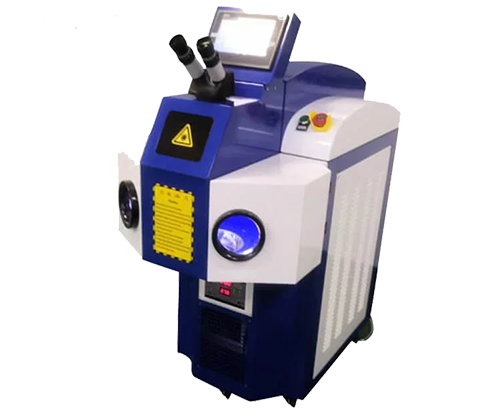
Compare compact 100W and 200W mini jewelry welders with professional 200W and 300W cabinet systems based on power, pulse control, observation, cooling, workspace, and daily workload.

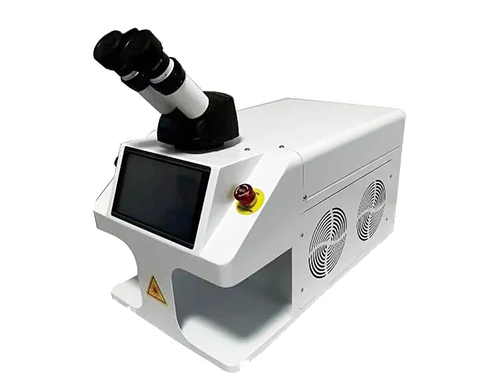
Mini máquina de solda a laser de fibra para joias HT JW MD 100
Mini máquina de solda a laser de fibra para joias HT JW MD 200
How to Choose the Right Jewelry Laser Welding Machine
Choose a jewelry laser welder based on machine format, laser power and pulse capability, observation system, cooling requirements, workload, and the alloys and repair tasks you need to process.
By Mini or Cabinet Format
Choose a mini system when bench space and mobility matter, or a cabinet system when integrated cooling, extraction, and repeated workshop use are higher priorities.
By Power and Pulse Control
Compare 100W, 200W, and 300W configurations together with pulse energy, pulse width, spot-size range, and welding frequency for your specific work.
By Observation System
Select the viewing configuration required for fine positioning, from 10X microscope observation to microscope-and-CCD dual positioning on supported models.
By Cooling and Workload
Mini models use compact built-in cooling systems, while cabinet machines use compressor-refrigerated water cooling designed for steadier workshop operation.
By Alloy and Welding Task
Match the machine to your gold, silver, platinum, delicate alloys, joint geometry, thinnest sections, repair work, custom production, and expected daily workload.
Compare Jewelry Laser Welder Configurations
Compare mini and cabinet jewelry laser welding machines by power, pulse capability, observation system, cooling method, dimensions, and intended workshop use.
| Compare | HT JW-MD 100 | HT JW-MD 200 | HT JW-CB 200 | HT JW-CB 300 |
|---|---|---|---|---|
| Best For | Compact workshops & precision jewelry repair | Jewelry repair, manufacturing & micro-welding | Continuous professional workshop use | Higher-power continuous jewelry production |
| Machine Format | Mini / Compact | Mini / Compact | Cabinet | Cabinet |
| Laser Power | 100W | 200W | 200W | 300W |
| Laser Type / Wavelength |
YAG 1064 nm |
YAG 1064 nm |
YAG 1064 nm |
YAG 1064 nm |
| Max Pulse Energy | 45 J | 60 J | 85 J | 85 J |
| Pulse Width | 0.1–10 ms | 0.1–10 ms | 0.1–3 ms | 0.1–3 ms |
| Spot Size | 0.1–3 mm | 0.1–3 mm | 0.3–3 mm | 0.3–3 mm |
| Welding Frequency | 1–15 Hz | 1–15 Hz | 1–30 Hz | 1–30 Hz |
| Observation & Positioning |
10X Microscope Cross-cursor CCD dual display positioning |
10X Microscope Cross-cursor CCD dual display positioning |
10X Microscope Optional microscope + CCD dual observation |
10X Microscope Optional microscope + CCD dual observation |
| Cooling System |
Built-in air-cooled water tank 2.5 L stainless-steel tank |
Built-in air-cooled water tank 4 L stainless-steel tank | Compressor-refrigerated water cooling | Compressor-refrigerated water cooling |
| Electrical Requirement |
<3.5 kW AC220V ±10%, 50/60 Hz |
<6 kW AC220V ±10%, 50/60 Hz |
Peak 7.5 kW AC220V ±10%, 50/60 Hz |
Peak 7.5 kW AC220V ±10%, 50/60 Hz |
| Machine Size | 525 × 295 × 425 mm | 570 × 340 × 430 mm | 1040 × 580 × 1280 mm | 1040 × 580 × 1280 mm |
| Machine Weight | 26 kg | 38 kg | 126 kg | 126 kg |
| Product Page | View MD 100 | View MD 200 | View CB 200 | View CB 300 |
Why Choose Hightech Jewelry Laser Welding Machines?
Precision Micro-Welding
Controlled pulse output and adjustable spot size support detailed jewelry repair and fabrication while minimizing heat impact, deformation, and unnecessary finishing.
Clear Observation and Positioning
10X microscope systems and CCD positioning options help operators monitor small joints, prongs, bezels, chains, and other fine welding areas with greater control.
Mini and Cabinet Configurations
The four-model range lets buyers choose between compact bench-friendly systems and cabinet machines with stronger integrated cooling and workshop-oriented features.
Safety, Cooling and Workshop Support
Model-specific features include synchronized eye protection, gas shielding, cooling systems, fume extraction, multilingual controls, training guidance, spare parts, and technical support.
Jewelry Metals and Applications
Choose a jewelry laser welder around the alloys you process and the repair or production tasks you perform most often. Gold, silver, platinum, high-purity precious metals, and delicate alloys are core applications, while other metals and heat-sensitive assemblies should be verified through sample testing.
Gold
Precision joining and repair for gold jewelry, fine components, settings, custom pieces, and restoration work.
Silver and Platinum
Supports detailed welding applications where controlled heat input and accurate positioning are important for precious-metal work.
Compatible and Delicate Alloys
Alloy composition, coatings, previous solder, mixed metals, and heat-sensitive assemblies should be evaluated and sample-tested before production.
Chains, Prongs and Bezels
Suitable for localized repair and rebuilding of chains, prongs, bezels, settings, seams, and other small jewelry components.
Custom Jewelry and Prototypes
Supports fine-component joining, bespoke jewelry assembly, prototypes, micro-welding, and small-part production.
Watches and Accessories
Selected models can support micro-welding work on watch cases, bands, hinges, and other fine metal accessories.
Frequently Asked Questions
What jewelry metals can a fiber laser jewelry welding machine weld?
Hightech emphasizes gold, silver, platinum, high-purity precious metals, and delicate alloys. Titanium, stainless steel, coatings, mixed-metal joints, and heat-sensitive assemblies should be confirmed through sample testing.
Which jewelry repair and production tasks are best suited to a laser welder?
Typical applications include chains, resizing, prongs, bezels, settings, seam repair, fine-component joining, custom assembly, watches, prototypes, and small-part production.
How does laser jewelry welding compare with torch soldering, TIG, or pulse-arc welding?
Laser welding concentrates heat in a smaller area, while torch soldering heats a broader zone. TIG and pulse-arc processes may suit different joint sizes or materials. The best process should be evaluated on the actual part.
Should I choose a mini or cabinet jewelry laser welding machine?
Choose a mini system when workspace and mobility are priorities. Cabinet systems are better suited when integrated compressor cooling, extraction, controls, and repeated workshop operation are more important.
How precisely can the machine control heat around thin metal, prongs, and stone settings?
The models provide adjustable pulse, spot size, energy, and welding frequency together with microscope or CCD positioning. Actual heat control depends on the alloy, focus, parameter settings, joint geometry, and operator technique.
What affects fiber laser jewelry welding machine price and ownership cost?
Price depends on power, pulse performance, cooling system, observation package, cabinet design, extraction, safety equipment, optional accessories, voltage configuration, freight, installation, and training. Ownership cost also includes electricity, shielding gas, consumables, cooling care, maintenance, and downtime.
How much training is required to operate a jewelry laser welder safely?
Hightech provides manuals, training videos, and remote guidance. Training should cover focusing, parameter adjustment, eye protection, gas shielding, cooling, maintenance, and applicable local safety requirements.
What should I verify before buying?
Confirm the exact laser configuration, eye protection, extraction, cooling, voltage and frequency, grounding, included accessories, manuals, spare parts, warranty exclusions, technical support, and regional service coverage before ordering.
What is the difference between the 100W, 200W, and 300W models?
The range differs in laser power, pulse capability, cooling, physical format, and intended workload. The MD 100 and MD 200 are compact mini systems, while the CB 200 and CB 300 are larger cabinet configurations with compressor-refrigerated water cooling.
Are the mini jewelry welding machines handheld?
No. The mini models are compact and movable bench systems rather than handheld welding tools. For example, the MD 200 measures 570 × 340 × 430 mm and weighs 38 kg.