


Fiber Laser Table Welding Machine
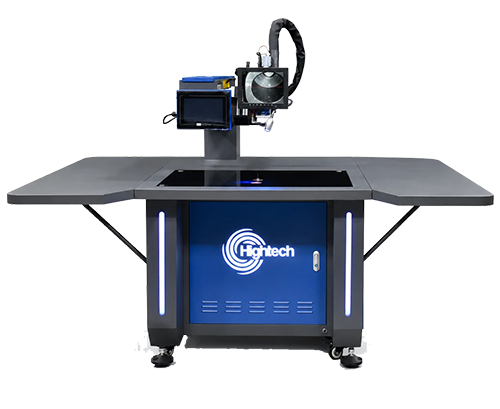
Fixed-table fiber laser welding systems provide stable, accurate welding for thin parts, channel letters, decorative components, precision assemblies, and repeat production. Choose the right configuration based on material, thickness, work area, positioning, fixtures, and automation requirements.
In 100+ Countries
On-site or Remote
Ready to Ship Globally
Quick Response 24/7
Our Fiber Laser Table Welding Machines
Explore fixed-table fiber laser welding systems designed for accurate positioning, controlled welding, stable workholding, and detailed metal fabrication. Compare available models based on laser power, working area, vision system, welding head, cooling, and automation requirements.
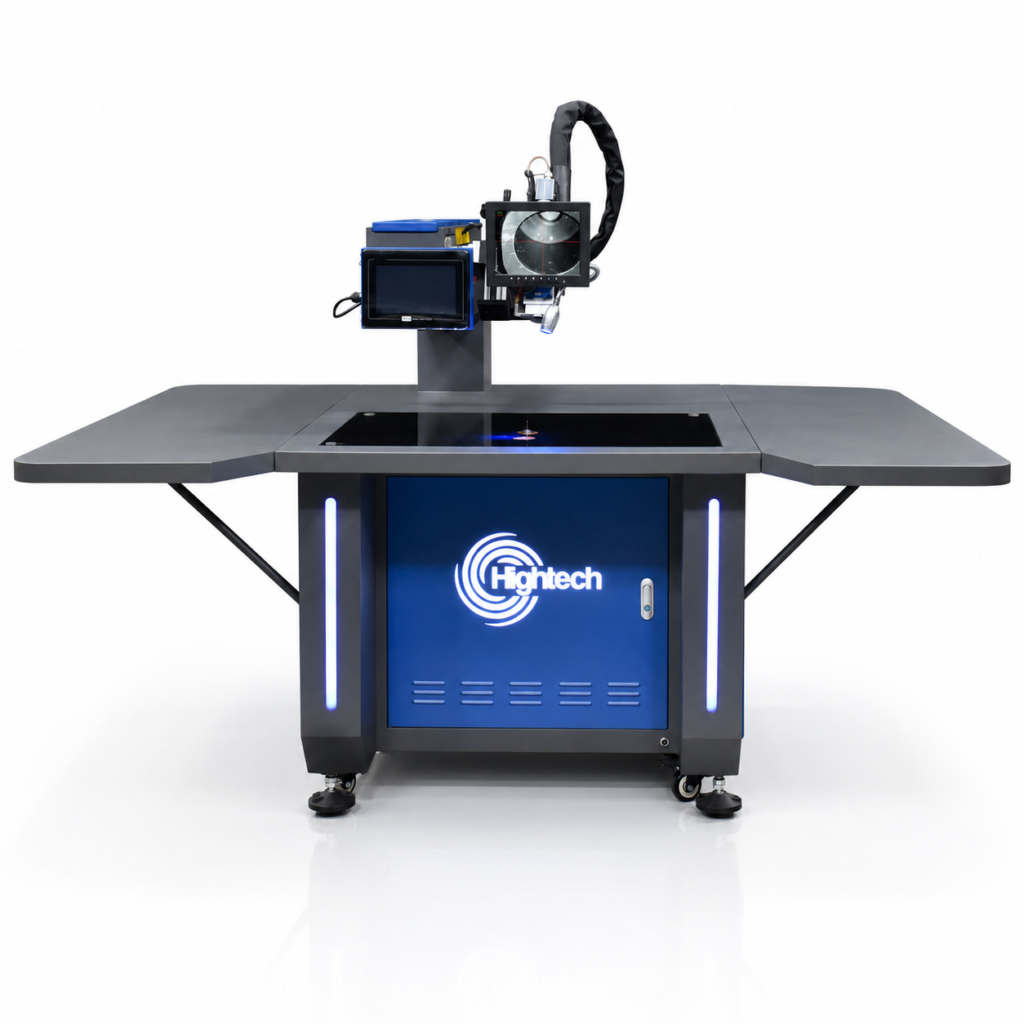
Máquina de solda de mesa a laser de fibra HT FWT-1500
How to Choose the Right Fiber Laser Table Welding Machine
Choose the right table welding system by matching the material, thickness, part dimensions, joint geometry, positioning requirements, production volume, workshop setup, and required level of automation.
By Material and Thickness
Start with the metal grades and thickness range you weld most often. Aluminum, stainless steel, galvanized sheet, titanium, and other metals require different parameters, shielding, preparation, and process validation.
By Part Size and Work Area
Size the worktable and fixture area for your largest routine component while allowing enough space for loading, operator access, cooling, extraction, and service clearance.
By Joint Type and Fit-Up
Joint geometry, gap control, surface condition, shielding, filler requirements, and expected finish all influence the welding configuration and achievable consistency.
By Precision and Positioning
For small seams and detailed components, compare CCD positioning, fixture repeatability, focus control, and adjustable weld-pattern capability.
By Production Volume and Automation
For repeated production, evaluate fixtures, cycle time, saved parameters, programmable motion, rotary options, and other automation requirements before selecting a system.
Compare Fiber Laser Table Welding Machine Models
Compare common table-welding configurations by positioning method, workholding, motion control, repeatability, and production requirements before choosing a machine.
| Product | Laser Power | Welding Thickness | Positioning | Welding Head | Cooling | Welding Speed | Best For |
|---|---|---|---|---|---|---|---|
| HT FWT-1500 View Product | 1500 W MAX fiber source | 0.4–8 mm Product-listed range | CCD Vision Visual weld positioning | Double-Swing Head Adjustable weld patterns | Compressor Water Cooling | 0–120 mm/s | Advertising, decorative work, precision parts, prototypes & repeat components |
Why Choose Hightech Fiber Laser Table Welding Machines?
Stable and Precise Workholding
A fixed welding table supports consistent part positioning and reduces unnecessary movement when welding small, detailed, or repeat components.
CCD-Assisted Positioning
Vision-assisted targeting helps operators position detailed joints more accurately and monitor welding on intricate components.
Flexible Weld Pattern Control
Available oscillating and double-swing welding heads can adjust weld patterns for different seams, helping improve joint appearance and process flexibility.
Global Service and Technical Support
Hightech provides worldwide shipping, installation and operation guidance, spare-parts support, warranty coverage, and long-term technical assistance.
Materials and Fiber Laser Table Welding Applications
Fiber laser table welding systems are used where parts can be supported, aligned, or fixtured consistently. Applications range from channel letters and signage to decorative metalwork, thin-sheet assemblies, prototypes, and detailed precision components.
Aluminum
Suitable configurations can weld aluminum parts and signage components, with alloy-specific cleaning, focus, shielding, and sample validation recommended before production.
Stainless Steel
Useful for precision signs, decorative parts, and thin assemblies where controlled gaps, heat input, and seam appearance are important.
Galvanized Sheet
Can be processed with suitable parameters and effective extraction to manage zinc vapor generated during welding.
Titanium
Precision welding requires clean surfaces, reliable shielding, and validated parameters for the specific grade and component.
Channel Letters and Signage
Stable table positioning supports aluminum and stainless-steel channel letters, sign components, panels, and detailed advertising products.
Decorative and Precision Components
Suitable for decorative metalwork, crafts, prototypes, thin-sheet assemblies, and repeat components where positioning and weld appearance matter.
Frequently Asked Questions
What Is a Fiber Laser Table Welding Machine?
A fiber laser table welding machine is a laser welding system arranged around a fixed worktable so parts can be supported, aligned, or fixtured during welding.
How Is a Tabletop Fiber Laser Welder Different From a Handheld Laser Welder?
A table system prioritizes controlled positioning and repeatability for supported parts, while a handheld laser welding machine provides greater flexibility for larger or more varied assemblies.
Which Metals Can a Fiber Laser Table Welding Machine Weld?
The current Hightech table-welding configuration lists aluminum, stainless steel, galvanized sheet, and titanium. Final suitability should be confirmed for the exact grade, thickness, coating, joint, and finish requirement.
Can It Weld Aluminum and Stainless Steel Channel Letters?
Yes, when the alloy, material thickness, joint fit-up, shielding, focus, and welding parameters have been validated for the application.
What Applications Are Best Suited to a Fiber Laser Welding Table?
Typical applications include channel letters, signs, decorative metalwork, thin precision parts, prototypes, and repeat components that benefit from stable positioning.
How Much Workshop Space Is Required?
Plan space for the machine, worktable, cooling system, extraction, service clearance, operator access, and an appropriately controlled laser-safety area.
What Worktable Size and Laser Power Should I Choose?
Choose a work area that accommodates your largest routine part and validate laser power using the thickest regular material and representative sample welds.
What Affects Welding Accuracy and Consistency?
Consistency depends on positioning, fixtures, focus, joint gaps, surface condition, welding parameters, cooling, shielding, and operator practice.
What Factors Affect Fiber Laser Table Welding Machine Price?
Price can vary with laser power, table size, vision system, motion control, fixtures, cooling, software, safety equipment, shipping, installation, training, warranty, and support.
What Maintenance Does a Fiber Laser Table Welding Machine Require?
Routine maintenance can include checking optics and protective lenses, cooling water, filters, fixtures, extraction, cables, gas lines, and stored machine or software settings.